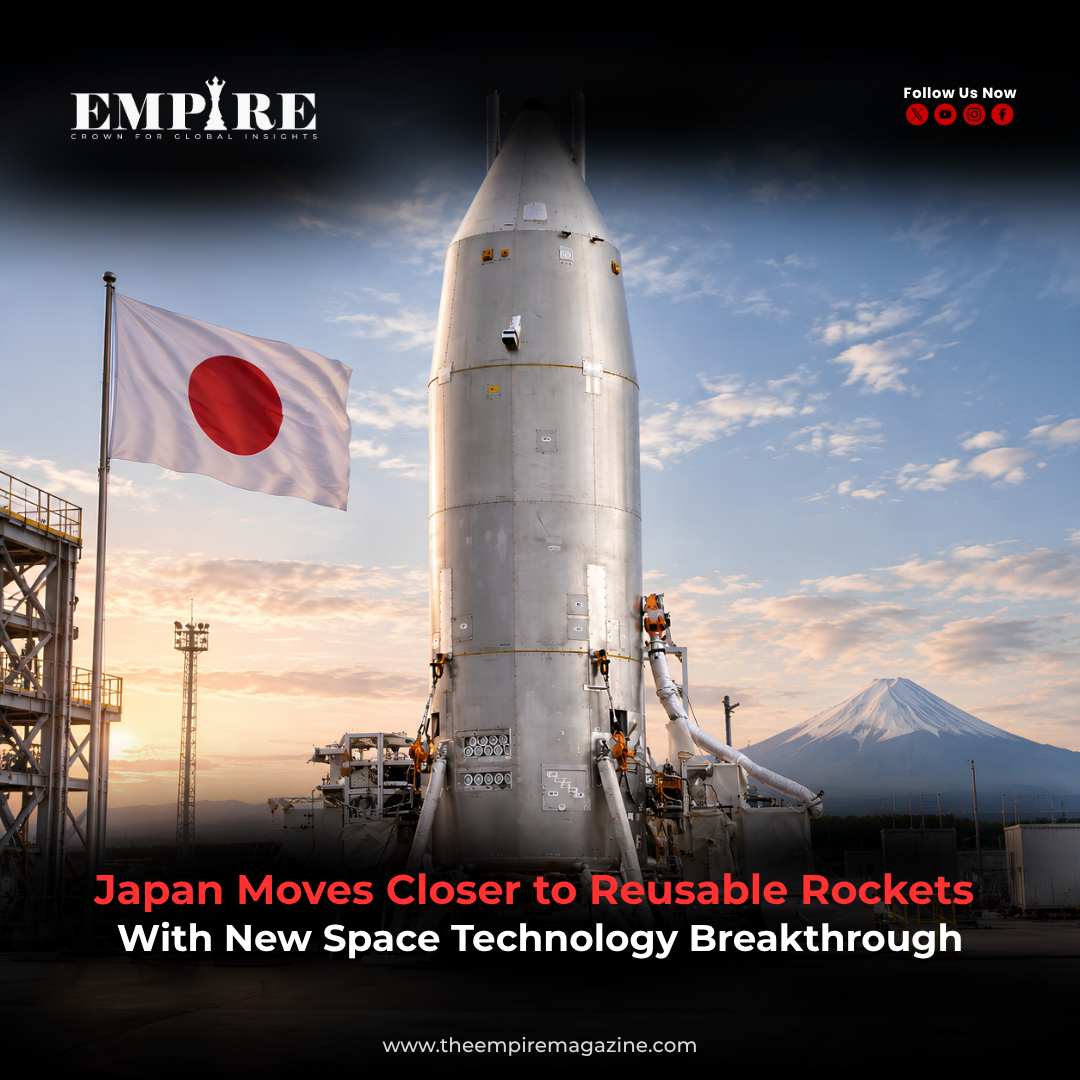
Japan Moves Closer to Reusable Rockets as the country advances its space technology ambitions through research into reusable launch systems designed to reduce costs and improve access to space. Japan’s space industry has been working on technologies that could allow rockets to return safely after launch, following a global shift toward reusable spacecraft development.
Reusable rockets have become one of the most important innovations in the modern space industry. Traditionally, most rockets are used only once, making every launch extremely expensive because major components are discarded after flight. Reusable rocket technology aims to change this model by allowing key rocket parts to be recovered, inspected, and used again.
The success of reusable rockets by companies such as SpaceX has encouraged space agencies and companies worldwide to develop their own technologies. Japan is now investing in research and testing programs to strengthen its position in the competitive global space sector.
Japan Moves Closer to Reusable Rockets Through Advanced Space Research
Japan Moves Closer to Reusable Rockets through continued research led by organisations including the Japan Aerospace Exploration Agency (JAXA) and Japanese aerospace companies.
Japan has a long history of space exploration, satellite development, and rocket engineering. The country operates the H3 launch vehicle and has developed advanced space technologies for scientific missions and commercial applications.
However, reusable rockets require different engineering approaches compared with traditional expendable launch systems.
Engineers must solve complex challenges including:
- Controlled rocket landing
- Heat resistance during atmospheric re-entry
- Engine reliability
- Structural durability
- Cost-effective refurbishment
Developing these technologies requires repeated testing and improvements before reusable rockets can become commercially practical.
Japan Moves Closer to Reusable Rockets With Landing Technology Development
One of the biggest challenges in reusable rocket development is achieving controlled landing after launch.
Unlike traditional rockets that fall into the ocean after completing their mission, reusable rockets must return safely to a designated landing area.
Japan has been conducting research into vertical takeoff and vertical landing technologies.
JAXA has tested experimental vehicles designed to study:
Flight Control Systems
Reusable rockets need advanced navigation and control technologies to manage their movement during descent.
Engine Restart Capability
Rocket engines must be capable of restarting during different stages of flight.
Autonomous Landing
Future reusable systems require highly accurate automated landing technologies.
These technologies are essential for creating rockets that can be recovered and reused.
Japan Moves Closer to Reusable Rockets as Global Space Competition Increases
Japan’s efforts come during a period of rapid change in the global space industry.
Reusable rockets have transformed the economics of space launches by reducing costs and increasing launch frequency.
Companies such as SpaceX have demonstrated the commercial potential of reusable launch systems, creating new competition among space organisations worldwide.
China has also been developing reusable rocket technology, increasing competition in the Asian space sector.
Japan’s focus on reusable systems reflects the country’s effort to maintain competitiveness in a rapidly changing space market.
The development of reusable rockets could support:
- Commercial satellite launches
- Space research missions
- International partnerships
- Future space transportation systems
Japan Moves Closer to Reusable Rockets Through New Rocket Testing Programs
Japan’s reusable rocket research involves multiple experimental projects aimed at improving launch and recovery capabilities.
JAXA has conducted tests with reusable rocket prototypes, including experiments focused on vertical landing and flight control technologies.
One example is the Reusable Vehicle Testing project, which studied technologies needed for future reusable launch vehicles.
Japanese companies are also exploring reusable rocket concepts to support commercial space services.
These programs focus on collecting technical data and improving reliability before developing operational systems.
Rocket development requires extensive testing because even small engineering improvements can significantly affect safety and performance.
Japan Moves Closer to Reusable Rockets With Focus on Lower Space Launch Costs
Reducing launch costs is one of the main reasons countries are investing in reusable rocket technology.
Traditional rockets require new hardware for every launch, creating significant manufacturing expenses.
Reusable systems could reduce costs by allowing rocket components to be used multiple times.
Lower launch costs could create new opportunities for:
Satellite Deployment
More affordable launches could support the growing satellite industry.
Space-Based Services
Companies could develop new applications using easier access to space.
Scientific Research
Researchers could conduct more missions with reduced transportation costs.
Japan’s reusable rocket development is connected to the broader goal of making space more accessible.
Japan Moves Closer to Reusable Rockets While Facing Technical Challenges
Although reusable rockets offer major benefits, developing them remains difficult.
Several challenges must be addressed before large-scale deployment.
Engineering Complexity
Reusable rockets require advanced systems capable of surviving extreme conditions.
High Development Costs
Research and testing require significant investment over many years.
Operational Reliability
Reusable rockets must achieve high safety standards before regular commercial use.
Japan’s space industry continues working on these challenges through research partnerships and technological development.
Japan Moves Closer to Reusable Rockets and the Future of Space Innovation
Japan’s progress in reusable rocket technology represents a major step in the country’s space ambitions.
The development of reusable launch systems could help Japan participate more strongly in the future space economy, where affordable and frequent launches are expected to become increasingly important.
Reusable rockets are not only about reducing costs. They represent a change in how humanity approaches space exploration and commercial activity.
The same global technology transformation can be seen across industries, from artificial intelligence to advanced manufacturing. Read more technology insights here: https://theempiremagazine.com/h2o-ai-enterprise-ai-tools/
Japan Moves Closer to Reusable Rockets as Space Technology Evolves
Japan’s investment in reusable rocket technology shows how the country is adapting to the next generation of space exploration.
While challenges remain before reusable rockets become widely operational, continued research, testing, and innovation are helping Japan build important capabilities.
The future of space technology will depend on countries and companies that can develop safer, more efficient, and more affordable ways to access orbit.
Japan’s reusable rocket efforts represent one part of this global transformation, as nations compete to shape the future of space transportation.
Follow The Empire Magazine for global business, technology, innovation, and leadership insights:
Facebook: https://www.facebook.com/profile.php?id=61573749076160
Instagram: https://www.instagram.com/the_empire_magazine/
The Empire Magazine | Crown For Global Insights