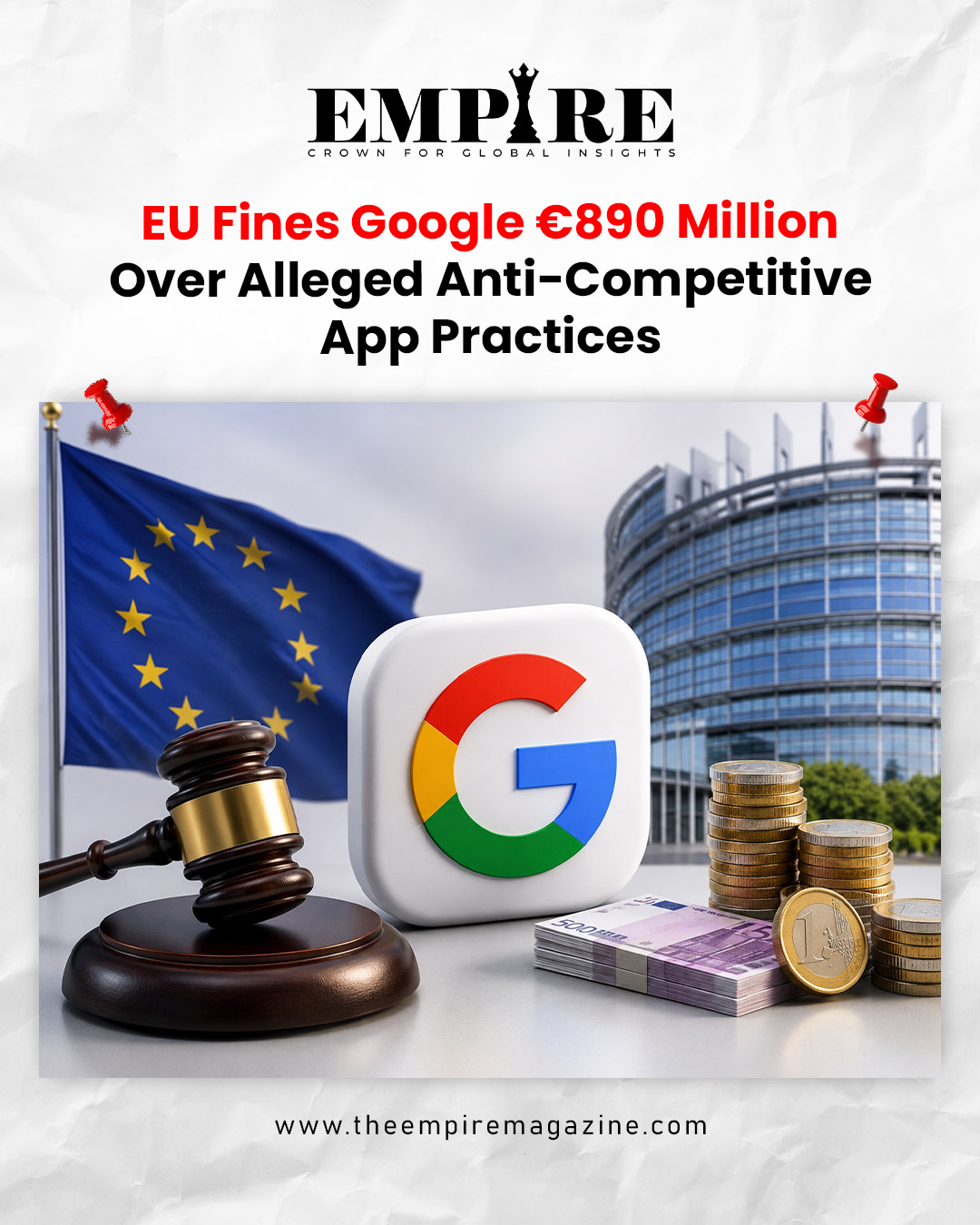
The EU fines Google €890 million over alleged anti-competitive app practices. Explore the case, its impact on developers, Android users, digital markets, and the future of global tech regulation. U.S.
The EU has once again placed one of the world’s largest technology companies under intense regulatory scrutiny. In its latest competition enforcement action, the European Commission has imposed an €890 million penalty on Google over alleged anti-competitive app practices, marking another significant chapter in the long-running battle between regulators and Big Tech. While Google continues to maintain that its ecosystem benefits consumers and developers alike, European authorities argue that certain business practices have unfairly limited competition within the Android app ecosystem. The decision is being viewed as far more than another financial penalty. It reflects Europe’s continuing effort to reshape digital markets, encourage fair competition, and reduce the influence of dominant technology platforms over developers, consumers, and businesses. For millions of Android users, software developers, startups, and investors across the globe, the ruling raises important questions about how digital marketplaces should operate and who ultimately controls access to consumers in the mobile economy.
EU Fines Google €890 Million Over Growing Competition Concerns
The latest decision follows years of investigations into Google’s business practices within the Android ecosystem. European regulators allege that Google leveraged its dominant market position to favor its own services and create barriers that limited opportunities for competing app developers and digital service providers. According to competition authorities, several contractual requirements and platform policies allegedly restricted developers’ freedom to distribute applications or offer alternative payment solutions, reducing consumer choice and making market entry more difficult for smaller competitors. The European Commission argues that dominant digital platforms carry a special responsibility to preserve fair competition rather than reinforce existing market power. Although Google disputes many of these conclusions, the Commission believes the financial penalty reflects the seriousness and duration of the alleged violations. The case also demonstrates Europe’s determination to ensure that innovation is driven by competitive markets rather than by platform dominance, especially as mobile applications continue to influence nearly every aspect of daily life, including communication, banking, education, healthcare, entertainment, travel, and commerce.
EU Fines Google €890 Million and the App Store Debate
The decision has reignited a broader debate surrounding how mobile app ecosystems should function in the digital age. For years, developers have argued that dominant platform operators exercise excessive control over application distribution, payment systems, pricing policies, and visibility within digital marketplaces. Critics believe these restrictions make it difficult for independent developers and smaller businesses to compete on equal terms, while larger platforms benefit from their established infrastructure and enormous user base. European regulators increasingly support the view that healthy competition requires developers to enjoy greater flexibility when offering services and interacting with consumers. The introduction of the Digital Markets Act has strengthened this regulatory philosophy by imposing new obligations on designated gatekeeper platforms, requiring them to allow more openness and transparency within their ecosystems. The Google case therefore represents not merely an isolated enforcement action but part of a much larger transformation in Europe’s approach toward digital competition, platform accountability, and consumer empowerment in rapidly evolving technology markets.
EU Fines Google €890 Million: Impact on Developers and Consumers
The consequences of this ruling extend well beyond Google itself. Independent developers, startup founders, software companies, and digital entrepreneurs are carefully watching how these regulatory changes may reshape opportunities within the Android ecosystem. If platform restrictions are reduced, developers could gain greater flexibility in payment processing, customer communication, subscription management, and app distribution strategies. Such changes may lower operational costs, increase innovation, and encourage new entrants to compete with established market leaders. Consumers may also benefit from greater transparency, increased competition, more pricing options, and improved access to alternative digital services. However, some industry observers caution that greater openness could introduce additional security challenges, requiring stronger verification systems to protect users from malicious applications and fraudulent transactions. The challenge for regulators will be balancing competitive fairness with cybersecurity and user trust. Ultimately, the objective is not to punish technological success but to ensure that innovation continues within an environment where businesses compete based on quality, value, and creativity rather than platform control alone.
EU Fines Google €890 Million and Global Regulatory Trends
Europe’s action is part of a much wider global movement toward stronger regulation of dominant technology companies. Governments in the United States, United Kingdom, South Korea, Japan, Australia, and several other jurisdictions have intensified investigations into digital platforms concerning app stores, online advertising, artificial intelligence, cloud computing, and search engine dominance. Policymakers increasingly argue that traditional competition laws require modernization to address today’s digital economy, where network effects and platform ecosystems create significant barriers for emerging competitors. The European Union has established itself as one of the world’s most assertive regulators, frequently setting standards that influence legislation elsewhere. As multinational technology companies operate across borders, compliance strategies increasingly reflect European regulatory expectations even outside the continent. Consequently, the Google case is expected to influence future investigations involving other major technology firms while encouraging governments worldwide to examine whether existing digital markets truly promote competition, consumer welfare, and long-term innovation.
EU Fines Google €890 Million: What Google Says
Google has consistently defended its Android ecosystem, arguing that its platform has enabled unprecedented innovation by providing developers with access to billions of users globally. The company maintains that Android remains an open ecosystem supporting thousands of device manufacturers, millions of applications, and extensive consumer choice compared to closed software environments. Google also argues that many of its policies are designed to maintain platform security, reduce fraud, protect user privacy, and ensure a consistent customer experience across devices. Company representatives have expressed concern that excessive regulatory intervention could unintentionally weaken cybersecurity protections, reduce incentives for future investment, and create fragmented digital ecosystems. Google is expected to continue pursuing available legal remedies while working to comply with evolving European regulatory requirements. The company has previously modified several business practices following earlier antitrust decisions and may introduce additional operational adjustments depending on the final legal outcome of this latest competition case.
EU Fines Google €890 Million and the Future of Digital Competition
The significance of this decision extends far beyond the amount of the financial penalty. It represents another milestone in the ongoing evolution of digital competition policy, where regulators increasingly seek to ensure that powerful technology companies do not use market dominance to restrict innovation or limit consumer choice. As artificial intelligence, cloud computing, mobile ecosystems, and digital commerce continue to expand, governments worldwide will likely impose greater expectations regarding transparency, interoperability, and fair business practices. Technology companies may increasingly design products with regulatory compliance as a central business consideration rather than an afterthought. Developers, investors, policymakers, and consumers will all play important roles in shaping this next phase of the digital economy. Whether Google’s appeal ultimately succeeds or not, the broader message is unmistakable: competition authorities are prepared to intervene whenever they believe dominant digital platforms threaten market fairness. This evolving regulatory environment is expected to influence product strategies, investment decisions, and innovation priorities throughout the global technology industry for many years to come.
EU Fines Google €890 Million
The EU Fines Google €890 Million case is far more than another headline involving a technology giant. It reflects an important shift in how governments around the world view digital competition, platform responsibility, and consumer rights. As regulators seek to create more open and competitive digital markets, technology companies must balance innovation with fairness, transparency, and compliance. For developers, the decision could open new opportunities to reach customers with fewer restrictions. For consumers, it promises greater choice and potentially more competitive pricing. For Google, it represents another challenge in navigating an increasingly complex global regulatory landscape. Regardless of the eventual legal outcome, the case underscores a reality that is reshaping the technology industry: the future of digital innovation will increasingly be defined not only by technological breakthroughs but also by the rules that govern competition in the modern digital economy.
For more business and retail insights, read more on The Empire Magazine
Previous article: https://theempiremagazine.com/peptide-treatment/
Magazine Feautures | Podcasts: Empire Global Talks
Follow The Empire Magazine on Facebook | Instagram | LinkedIn | YouTube
The Empire Magazine | Crown for Global Insights