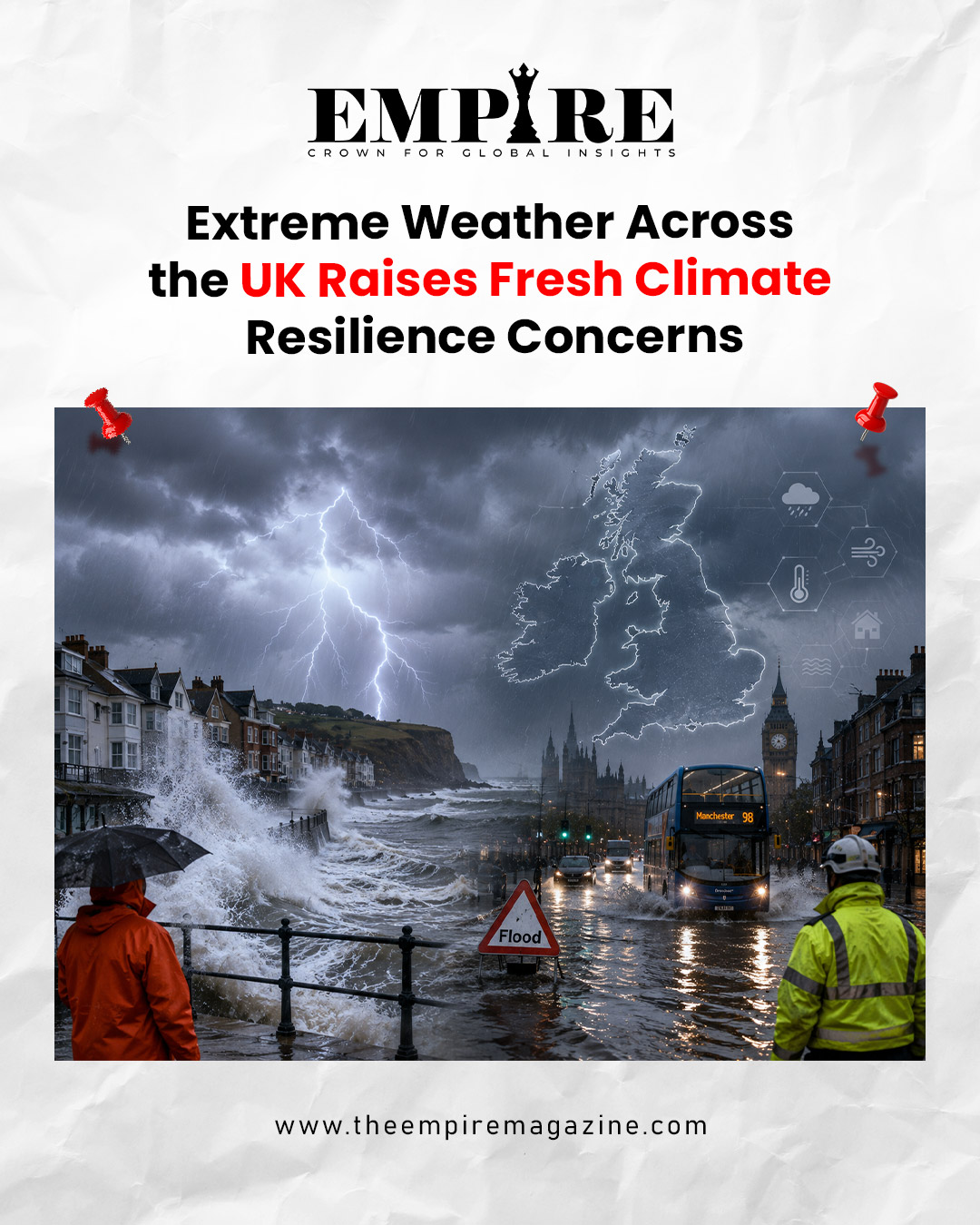
Extreme weather across the UK is intensifying climate resilience concerns as floods, heatwaves, storms, and droughts challenge communities, infrastructure, and the economy.
Extreme Weather Across the UK Raises Fresh Climate Resilience Concerns
Extreme Weather Across the UK is no longer an occasional headline, it has become a defining reality for communities, businesses, policymakers, and emergency services across the nation. From record-breaking heatwaves and devastating flash floods to prolonged droughts and powerful storms, the United Kingdom is witnessing weather patterns that scientists increasingly link to climate change. While the country has always experienced variable weather, the growing frequency and intensity of these events are raising serious questions about whether existing infrastructure, healthcare systems, transport networks, and local communities are prepared for what lies ahead. As climate experts continue to warn that extreme weather events will become even more common during the coming decades, the conversation is shifting from merely understanding climate change to actively strengthening climate resilience. The challenge today is not simply surviving the next storm or heatwave but building cities, economies, and communities capable of adapting to a rapidly changing climate.
Extreme Weather Across the UK Is Becoming the New Normal
The past few years have demonstrated that Extreme Weather Across the UK is no longer an isolated occurrence but part of an increasingly visible climate pattern affecting every region. England has experienced unprecedented heat records, Scotland has witnessed heavier rainfall, Wales has faced destructive flooding, and Northern Ireland has reported unusual weather extremes affecting agriculture and local infrastructure. Transport disruptions caused by flooded railways, roads damaged by excessive heat, water shortages during prolonged dry periods, and increased pressure on emergency responders have become familiar scenes. Scientists from leading climate research organisations explain that a warmer atmosphere holds more moisture, making heavy rainfall events significantly more intense, while higher temperatures also contribute to longer heatwaves and increased wildfire risks. For millions of residents, these weather changes are becoming personal experiences rather than distant scientific predictions, affecting daily routines, public health, travel, insurance costs, and even household finances as adaptation becomes increasingly necessary across the country.
Climate Change Is Driving Extreme Weather Across the UK
Climate researchers overwhelmingly agree that Climate Change UK is increasing the likelihood and severity of many weather extremes, even though individual weather events cannot always be attributed solely to global warming. Rising global temperatures have altered atmospheric circulation, ocean temperatures, and rainfall distribution, creating conditions that make intense storms, severe flooding, prolonged heatwaves, and droughts more likely than in previous decades. The UK’s Climate Change Committee has repeatedly warned that the country remains vulnerable despite growing awareness of climate risks. Coastal regions face rising sea levels and stronger storm surges, while inland communities experience greater risks from flash floods caused by intense rainfall overwhelming drainage systems. Meanwhile, hotter summers create additional health concerns, particularly for elderly citizens, children, and people with chronic illnesses. Scientists stress that reducing greenhouse gas emissions remains essential, but adaptation measures are equally important because many climate impacts are already unavoidable due to historical emissions that continue influencing global weather systems today.
Extreme Weather Across the UK Impacts Communities
The human impact of Extreme Weather Across the UK extends far beyond damaged buildings and flooded streets. Families forced to evacuate their homes often face emotional stress, financial uncertainty, and lengthy recovery periods that insurance claims alone cannot fully resolve. Farmers encounter unpredictable growing seasons, crop failures, and livestock challenges, threatening food production and rural livelihoods. Schools close during severe weather events, disrupting education, while hospitals experience increased admissions linked to heat-related illnesses, respiratory conditions, and accidents caused by storms or flooding. Mental health experts also highlight the psychological effects of repeated climate-related disasters, including anxiety, trauma, and uncertainty about the future. Local councils are increasingly investing in community resilience programmes, emergency planning, and public awareness campaigns, recognising that preparing residents before disasters occur is often more effective than responding after damage has already been done. The growing frequency of these events demonstrates that climate resilience is not solely an environmental issue but a social, economic, and public health priority affecting every generation.
UK Climate Resilience Faces Infrastructure Challenges
One of the greatest concerns surrounding UK climate resilience is whether infrastructure built for historical weather conditions can withstand future climate realities. Roads soften under extreme heat, railway tracks buckle during prolonged high temperatures, airports face operational challenges, electricity networks become vulnerable to storms, and ageing drainage systems struggle with sudden heavy rainfall. Water companies are simultaneously dealing with flood risks during winter and water shortages during increasingly dry summers, creating a complex balancing act for essential public services. Urban areas face additional challenges because concrete surfaces absorb and retain heat, creating urban heat islands that intensify already rising temperatures. Engineers, planners, and local governments are now reconsidering building standards, drainage capacity, flood defences, and transport resilience to ensure future developments are better equipped to cope with changing weather patterns. However, experts argue that infrastructure upgrades require sustained long-term investment rather than short-term reactive measures following each major weather event, making political commitment just as important as engineering innovation.
Businesses Respond to Extreme Weather Across the UK
Extreme Weather Across the UK is reshaping business strategies across multiple industries. Retailers experience supply chain disruptions caused by flooding and transport delays, manufacturers face operational interruptions due to power outages or workforce challenges, while insurance companies continue reassessing climate-related risks as claims increase. Tourism businesses must adapt to changing visitor expectations as unpredictable weather influences travel decisions, and agriculture continues investing in drought-resistant crops, improved irrigation, and innovative farming techniques. Financial institutions are also integrating climate risks into lending and investment decisions, recognising that environmental resilience increasingly influences long-term economic stability. Large corporations are strengthening business continuity plans, investing in sustainable operations, and adopting climate risk assessments that extend beyond regulatory compliance. Smaller businesses, however, often lack the resources required for comprehensive adaptation strategies, highlighting the importance of government support, industry collaboration, and accessible climate resilience guidance to ensure that businesses of every size remain prepared for future weather challenges.
Government Plans for Extreme Weather Across the UK
The UK government has introduced multiple initiatives aimed at strengthening UK climate resilience through flood defence investments, climate adaptation programmes, net-zero policies, and infrastructure planning. National agencies continue improving weather forecasting capabilities, providing earlier warnings that help communities prepare before severe events occur. Local authorities are expanding flood management schemes, restoring wetlands, planting trees, and encouraging nature-based solutions that reduce flood risks while supporting biodiversity. Climate resilience is also becoming a central consideration in housing development, urban planning, and transport investment decisions. Nevertheless, independent experts argue that implementation must accelerate significantly to keep pace with the increasing frequency of climate-related events. The challenge extends beyond policy announcements, requiring coordinated action between national government, regional authorities, businesses, scientists, and local communities. Effective climate resilience depends on consistent investment, evidence-based planning, and widespread public participation, ensuring adaptation efforts are embedded across every sector rather than treated as isolated environmental initiatives.
Why Climate Resilience Matters During Extreme Weather Across the UK
Climate resilience is becoming one of the defining priorities for the UK’s future because it focuses on reducing vulnerability before disasters occur instead of merely responding afterwards. Building resilience involves strengthening infrastructure, improving emergency preparedness, protecting vulnerable populations, investing in sustainable water management, expanding green spaces, modernising transport systems, and encouraging climate-conscious urban development. Education also plays a critical role by helping citizens understand weather risks and practical adaptation measures that improve household safety. Technological innovations, including advanced weather forecasting, climate modelling, artificial intelligence, and smart infrastructure monitoring, are providing governments and businesses with better tools to anticipate risks before they escalate into emergencies. While mitigation efforts remain essential to reduce future warming, resilience ensures societies can continue functioning despite increasingly unpredictable weather. Experts widely agree that countries investing early in climate resilience will experience lower economic losses, stronger public safety outcomes, and greater long-term sustainability than those delaying adaptation efforts.
The Road Ahead for Extreme Weather Across the UK
Extreme Weather Across the UK represents one of the country’s most pressing long-term challenges, demanding action that extends beyond political cycles and immediate disaster responses. Every flood, heatwave, storm, and drought reinforces the urgency of creating resilient communities capable of adapting to an evolving climate. While scientific understanding continues improving and technological innovations offer valuable solutions, resilience ultimately depends on collective commitment from governments, businesses, local authorities, and citizens alike. Investments made today in sustainable infrastructure, renewable energy, flood protection, public awareness, and climate adaptation will shape how effectively future generations navigate increasingly uncertain weather conditions. The United Kingdom has both the expertise and resources to become a global leader in climate resilience, but success will require decisive implementation rather than delayed ambition. As Extreme Weather Across the UK becomes an increasingly familiar reality, resilience is no longer an optional policy objective, it is becoming an essential foundation for protecting lives, strengthening the economy, and securing a sustainable future in a rapidly changing world.
For more business and retail insights, read more on The Empire Magazine
Previous article: https://theempiremagazine.com/amazon-cloud-gaming/
Magazine Feautures | Podcasts: Empire Global Talks
Follow The Empire Magazine on Facebook | Instagram | LinkedIn | YouTube
The Empire Magazine | Crown for Global Insights