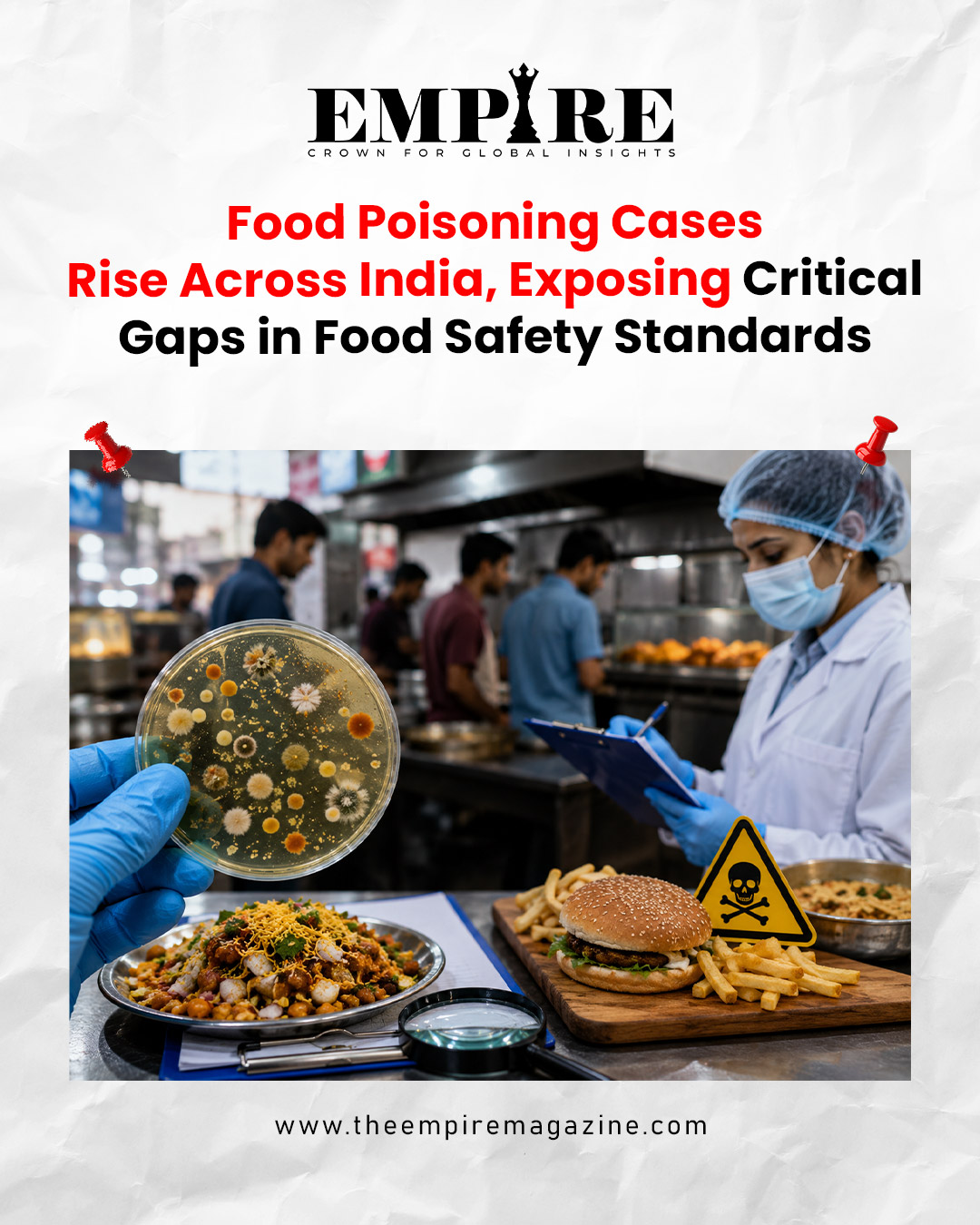
Food poisoning cases are rising across India, exposing serious food safety standards gaps. Explore the causes, health risks, government response, and solutions. Food poisoning cases across India are increasing at an alarming pace, exposing serious weaknesses in food safety standards, hygiene practices, and regulatory enforcement. From contaminated street food to unsafe packaged products, the growing crisis highlights the urgent need for stronger food safety systems, consumer awareness, and stricter implementation of food regulations.
Food Poisoning Cases Are Becoming a National Concern
Food Poisoning Cases are no longer isolated incidents that disappear from the headlines after a few days. Across India, reports of people falling ill after consuming contaminated food are becoming increasingly common, raising serious concerns about the country’s food safety ecosystem. Whether it is school children hospitalised after consuming mid-day meals, wedding guests suffering from severe foodborne illnesses, or families experiencing food poisoning after eating from restaurants and street vendors, the frequency of such incidents has reached an alarming level. According to health experts, food contamination remains one of the most underestimated public health challenges in India, affecting thousands of people every year. While rapid urbanisation has transformed India’s food industry with cloud kitchens, food delivery platforms and expanding restaurant chains, food safety practices have not evolved at the same pace. Improper storage, unhygienic cooking conditions, contaminated water, expired ingredients and poor handling practices continue to contribute significantly to Food Poisoning Cases. The growing dependence on ready-to-eat meals and online food delivery has made food safety an issue that affects every household, regardless of income or geography. As consumers become more conscious about nutrition and health, the rising number of Food Poisoning Cases is exposing critical gaps in India’s food safety standards and demanding urgent reforms before preventable illnesses become an even greater national health burden.
Food Poisoning Cases Reveal Weak Food Safety Standards
The recent surge in Food Poisoning Cases has brought India’s food safety standards under intense scrutiny. While the country has regulatory bodies such as the Food Safety and Standards Authority of India (FSSAI), implementation often varies significantly between states and local authorities. Many small food establishments continue to operate without adequate hygiene inspections, while illegal food manufacturing units frequently escape regulatory oversight. Experts argue that compliance is often viewed as a paperwork exercise rather than a commitment to consumer safety. In several reported Food Poisoning Cases, investigations have traced illnesses back to contaminated raw materials, improper refrigeration, bacterial growth due to poor storage, cross-contamination during food preparation and even the use of expired ingredients. Rural and semi-urban regions face additional challenges because limited infrastructure, inconsistent electricity supply and inadequate cold chain facilities make safe food storage difficult. The growing demand for inexpensive food also places pressure on vendors to cut costs, sometimes compromising quality and hygiene. As India’s food industry expands rapidly, stronger enforcement of Food Safety Standards, regular inspections, scientific food testing and stricter penalties for violations have become essential to restoring public confidence and reducing Food Poisoning Cases across the country.
Why Food Poisoning Cases Continue to Increase
Several interconnected factors explain why Food Poisoning Cases continue to rise despite improvements in healthcare and awareness. Climate change is one major contributor, as higher temperatures create ideal conditions for bacteria such as Salmonella, E. coli and Listeria to multiply more rapidly in improperly stored food. Increasing urban populations have also intensified demand for mass food production, catering services and packaged meals, increasing opportunities for contamination if hygiene protocols are ignored. Street food, although an important part of India’s culinary culture, often operates without consistent sanitation standards, making consumers vulnerable when vendors lack access to clean water, waste disposal facilities or food storage infrastructure. Another emerging concern is the rapid expansion of online food delivery services. While many organised restaurants maintain high standards, smaller kitchens operating through digital platforms may not always receive regular inspections. In addition, food travels longer distances before consumption, making temperature control essential to prevent bacterial growth. Consumer behaviour also contributes to Food Poisoning Cases, as many people unknowingly consume expired packaged foods, improperly stored leftovers or food prepared under unhygienic conditions during social gatherings. Public health specialists emphasise that reducing Food Poisoning Cases requires a collaborative effort involving regulators, businesses and consumers, rather than relying solely on government enforcement.
Food Poisoning Cases Affect India’s Healthcare System
The impact of Food Poisoning Cases extends far beyond temporary stomach discomfort. Severe foodborne illnesses can lead to dehydration, kidney complications, liver damage, neurological disorders and, in extreme situations, even death. Children, pregnant women, elderly individuals and people with weakened immune systems remain particularly vulnerable to complications arising from contaminated food. Hospitals across India frequently report seasonal spikes in admissions during summer and monsoon months, when bacterial contamination becomes more common due to favourable environmental conditions. Besides the physical suffering experienced by patients, Food Poisoning Cases place an additional burden on India’s already stretched healthcare infrastructure. Emergency departments, diagnostic laboratories and public hospitals often manage preventable illnesses that consume valuable medical resources. Families also bear significant financial costs associated with treatment, lost wages and prolonged recovery periods. The economic consequences extend to businesses as well, with restaurants, catering companies and food manufacturers facing reputational damage, financial losses and potential legal action following food safety violations. Experts estimate that foodborne diseases result in substantial productivity losses every year, making Food Poisoning Cases not only a public health issue but also an economic challenge requiring systematic policy interventions and stronger accountability across the food supply chain.
Food Poisoning Cases Demand Stronger Government Action
India has introduced several initiatives to strengthen food safety through FSSAI regulations, food licensing systems, hygiene rating programmes and consumer awareness campaigns. However, the increasing number of Food Poisoning Cases demonstrates that policy implementation remains inconsistent. Food safety experts believe that inspections must become more technology-driven, using digital tracking systems, real-time reporting mechanisms and laboratory testing to identify violations before outbreaks occur. Artificial intelligence, blockchain technology and digital traceability systems are increasingly being explored worldwide to improve transparency across food supply chains, allowing authorities to quickly identify contamination sources during Food Poisoning Cases. Strengthening food safety education is equally important. Restaurant staff, street vendors, food handlers and school kitchen workers require regular training on hygiene, temperature control, safe cooking practices and personal sanitation. Governments can also encourage public participation by simplifying food complaint mechanisms through mobile applications and helplines. Transparent publication of inspection reports would further improve accountability while empowering consumers to make informed choices. As India’s food industry continues to grow into one of the largest globally, modernising Food Safety Standards will be essential for protecting public health and maintaining confidence in the nation’s food ecosystem.
Food Poisoning Cases Can Be Prevented Through Awareness
Although regulatory reforms remain critical, consumers also play an important role in preventing Food Poisoning Cases. Simple precautions such as checking expiry dates, purchasing food from hygienic establishments, maintaining proper refrigeration at home, washing fruits and vegetables thoroughly, avoiding cross-contamination between raw and cooked foods and ensuring safe drinking water can significantly reduce the risk of foodborne illnesses. Individuals should also be cautious while consuming food during festivals, weddings and large public gatherings where food is prepared in bulk and may remain exposed for extended periods. Parents should educate children about basic food hygiene habits, while educational institutions can integrate food safety awareness into health programmes. Businesses must recognise that food safety is not merely a regulatory requirement but a fundamental responsibility towards customers. Investing in employee training, modern kitchen infrastructure, quality testing and transparent supply chains ultimately builds long-term consumer trust. Public awareness campaigns through digital media, schools and healthcare institutions can further strengthen understanding of Food Poisoning Cases, enabling communities to identify risks early and seek timely medical attention when symptoms appear.
The Future of Food Safety Standards in India
The rising number of Food Poisoning Cases should serve as a wake-up call rather than a recurring headline that fades with time. India’s rapidly expanding food industry presents enormous opportunities for economic growth, employment and innovation, but those opportunities must be supported by uncompromising food safety standards. Consumers today expect greater transparency regarding ingredient sourcing, hygiene practices and quality assurance, making food safety an essential pillar of sustainable business growth. Governments, regulators, food businesses, healthcare professionals and consumers must work together to create a culture where food safety becomes a shared responsibility instead of a reactive response after outbreaks occur. Investing in scientific testing, modern infrastructure, digital monitoring and continuous education will not only reduce Food Poisoning Cases but also strengthen public trust in India’s food ecosystem. Ultimately, the true measure of a nation’s progress is not simply the quantity of food it produces but the confidence with which every citizen can consume it safely. Strengthening Food Safety Standards today will help ensure that future generations inherit a healthier, more resilient and more responsible food system where preventable Food Poisoning Cases become increasingly rare rather than alarmingly common.
For more business and retail insights, read more on The Empire Magazine
Previous article: https://theempiremagazine.com/himalayan-bird-populations/
Magazine Feautures | Podcasts: Empire Global Talks
Follow The Empire Magazine on Facebook | Instagram | LinkedIn | YouTube
The Empire Magazine | Crown for Global Insights