
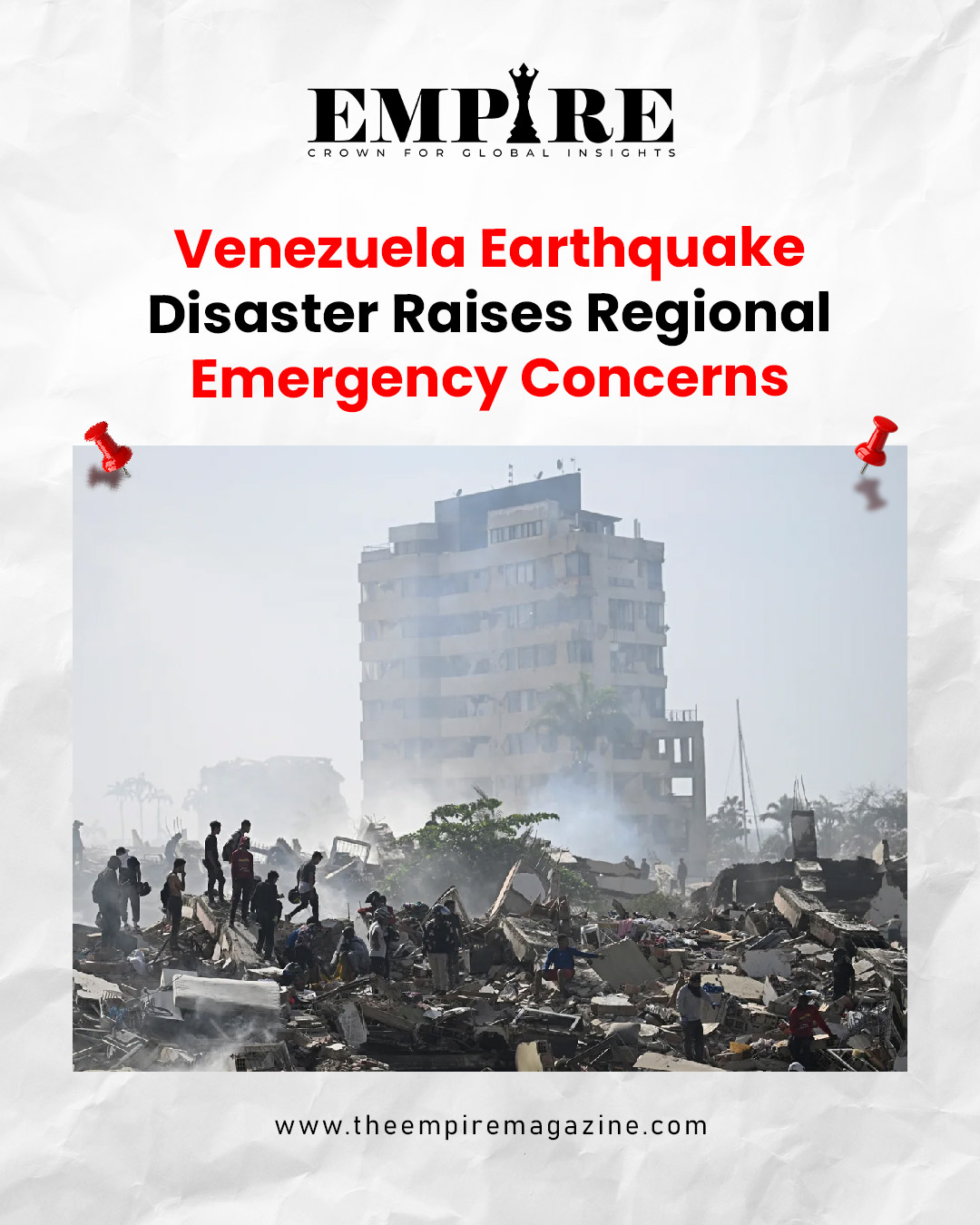
Venezuela earthquake disaster triggers a humanitarian crisis, thousands of casualties, and regional emergency concerns. Read the latest verified analysis and relief updates. The Venezuela earthquake disaster has emerged as one of Latin America’s worst natural catastrophes in recent years, leaving thousands dead, injured, and displaced. The twin earthquakes have sparked regional emergency concerns, strained humanitarian resources, and highlighted the urgent need for resilient infrastructure, coordinated disaster management, and international relief efforts.
Venezuela Earthquake Disaster Raises Regional Emergency Concerns
The Venezuela earthquake disaster has rapidly evolved from a devastating natural calamity into a regional humanitarian emergency, prompting governments, international aid organizations, and disaster-response agencies to intensify relief efforts. Two powerful earthquakes measuring 7.2 and 7.5 magnitude struck northern Venezuela within seconds of each other on June 24, causing catastrophic destruction across several regions, including Caracas and La Guaira. Thousands of residential buildings, hospitals, schools, roads, and essential infrastructure suffered extensive damage, leaving millions affected by disrupted services and widespread displacement. Rescue operations continue amid fears that casualty figures may rise further as emergency workers search collapsed buildings and isolated communities. Experts describe the disaster as one of the country’s worst seismic events in decades, with aftershocks complicating relief operations and increasing risks for survivors. The Venezuelan government declared a state of emergency while humanitarian agencies mobilized medical supplies, temporary shelters, food assistance, and clean drinking water. However, damaged transport networks, limited healthcare capacity, and economic constraints have slowed recovery efforts, transforming the tragedy into a broader regional concern with neighboring countries preparing for refugee flows and humanitarian assistance.
Venezuela Earthquake Disaster Intensifies Humanitarian Crisis Across Affected Regions
The Venezuela earthquake disaster has devastated thousands of families already struggling with years of economic hardship. Entire neighborhoods in La Guaira experienced severe structural collapse, while hospitals quickly exceeded capacity due to the overwhelming number of injured residents. Emergency shelters have become overcrowded, exposing displaced families to sanitation challenges and increasing the risk of infectious diseases. Relief organizations report growing shortages of medicines, drinking water, food supplies, electricity, and essential healthcare services. Mobile medical units have been deployed to treat trauma injuries alongside chronic illnesses that have worsened due to disrupted medical access. International humanitarian organizations have warned that prolonged displacement could trigger secondary health emergencies, including diarrheal diseases and untreated chronic conditions. The United Nations and several global aid agencies have expanded emergency appeals to support millions requiring immediate assistance. Despite logistical challenges, international rescue teams continue collaborating with Venezuelan authorities to provide emergency medical care, restore communication networks, and deliver humanitarian supplies to isolated communities. The disaster demonstrates how vulnerable populations face disproportionate consequences when major natural disasters strike countries already confronting economic and infrastructure limitations.
Regional Emergency Concerns Grow Following Venezuela Earthquake Disaster
The Venezuela earthquake disaster has raised significant regional emergency concerns throughout Latin America as neighboring countries assess potential humanitarian, economic, and logistical impacts. Governments across the region have expressed solidarity while preparing emergency response mechanisms to accommodate displaced populations if necessary. International disaster experts emphasize that seismic events of this magnitude often generate prolonged recovery challenges extending well beyond national borders. Transportation disruptions, damaged ports, interrupted trade routes, and increased humanitarian requirements could influence regional economic stability over the coming months. Several countries have dispatched specialized urban search-and-rescue teams, engineers, medical professionals, and emergency supplies to assist ongoing operations. Global humanitarian organizations have highlighted the importance of coordinated cross-border cooperation to ensure uninterrupted delivery of aid. Meanwhile, international financial institutions and donor agencies are evaluating reconstruction assistance that could help restore housing, healthcare infrastructure, schools, and public utilities. The crisis has reinforced the need for stronger regional disaster preparedness frameworks capable of responding quickly to large-scale seismic emergencies affecting multiple nations simultaneously.
Infrastructure Damage Highlights Need for Stronger Earthquake Preparedness
Beyond the tragic loss of life, the Venezuela earthquake disaster has exposed longstanding infrastructure vulnerabilities that amplified destruction during the seismic event. Engineers and disaster specialists note that numerous residential buildings, public housing complexes, transportation corridors, bridges, and utility systems were unable to withstand the powerful ground shaking. Satellite assessments indicate widespread structural damage across urban and coastal communities, raising questions about construction standards, maintenance practices, and disaster resilience planning. Critical infrastructure failures disrupted electricity, telecommunications, water distribution, and emergency medical services during the crucial first hours following the earthquakes. Experts argue that rebuilding efforts should prioritize resilient construction techniques, stricter building codes, seismic monitoring systems, and comprehensive urban planning to reduce future disaster risks. Investments in earthquake-resistant infrastructure not only save lives but also accelerate economic recovery following major natural disasters. The Venezuelan tragedy serves as a reminder that disaster preparedness requires continuous investment rather than reactive emergency spending after catastrophic events occur.
International Relief Efforts Expand as Recovery Operations Continue
Global humanitarian agencies have significantly expanded their response to the Venezuela earthquake disaster, recognizing that recovery will require sustained international cooperation over many months. Emergency medical teams continue providing trauma care, field hospitals remain operational, and humanitarian organizations are distributing food, hygiene kits, temporary shelter materials, and clean water to affected communities. International donors are discussing financial support for reconstruction while specialized engineers assess damaged infrastructure and recommend rebuilding priorities. Governments worldwide have pledged solidarity through emergency assistance, technical expertise, and disaster-response personnel. Humanitarian organizations stress that immediate rescue operations represent only the beginning of a much longer recovery process involving housing reconstruction, healthcare restoration, educational continuity, livelihood support, and psychosocial assistance for survivors. Long-term recovery will depend on transparent coordination among government agencies, international organizations, civil society groups, and local communities. Experts also emphasize integrating climate resilience and seismic preparedness into reconstruction strategies to strengthen communities against future natural disasters.
Future Outlook: Venezuela Earthquake Disaster Reinforces Importance of Disaster Resilience
The Venezuela earthquake disaster represents more than a national tragedy; it is a regional wake-up call regarding disaster preparedness, resilient infrastructure, and coordinated humanitarian response. As rescue efforts gradually transition toward long-term recovery, authorities face the immense challenge of rebuilding communities while addressing immediate humanitarian needs. Recovery will require substantial investment in housing, healthcare systems, education, transportation networks, and emergency management capabilities. Seismologists continue monitoring aftershock activity, while disaster experts urge governments throughout Latin America to strengthen early warning systems, improve public awareness campaigns, and modernize building regulations in earthquake-prone regions. The international community’s continued support will play a vital role in helping Venezuela rebuild safely and sustainably. Ultimately, the lessons emerging from this catastrophe extend beyond Venezuela, reinforcing the universal importance of preparedness, resilient infrastructure, and collaborative disaster management in an increasingly unpredictable natural environment. While the road to recovery will be lengthy, coordinated action among governments, humanitarian organizations, and local communities offers the strongest path toward rebuilding lives and strengthening resilience against future seismic disasters.
Venezuela Earthquake Disaster Puts Disaster Preparedness in Global Spotlight
The Venezuela earthquake disaster has become a major reference point in global discussions on disaster preparedness, urban resilience, and emergency response. Seismologists and disaster management experts believe that the Venezuela earthquake disaster underscores the importance of enforcing modern building codes, investing in earthquake-resistant infrastructure, and strengthening early warning systems in seismically active regions. As reconstruction plans begin to take shape, policymakers are emphasizing that recovery should not only replace damaged infrastructure but also create safer and more resilient communities. The lessons from the Venezuela earthquake disaster are expected to influence disaster management strategies across Latin America, where several countries face similar seismic risks. Strengthening community preparedness, expanding emergency response training, and improving coordination between governments and humanitarian organizations will be essential to reducing the impact of future earthquakes.
Economic Impact of the Venezuela Earthquake Disaster Extends Beyond Borders
The Venezuela earthquake disaster is also expected to have long-term economic implications, affecting industries, infrastructure investment, trade, and regional development. Damage to transportation networks, ports, energy facilities, and commercial centers has disrupted business operations and slowed economic activity in several affected areas. Economists warn that rebuilding after the Venezuela earthquake disaster could require billions of dollars in public and international funding, placing additional pressure on an already fragile economy. At the same time, the disaster has renewed calls for greater international cooperation in financing resilient infrastructure projects and supporting sustainable reconstruction. As Venezuela works toward recovery, the Venezuela earthquake disaster serves as a reminder that investing in disaster resilience today can significantly reduce economic losses and humanitarian challenges in the future.
Why the Venezuela Earthquake Disaster Matters for the World
The Venezuela earthquake disaster is more than a national emergency, it is a global reminder of the devastating consequences of major seismic events in vulnerable regions. The humanitarian response to the Venezuela earthquake disaster has demonstrated the importance of rapid international collaboration, advanced search-and-rescue capabilities, and coordinated relief operations. Experts believe that the experience gained from the Venezuela earthquake disaster will contribute to improved emergency planning, better disaster risk reduction policies, and stronger regional cooperation across Latin America. As recovery continues, governments and global organizations are likely to use the lessons from the Venezuela earthquake disaster to build more resilient cities, protect vulnerable populations, and strengthen preparedness for future natural disasters.
For more business and retail insights, read more on The Empire Magazine
Previous article: https://theempiremagazine.com/ukraine-conflict/
Magazine Feautures | Podcasts: Empire Global Talks
Follow The Empire Magazine on Facebook | Instagram | LinkedIn | YouTube
The Empire Magazine | Crown for Global Insights