
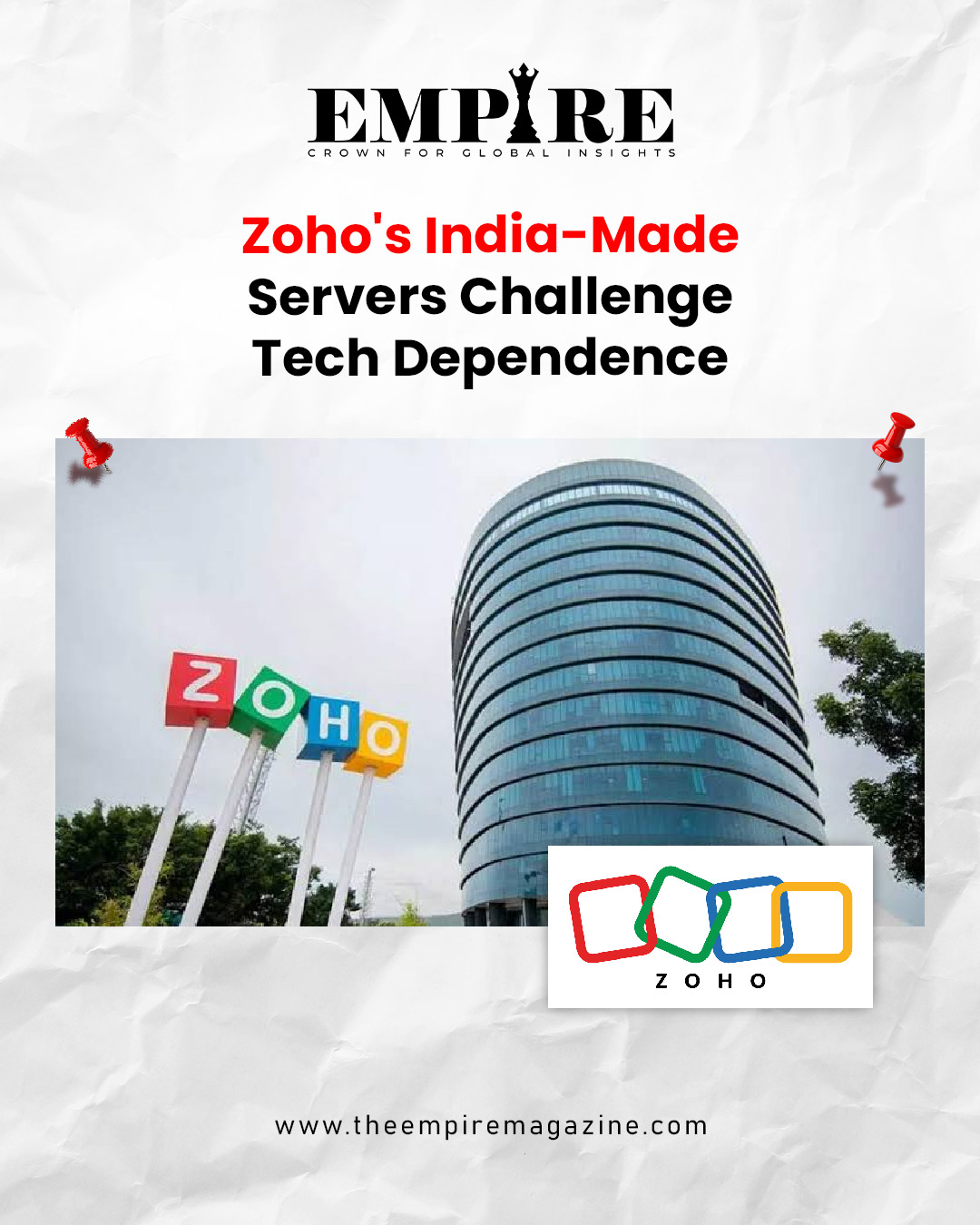
How Zoho’s Made-in-India Servers Are Challenging Technology Dependence has become an important topic in India’s technology sector following Zoho’s entry into the server hardware market. In June 2026, Zoho unveiled Nathu La, its first indigenously designed server platform, marking a significant step toward building a complete technology stack that spans hardware, infrastructure, cloud services, and software. The move reflects a growing emphasis on technological self-reliance, data sovereignty, and reducing dependence on foreign hardware providers. (Business Standard)
For decades, the global server market has been dominated by international manufacturers and technology suppliers. Zoho’s latest initiative demonstrates how Indian technology companies are beginning to participate in the development of advanced computing infrastructure rather than focusing solely on software services.
The launch of Nathu La highlights broader industry trends involving artificial intelligence, cloud computing, enterprise infrastructure, and the increasing importance of controlling critical technology resources.
How Zoho’s Made-in-India Servers Are Challenging Technology Dependence Through Local Innovation
A key aspect of How Zoho’s Made-in-India Servers Are Challenging Technology Dependence is the company’s focus on domestic innovation.
According to Zoho, Nathu La was developed through more than five years of research and development by its engineering team in Nagpur. The project involved designing key hardware components and creating intellectual property owned in India. (The Indian Express)
Unlike many companies that primarily assemble imported components, Zoho has emphasized its role in designing critical elements of the server platform.
Why Local Technology Development Matters
Technology infrastructure plays a critical role in modern economies.
Countries and businesses increasingly recognize the importance of controlling key technologies related to:
- Data storage
- Cloud computing
- Artificial intelligence
- Cybersecurity
- Digital infrastructure
By investing in local development, companies can strengthen technological capabilities while supporting domestic innovation ecosystems.
Building Intellectual Property in India
One of the notable aspects of the Nathu La project is that Zoho retains ownership of the platform’s intellectual property. The company has stated that the server was designed in-house and represents part of its long-term strategy to control its technology stack from hardware to applications. (Business Standard)
This approach aligns with broader efforts to strengthen India’s position within global technology markets.
How Zoho’s Made-in-India Servers Are Challenging Technology Dependence Through Cost Efficiency
Another reason How Zoho’s Made-in-India Servers Are Challenging Technology Dependence has attracted attention is the company’s focus on reducing infrastructure costs.
As artificial intelligence adoption accelerates, computing costs have become a major concern for technology companies. Training and operating AI systems require substantial computing resources, creating pressure on organizations to improve efficiency.
Zoho has reported that Nathu La achieves comparable performance while reducing power consumption by 12% to 18% and lowering total cost of ownership by 20% to 30%. (Business Standard)
Lower Costs Support AI Growth
Artificial intelligence workloads require:
- High-performance computing
- Large-scale servers
- Advanced networking
- Significant energy resources
Reducing infrastructure expenses can make AI deployment more affordable for businesses.
Improving Data Center Efficiency
Data centers represent a major operational cost for cloud and software companies.
By designing its own server platform, Zoho aims to optimize performance for specific workloads while improving energy efficiency and reducing operational expenses. (Moneycontrol)
How Zoho’s Made-in-India Servers Are Challenging Technology Dependence in AI Infrastructure
The rise of artificial intelligence has increased the strategic importance of computing infrastructure.
A major element of How Zoho’s Made-in-India Servers Are Challenging Technology Dependence is the server’s role in supporting AI workloads.
AI Requires Specialized Infrastructure
Modern AI systems depend on:
- Powerful processors
- Scalable server platforms
- Efficient cooling systems
- High-speed connectivity
Zoho has indicated that Nathu La was designed to support AI inference and other high-performance computing applications. (The Financial Express)
Supporting Future AI Development
As demand for AI services grows, companies are increasingly seeking ways to reduce infrastructure costs while improving performance.
Server platforms optimized for AI workloads can help organizations deploy intelligent applications more efficiently.
This trend is contributing to increased investment in hardware innovation worldwide.
How Zoho’s Made-in-India Servers Are Challenging Technology Dependence Through Full-Stack Strategy
Zoho has long advocated for controlling a complete technology ecosystem.
The discussion around How Zoho’s Made-in-India Servers Are Challenging Technology Dependence is closely connected to the company’s full-stack strategy.
What Is a Full-Stack Technology Approach?
A full-stack strategy involves managing multiple layers of technology, including:
- Hardware
- Infrastructure
- Operating systems
- Cloud services
- Applications
By controlling more components internally, organizations can improve integration and reduce reliance on external suppliers.
Greater Operational Control
Building internal infrastructure can provide benefits such as:
- Improved performance optimization
- Enhanced security oversight
- Better cost management
- Greater flexibility
Zoho has repeatedly emphasized the value of owning key elements of its technology ecosystem. (Business Standard)
How Zoho’s Made-in-India Servers Are Challenging Technology Dependence Through Data Sovereignty
Data sovereignty has become increasingly important for governments and enterprises worldwide.
Another aspect of How Zoho’s Made-in-India Servers Are Challenging Technology Dependence involves greater control over infrastructure supporting data management.
Growing Focus on Data Control
Organizations increasingly consider:
- Data privacy
- Security requirements
- Regulatory compliance
- Infrastructure ownership
Technology companies that control their own infrastructure may gain additional flexibility in addressing these concerns.
Enterprise and Government Interest
Data sovereignty considerations are influencing technology purchasing decisions across multiple sectors.
Locally developed infrastructure solutions can appeal to organizations seeking greater visibility and control over technology environments.
How Zoho’s Made-in-India Servers Are Challenging Technology Dependence and Supporting India’s Technology Ecosystem
The broader significance of How Zoho’s Made-in-India Servers Are Challenging Technology Dependence extends beyond a single product launch.
Strengthening Domestic Engineering Capabilities
The Nathu La project was developed by engineers in Nagpur and demonstrates the capabilities of Indian talent in advanced hardware design. (The Financial Express)
This achievement highlights the growing sophistication of India’s technology ecosystem.
Encouraging Technology Self-Reliance
As global competition intensifies in artificial intelligence, cloud computing, and digital infrastructure, countries are increasingly investing in domestic capabilities.
Zoho’s server initiative reflects broader efforts to strengthen technological self-reliance while supporting innovation across hardware and software sectors.
Expanding Opportunities Beyond Software
India has traditionally been known for software development and IT services.
Projects such as Nathu La suggest that Indian companies are increasingly exploring opportunities in advanced hardware engineering, infrastructure development, and AI-related technologies.
The emergence of locally designed server platforms demonstrates how Indian technology firms are expanding their role within the global digital economy and contributing to the evolution of next-generation computing infrastructure. (Business Standard)
For more business and technology insights, read: https://theempiremagazine.com/?p=7144
Follow The Empire Magazine on Facebook: https://www.facebook.com/profile.php?id=61573749076160
Follow The Empire Magazine on Instagram: https://www.instagram.com/the_empire_magazine/
– The Empire Magazine
Crown For Global Insights