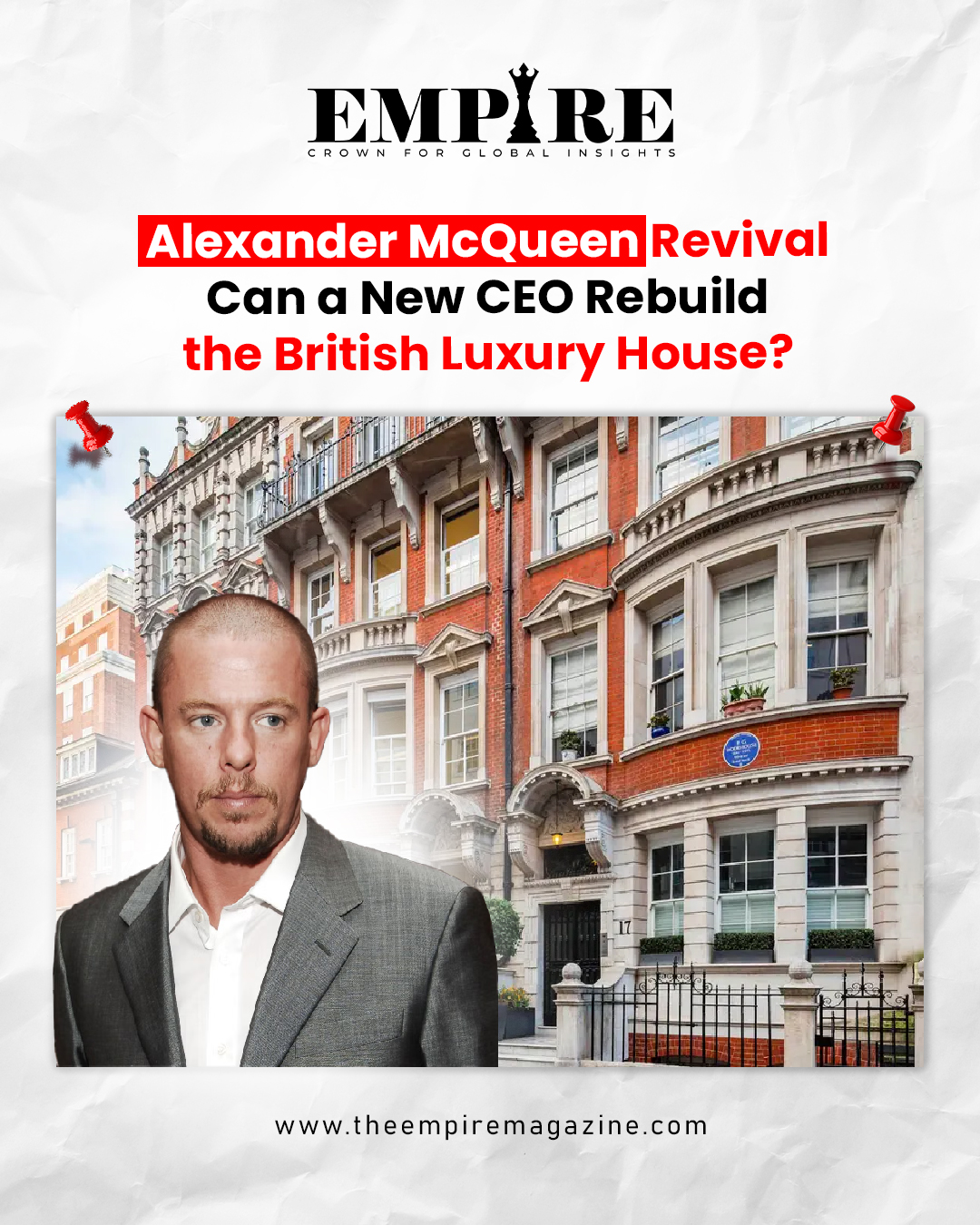
Alexander McQueen Revival has become one of the most closely watched stories in the luxury fashion industry after Kering appointed Gianfranco D’Attis as the new chief executive officer of Alexander McQueen. The British luxury house is known for dramatic tailoring, theatrical runway shows, dark romanticism, sharp craftsmanship, and the powerful creative legacy of founder Lee Alexander McQueen.
The appointment of D’Attis marks a new chapter for the brand. He officially became CEO on June 3, 2026, reporting to Kering CEO Luca de Meo and based in London. His role comes at a sensitive time for Alexander McQueen, which is working to strengthen its business performance, sharpen its brand identity, and support the creative direction of Seán McGirr.
Alexander McQueen remains one of Britain’s most respected fashion names, but respect alone is not enough in the modern luxury market. The brand must compete with larger houses, changing consumer tastes, slower luxury demand, and the pressure to turn cultural heritage into stronger commercial growth.
Alexander McQueen Revival and the Leadership Change
Alexander McQueen Revival begins with leadership. Kering’s decision to bring in Gianfranco D’Attis shows that the group wants sharper management at one of its important fashion houses. D’Attis brings more than 25 years of experience in the luxury industry, including senior roles across brand development, retail, client engagement, and international markets.
Before joining Alexander McQueen, D’Attis was CEO of Prada. His background gives him experience with global luxury consumers, store strategy, brand positioning, and high-end retail operations. These skills are important because Alexander McQueen needs both creative strength and business discipline.
A luxury house can have a powerful image, but it also needs clear merchandising, strong retail execution, customer engagement, disciplined distribution, and a product strategy that turns attention into sales. D’Attis’ challenge is to make McQueen stronger without weakening the rebellious identity that made the brand famous.
Why Alexander McQueen Needs a Stronger Business Strategy
Alexander McQueen is a globally recognized brand, but it operates inside a competitive luxury environment. Kering owns several major fashion houses, including Gucci, Saint Laurent, Bottega Veneta, Balenciaga, and Alexander McQueen. Within that portfolio, McQueen has a distinctive heritage but a smaller scale than the group’s largest brands.
The luxury market has also become more difficult. Consumers are more selective, aspirational spending has slowed in some regions, and brands must work harder to justify high prices. This makes execution more important than ever.
For Alexander McQueen, the opportunity is clear. The brand has a strong archive, a famous founder story, loyal fashion followers, and a reputation for craftsmanship. The challenge is turning that creative capital into consistent growth.
Brand Clarity as a Priority
Brand clarity will be one of the most important tasks for the new CEO. Alexander McQueen has many powerful codes: sharp tailoring, skull motifs, dramatic silhouettes, British rebellion, dark romance, punk energy, and couture-level craft.
However, a brand with many codes still needs a clear message for today’s consumer. What does McQueen stand for now? Who is the customer? Which products should drive growth? How should the brand balance archive heritage with new creative energy?
These questions matter because luxury shoppers are surrounded by choices. A strong brand must be instantly recognizable in stores, campaigns, products, runway images, and digital platforms. If D’Attis can help sharpen McQueen’s message, the brand may become more commercially focused without losing its soul.
Seán McGirr and the Creative Reset
Alexander McQueen’s creative reset began before D’Attis arrived. In 2023, Kering appointed Irish designer Seán McGirr as creative director after Sarah Burton left the house. Burton had led McQueen for 13 years after the death of Lee Alexander McQueen and had spent more than two decades at the brand.
McGirr’s appointment marked a major transition. He inherited a house with a deep emotional legacy and a highly respected design language. His task has been to bring a new voice while respecting the brand’s heritage.
The early response to McGirr’s work has been closely watched by critics, buyers, and customers. Creative transitions are difficult in luxury fashion because loyal audiences often compare new designers with past eras. For McQueen, this is especially sensitive because the founder’s legacy remains emotionally powerful.
Why Creative and Business Leadership Must Align
A luxury revival depends on alignment between creative and business leadership. The creative director builds the vision, while the CEO builds the structure that allows the vision to succeed commercially.
If McGirr is defining the new McQueen aesthetic, D’Attis must help turn that aesthetic into a stronger business. That means choosing the right product categories, improving retail experience, strengthening client relationships, and ensuring that runway energy translates into desirable products.
This partnership will be central to the brand’s future. A strong collection may create attention, but a strong business strategy turns attention into growth.
The Legacy of Lee Alexander McQueen
Any Alexander McQueen Revival must respect the legacy of Lee Alexander McQueen. The founder built one of the most emotionally intense and visually powerful brands in fashion history. His work combined tailoring, shock, beauty, darkness, vulnerability, history, nature, and performance.
McQueen was not only a designer. He was a storyteller. His runway shows became theatrical events that challenged the limits of fashion presentation. He created clothing that could be both brutal and beautiful, romantic and dangerous, precise and emotional.
That legacy is the brand’s greatest asset, but it is also a challenge. A modern McQueen cannot simply repeat the past. It must translate the spirit of rebellion, craft, and emotional intensity into products that make sense for today’s customers.
Product Strategy and Commercial Growth
For luxury houses, product strategy is central to revival. Runway shows create image, but products create revenue. Alexander McQueen has strength in tailoring, leather goods, footwear, accessories, and ready-to-wear. The brand’s sneakers, bags, skull motifs, and structured tailoring have helped it reach global consumers.
The next stage may require clearer hero products. Luxury brands often grow when they have recognizable categories that customers return to: bags, shoes, jackets, fragrances, jewellery, or signature silhouettes. McQueen’s challenge is to develop products that feel iconic but not overexposed.
Accessories are especially important because they often drive profitability in luxury. Handbags, shoes, belts, and small leather goods can bring more customers into the brand world. If D’Attis can strengthen these categories while keeping creative integrity, McQueen may improve its commercial position.
Retail Experience and Client Engagement
D’Attis’ retail experience will matter because luxury growth depends heavily on stores and client relationships. A strong boutique is not only a place to buy products. It is a place where customers experience the brand’s world.
Alexander McQueen stores must communicate the house’s identity clearly. They need strong visual merchandising, knowledgeable staff, personalized service, and a product selection that makes the brand feel desirable.
Client engagement is also important. Luxury brands increasingly rely on high-value customers who expect personal service, early access, private appointments, and emotional connection. McQueen has the heritage to build deep loyalty, but it must activate that loyalty through strong retail execution.
Digital Storytelling and Younger Luxury Consumers
Alexander McQueen has a major opportunity with younger luxury consumers. Gen Z and millennial shoppers are drawn to brands with strong identity, emotional storytelling, and visual power. McQueen has all of these elements.
The brand’s challenge is to make its heritage relevant in digital culture. Runway moments, campaign imagery, archive references, craftsmanship videos, celebrity dressing, and product storytelling can all help bring McQueen’s world to new audiences.
Digital platforms are especially important because many young consumers discover luxury through social media before entering a store. A strong digital identity can turn curiosity into aspiration.
Balancing Rebellion and Wearability
McQueen’s heritage is rebellious, but luxury customers also need wearable products. The brand must balance drama with everyday desirability. A powerful runway look may build image, while a beautifully cut jacket, bag, dress, or shoe drives sales.
This balance is difficult but essential. If the brand becomes too commercial, it may lose its edge. If it becomes too conceptual, it may struggle commercially. The new CEO and creative director must find the space where McQueen feels bold, modern, and sellable.
Kering’s Wider Turnaround Context
Alexander McQueen’s leadership change comes as Kering is working through a wider turnaround. The group has faced pressure from softer luxury demand and challenges at some of its major houses. Luca de Meo’s arrival as Kering CEO adds another layer of change across the group.
In this context, every brand matters. McQueen may be smaller than Gucci or Saint Laurent, but it carries cultural weight and British fashion prestige. A stronger McQueen would help Kering diversify growth and reinforce its fashion portfolio.
D’Attis’ appointment suggests that Kering wants more focus, stronger execution, and improved performance at the house. The goal is not only creative recognition but also financial discipline.
Can a New CEO Revive Alexander McQueen?
Alexander McQueen Revival will depend on several factors. Gianfranco D’Attis must strengthen brand clarity, improve retail execution, support Seán McGirr’s creative direction, and build stronger commercial momentum. At the same time, he must protect the brand’s emotional heritage.
The opportunity is real. Alexander McQueen has one of the strongest identities in British luxury. It has an archive full of powerful codes, a loyal audience, and a name that still carries global respect. But the luxury market rewards brands that combine heritage with clear modern strategy.
The new CEO’s success will depend on whether McQueen can become sharper, more desirable, and more commercially consistent while staying true to the spirit that made the house legendary.
Readers can also explore more space and AI infrastructure insights through this related article: Google Project Suncatcher: Can Data Centers Work in Orbit?.
For more updates from The Empire Magazine, follow us on Facebook and Instagram.
– The Empire Magazine
Crown For Global Insights