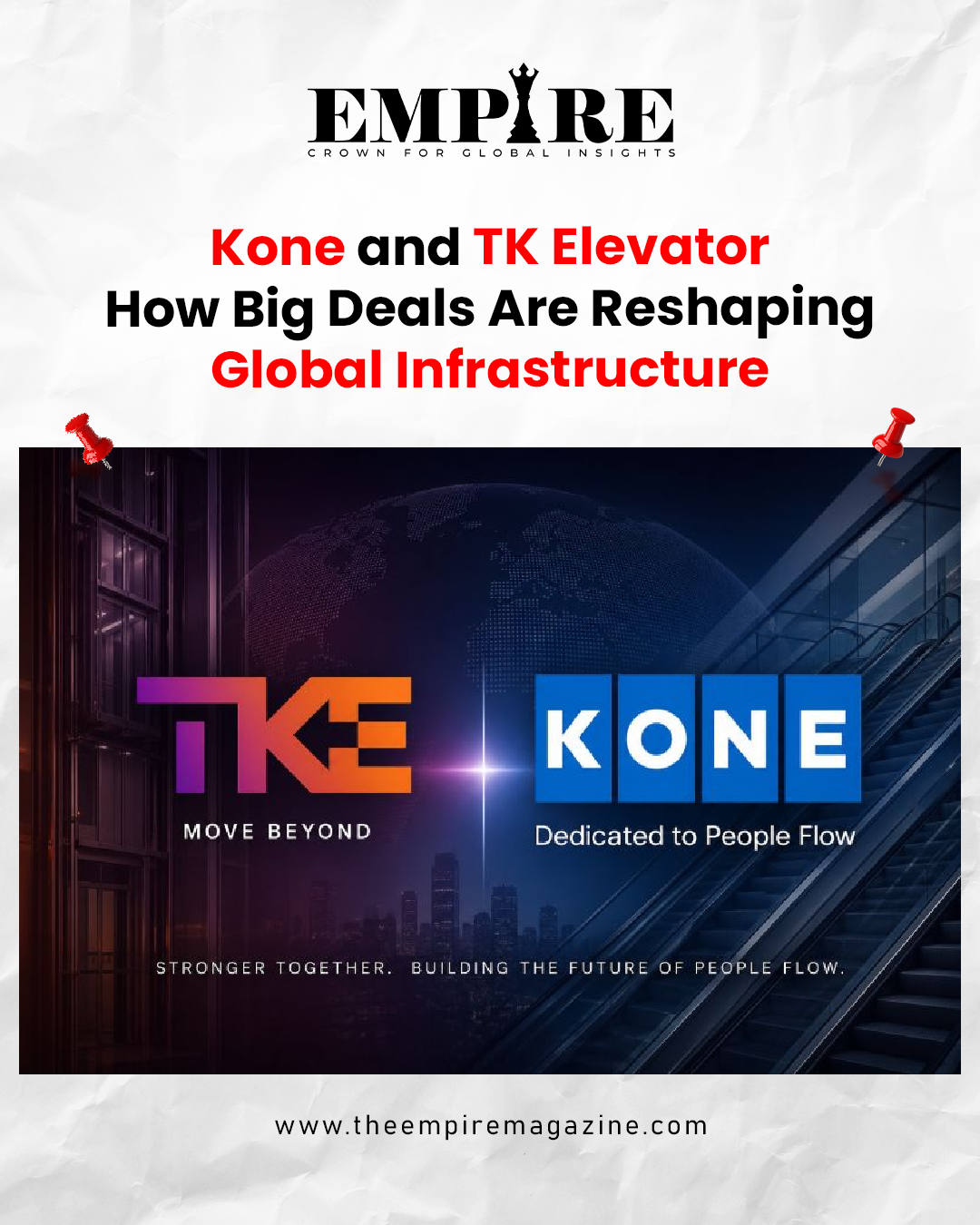
Kone and TK Elevator are now at the center of one of the biggest industrial deals in Europe’s infrastructure and mobility sector. Finnish elevator and escalator company Kone has agreed to acquire German rival TK Elevator in a major transaction valued at about €29.4 billion. If completed, the deal would create one of the world’s largest elevator and escalator companies and significantly reshape global vertical transportation.
The elevator industry may not always attract the same public attention as artificial intelligence, electric vehicles, or space technology, but it is a critical part of modern infrastructure. Elevators, escalators, moving walkways, and building mobility systems are essential for cities, airports, hospitals, offices, metro stations, hotels, malls, residential towers, and industrial sites.
As cities grow taller and existing buildings age, demand for maintenance, modernization, safety upgrades, and smart mobility systems is increasing. This is why the Kone and TK Elevator deal matters beyond the companies themselves. It reflects a broader shift in global infrastructure where scale, service networks, technology, and long-term maintenance contracts are becoming major sources of value.
Kone and TK Elevator Deal and the Future of Vertical Transportation
Kone and TK Elevator are both major names in vertical transportation. Kone, headquartered in Finland, is known globally for elevators, escalators, automatic doors, maintenance, modernization, and smart people-flow solutions. TK Elevator, based in Germany, was formerly part of Thyssenkrupp before it was sold to a consortium led by Advent International and Cinven in 2020.
The planned combination would bring together two companies with strong service platforms, broad geographic reach, and deep experience in urban mobility. Kone is especially strong in several European and Asian markets, while TK Elevator has a meaningful presence in the Americas. This geographic fit is one of the reasons the deal is strategically important.
For customers, the combined company could offer broader service coverage, stronger technology investment, and a larger modernization platform. For competitors, the deal would create a much larger rival in an industry already dominated by a small group of global players, including Otis and Schindler.
Why the Elevator Industry Matters to Global Infrastructure
The elevator and escalator industry is deeply connected to urban growth. Modern cities depend on vertical transportation because people live and work in taller buildings than ever before. Without elevators, high-rise residential towers, office buildings, hotels, hospitals, and transport hubs would not function efficiently.
Infrastructure is not only about roads, bridges, and airports. It is also about how people move inside buildings and public spaces. Elevators and escalators affect daily life in ways many people do not notice until something stops working.
This makes maintenance extremely important. A building owner may buy an elevator once, but it needs service for decades. That long-term service relationship is one of the biggest business strengths in the elevator industry.
Maintenance as a High-Value Business
Maintenance is a major reason large elevator companies are valuable. New equipment sales can rise or fall depending on construction cycles, but maintenance continues because installed elevators and escalators must remain safe and reliable.
Kone has reported a maintenance base of more than 1.8 million units. This shows how important recurring service revenue is to the company’s business model. TK Elevator also has a large installed base across major markets.
When two major elevator companies combine, the service base becomes a major strategic asset. A larger service network can support more customers, improve parts availability, increase technician coverage, and create stronger long-term revenue.
Why Kone Wants TK Elevator
Kone’s interest in TK Elevator is partly about scale. The elevator industry is competitive, and the largest companies benefit from wide service networks, global procurement, research and development, and strong customer relationships.
The acquisition would also help Kone strengthen its presence in the Americas. TK Elevator has an important footprint in the U.S. and other American markets, where Kone has wanted more growth. This matters because infrastructure investment, modernization demand, and building upgrades remain important in North America.
The deal also comes at a time when demand in China’s new-building market has been weaker. For elevator companies, China was once one of the biggest growth engines because of rapid urban construction. As that market slows, companies are looking for growth in services, modernization, and other regions.
Modernization Is Becoming a Major Growth Driver
Modernization is one of the most important trends in the elevator industry. Many buildings around the world have aging elevators and escalators that need upgrades. Modernization can improve safety, energy efficiency, accessibility, speed, reliability, and digital monitoring.
Kone has highlighted that millions of elevators and escalators globally are ready for modernization. This creates a long-term opportunity because building owners often prefer upgrading existing systems instead of replacing entire buildings.
A combined Kone and TK Elevator would have a stronger modernization platform. It could serve more customers, offer more technical solutions, and compete for large building-upgrade projects across regions.
Smart Buildings and Digital Services
Elevators are becoming smarter. Modern systems can use sensors, cloud platforms, predictive maintenance, destination control, energy management, and digital monitoring. These tools help building owners reduce downtime and improve user experience.
Predictive maintenance is especially valuable. Instead of waiting for an elevator to fail, service teams can use data to identify problems earlier. This reduces disruption and improves safety.
The Kone and TK Elevator deal could support more investment in these digital capabilities. Larger companies often have more resources for research, software, and connected service platforms.
Why Big Industrial Deals Are Increasing
The Kone and TK Elevator transaction is part of a wider trend of big industrial deals. Companies are using mergers and acquisitions to increase scale, expand into stronger regions, and improve profitability.
In infrastructure-related industries, scale matters because customers often want reliable global partners. Airports, hospitals, transport authorities, real estate groups, and large developers need suppliers that can install, maintain, and modernize equipment across many locations.
Large deals can also help companies manage supply chains better. Elevator systems require components, electronics, steel, motors, doors, control systems, and service parts. A larger company may have stronger purchasing power and more efficient production planning.
Antitrust Questions Around the Deal
The Kone and TK Elevator deal is large enough to attract regulatory attention. The elevator industry is concentrated, and regulators will review whether the transaction reduces competition in certain markets.
Antitrust authorities may examine local market shares, service contracts, modernization competition, new equipment sales, and customer choices. Because elevators are essential infrastructure, governments want to ensure that customers still have enough competitive options.
Kone has acknowledged that regulatory approval may take time and that divestitures could be required. This means the deal may not close quickly. Even after shareholder approval, the transaction must still pass through regulatory processes.
Why Regulators Will Watch Closely
Regulators will watch closely because elevator markets can vary by country and city. In some places, Kone and TK Elevator may overlap strongly. In others, their businesses may be more complementary.
Competition matters because building owners depend on fair pricing and reliable service. If too few companies control the market, customers may worry about higher costs or reduced choice.
This is why large industrial mergers often require conditions. Regulators may ask companies to sell certain assets, service portfolios, or local operations to preserve competition.
Impact on Competitors
If completed, the deal would change the competitive landscape for companies such as Otis, Schindler, Mitsubishi Electric, Hitachi, Fujitec, Hyundai Elevator, and other regional players.
Otis is currently one of the best-known global elevator companies. Schindler is also a major competitor and has already expressed concern about the potential impact of a Kone and TK Elevator combination. A larger Kone could create more pressure in global tenders, service contracts, modernization projects, and urban mobility solutions.
Competitors may respond by investing more in technology, improving service quality, pursuing acquisitions, or focusing on regional strengths. This could create a new phase of competition in the global elevator industry.
What the Deal Means for Cities
For cities, the deal matters because urban infrastructure depends on reliable vertical mobility. As urban populations grow, buildings become denser and taller. Transport hubs, metro systems, airports, hospitals, and commercial districts all require safe movement of people.
Elevators and escalators are also important for accessibility. Elderly people, people with disabilities, families, workers, and travelers all depend on them. Better technology and maintenance can improve quality of life in cities.
A larger company with stronger service capabilities could support smarter and more reliable urban mobility. However, customers and regulators will also want to ensure that competition remains healthy.
Sustainability and Energy Efficiency
Sustainability is another important part of the elevator industry. Buildings consume large amounts of energy, and mobility systems inside buildings must become more efficient. Modern elevators can use regenerative drives, better controls, standby modes, and smarter traffic management.
Modernization can reduce energy use and improve building performance. This matters for real estate owners trying to meet sustainability targets and reduce operating costs.
Kone and TK Elevator both operate in a market where customers increasingly ask for energy-efficient and digitally connected solutions. The combined company could invest more in sustainable product development if the deal is completed.
The Role of Private Equity in TK Elevator
TK Elevator became a private equity-owned company after Thyssenkrupp sold its elevator business in 2020. Advent International and Cinven were key investors in that transaction. The planned sale to Kone represents another major moment in private equity’s role in industrial assets.
Elevator companies are attractive because they have large maintenance bases, recurring service revenue, and long-term customer relationships. These features make the sector appealing to financial investors.
For TK Elevator’s owners, the Kone deal offers a path to exit through a major industrial combination. For Kone, it offers a chance to acquire scale and strengthen its global position.
Why the Deal Matters for Global Infrastructure Investors
Infrastructure investors watch deals like Kone and TK Elevator because they reveal where long-term value is moving. The future of infrastructure is not only new construction. It is also maintenance, modernization, digital services, and lifecycle management.
Elevators and escalators are long-life assets. Once installed, they require decades of service. This creates recurring revenue and makes the industry less dependent only on new building cycles.
Investors also see growth from urbanization, aging infrastructure, smart buildings, and safety regulations. A large elevator company can benefit from all these trends.
What Comes Next for Kone and TK Elevator
The next stage for Kone and TK Elevator will involve regulatory filings, integration planning, and market review. The deal has shareholder support, but it still needs approval from competition authorities.
If completed, integration will be a major task. The companies will need to combine systems, cultures, service networks, product portfolios, supply chains, and regional operations. Large industrial integrations are complex and can take years to fully deliver value.
The deal’s success will depend on whether Kone can preserve customer trust, keep service quality high, manage regulatory requirements, and deliver promised synergies.
How Big Deals Are Reshaping Infrastructure
Kone and TK Elevator show how big industrial deals are reshaping global infrastructure. The elevator industry is becoming more focused on scale, service, modernization, and digital technology. Companies that can combine large installed bases with smart maintenance and global reach may have an advantage.
For business leaders, the deal is a reminder that infrastructure is changing quietly but powerfully. The systems that move people through buildings are becoming more connected, more valuable, and more strategic.
As urbanization continues and buildings become smarter, vertical transportation will remain essential. The Kone and TK Elevator deal shows that even traditional industrial sectors are being transformed by consolidation, technology, and the demand for stronger global infrastructure.
Readers can also explore more global banking and business insights through this related article: Japan’s Banking Strategy: How Nomura Is Competing in the U.S. and Europe.
For more updates from The Empire Magazine, follow us on Facebook and Instagram.
– The Empire Magazine
Crown For Global Insights