Grab Became a Southeast Asian Super App Through Local Execution
Grab is one of Southeast Asia’s most recognized technology companies and a major example of how a regional startup can grow into a super app. The company started as a ride-hailing platform and expanded into deliveries, mobility, digital financial services, enterprise solutions, and other everyday services. Today, Grab operates as a leading super app across Southeast Asia, serving millions of users through one mobile platform.
Grab’s growth story began in 2012, when Anthony Tan and Tan Hooi Ling launched MyTeksi in Malaysia. The original idea was built around improving taxi safety and convenience in the region. The company later became GrabTaxi and then Grab, expanding from ride-hailing into a wider digital ecosystem.
Although Grab is headquartered in Singapore, its business story is deeply connected to the needs of Southeast Asian markets. The company grew by solving local transportation, payment, delivery, and access problems in countries with different languages, regulations, infrastructure levels, and consumer habits.
The Beginning: From MyTeksi to Grab
Grab started with a practical transportation problem. In many Southeast Asian cities, taxi booking, passenger safety, fare transparency, and driver reliability were major concerns. MyTeksi was created to make taxi rides safer and easier through mobile technology.
The app allowed users to book taxis and helped drivers receive customers more efficiently. This early focus on safety and reliability helped the company build trust in markets where digital ride-hailing was still new.
Founders and Early Vision
Anthony Tan and Tan Hooi Ling met at Harvard Business School and developed the idea that became MyTeksi. The company’s early mission was not only to create a transport app but to solve a regional mobility problem. This local-first approach became one of Grab’s strongest advantages.
The founders understood that Southeast Asia could not be treated as one simple market. Each country had different traffic systems, payment habits, consumer behavior, and regulatory requirements. Grab’s expansion strategy focused on adapting to local needs instead of copying one model across all countries.
Expansion Across Southeast Asia
Grab expanded beyond Malaysia into markets such as Singapore, Thailand, the Philippines, Vietnam, Indonesia, Cambodia, and Myanmar. According to Grab’s annual reporting, the company serves more than 800 cities in eight Southeast Asian countries through services that include food delivery, grocery delivery, package delivery, ride-hailing, taxi booking, online payments, lending, and insurance.
This regional expansion helped Grab become more than a transport company. It became a digital platform for daily life.
Mobility as the First Growth Engine
Mobility was Grab’s first major business pillar. Ride-hailing helped the company build user trust, driver networks, payment systems, location data, and operational knowledge. These assets later supported the company’s move into deliveries and financial services.
In Southeast Asia, mobility is a large opportunity because many cities face traffic congestion, limited public transport coverage, and high demand for flexible transportation. Grab’s mobility services gave users a convenient way to book rides while giving drivers access to income opportunities.
From Ride-Hailing to Super App
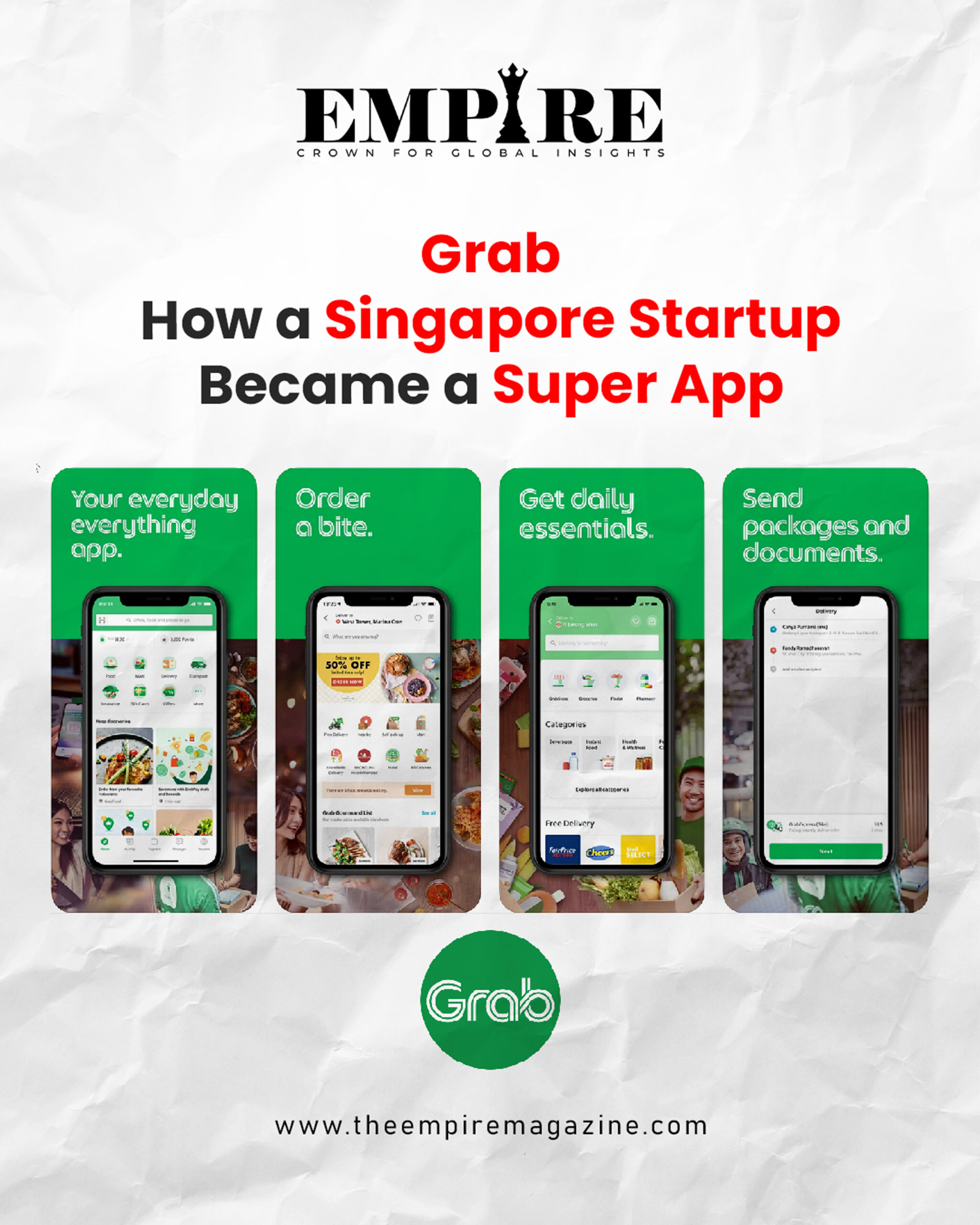
Grab’s super app model developed as the company added more services around daily consumer needs. Food delivery, grocery delivery, parcel delivery, payments, and financial services turned Grab from a single-purpose app into a multi-service platform.
Grab’s official super app page states that the company expanded across deliveries, mobility, financial services, enterprise, and other services through one app. This model connects consumers with drivers, merchants, delivery partners, and financial products in one ecosystem.
Why the Super App Model Worked
The super app model worked because many users in Southeast Asia prefer convenience, mobile-first services, and integrated digital tools. Instead of using separate apps for rides, food, payments, and deliveries, users can access multiple services from one platform.
For Grab, this created stronger user engagement. A customer who first used Grab for rides could later use it for food delivery, payments, groceries, or financial services. This increased the value of the platform and made the ecosystem more connected.
Deliveries Became a Major Business Segment
Food and grocery delivery became important parts of Grab’s business. GrabFood and GrabMart helped the company expand into everyday consumer spending. These services also supported restaurants, merchants, supermarkets, and small businesses by connecting them with digital customers.
During the growth of the digital economy, delivery platforms became important for urban consumers and local merchants. Grab’s delivery network used its driver-partner base, routing systems, and app infrastructure to serve this demand.
Support for Merchants and Driver-Partners
Grab’s ecosystem includes consumers, merchants, and driver-partners. Restaurants and stores can reach digital customers through the platform. Drivers and delivery partners can access earning opportunities through mobility and delivery services.
This multi-sided marketplace structure is central to Grab’s business. The platform becomes more valuable when more users, merchants, and partners participate.
Digital Financial Services and Payments
Grab expanded into financial services through payments, lending, insurance, and other digital finance products. This move was important because many Southeast Asian consumers and small businesses have historically faced gaps in access to formal financial services.
Grab’s financial services use transaction data, platform activity, and digital access to support payments and financial products. This connects with the broader fintech trend in Southeast Asia, where mobile-first platforms are helping more consumers and businesses participate in the digital economy.
GrabPay and Financial Access
GrabPay became part of the company’s strategy to support cashless payments. Payments are important for a super app because they create smoother transactions across rides, deliveries, and merchant services.
Financial services also help Grab deepen its platform relationship with users and small businesses. Lending and insurance can support merchants, drivers, and consumers who are already active in the ecosystem.
Public Listing and Business Scale
Grab became publicly traded on Nasdaq in 2021 through a SPAC merger. The listing marked one of the biggest moments for Southeast Asian technology in global public markets. Grab’s public company status also brought more focus on profitability, growth quality, and long-term financial performance.
In February 2026, Grab reported its first full year of net profit for 2025 and said it crossed 50 million monthly transacting users. The company said it would continue focusing on affordability, reliability, ecosystem engagement, and product-led innovation.
Profitability and Platform Growth
Profitability became an important milestone because many super app companies face high operating costs, competition, subsidies, and regulatory challenges. Grab’s movement toward profitability shows how the company has worked to balance growth with financial discipline.
Its 2024 investor update also highlighted strong on-demand gross merchandise value growth and increased user engagement across the platform.
Competition and Local Market Challenges
Grab operates in competitive markets. It has faced rivals in ride-hailing, food delivery, fintech, and local services. Competition has included regional players, local companies, and global platforms.
The company also operates across markets with different regulations and consumer needs. Ride-hailing rules, driver classifications, food delivery economics, payment regulations, and financial services licensing can vary by country.
Local Adaptation as a Business Advantage
Grab’s success has depended on local adaptation. Southeast Asia is not a single uniform market. Indonesia, Singapore, Malaysia, Thailand, Vietnam, the Philippines, Cambodia, and Myanmar each have different economic conditions, transport habits, payment preferences, and regulatory environments.
Grab’s ability to localize services helped it compete against companies that tried to apply global models without enough regional adjustment.
Why Grab Matters in Startup Business
Grab matters because it shows how a startup can grow by solving everyday problems at regional scale. The company did not remain limited to one category. It used mobility as a foundation and expanded into services that matched user behavior and market needs.
The company’s development also shows how Southeast Asia became an important technology region. Grab’s growth attracted global investors and helped prove that Southeast Asian startups could build large digital platforms with international recognition.
For more startup and business insights, read this feature on The Empire Magazine.
The Future of Grab’s Super App Strategy
Grab’s future growth is connected to affordability, reliability, product innovation, financial services, and deeper ecosystem engagement. The company’s super app model depends on keeping users active across multiple services while improving profitability and service quality.
As Southeast Asia’s digital economy continues to grow, Grab remains positioned around mobility, deliveries, payments, and financial access. Its journey from MyTeksi to a regional super app shows how local problem-solving, platform expansion, and disciplined execution helped a Singapore-headquartered startup become one of Southeast Asia’s most important technology companies.
Follow The Empire Magazine on Instagram and Facebook.
– The Empire Magazine
Crown For Global Insights