
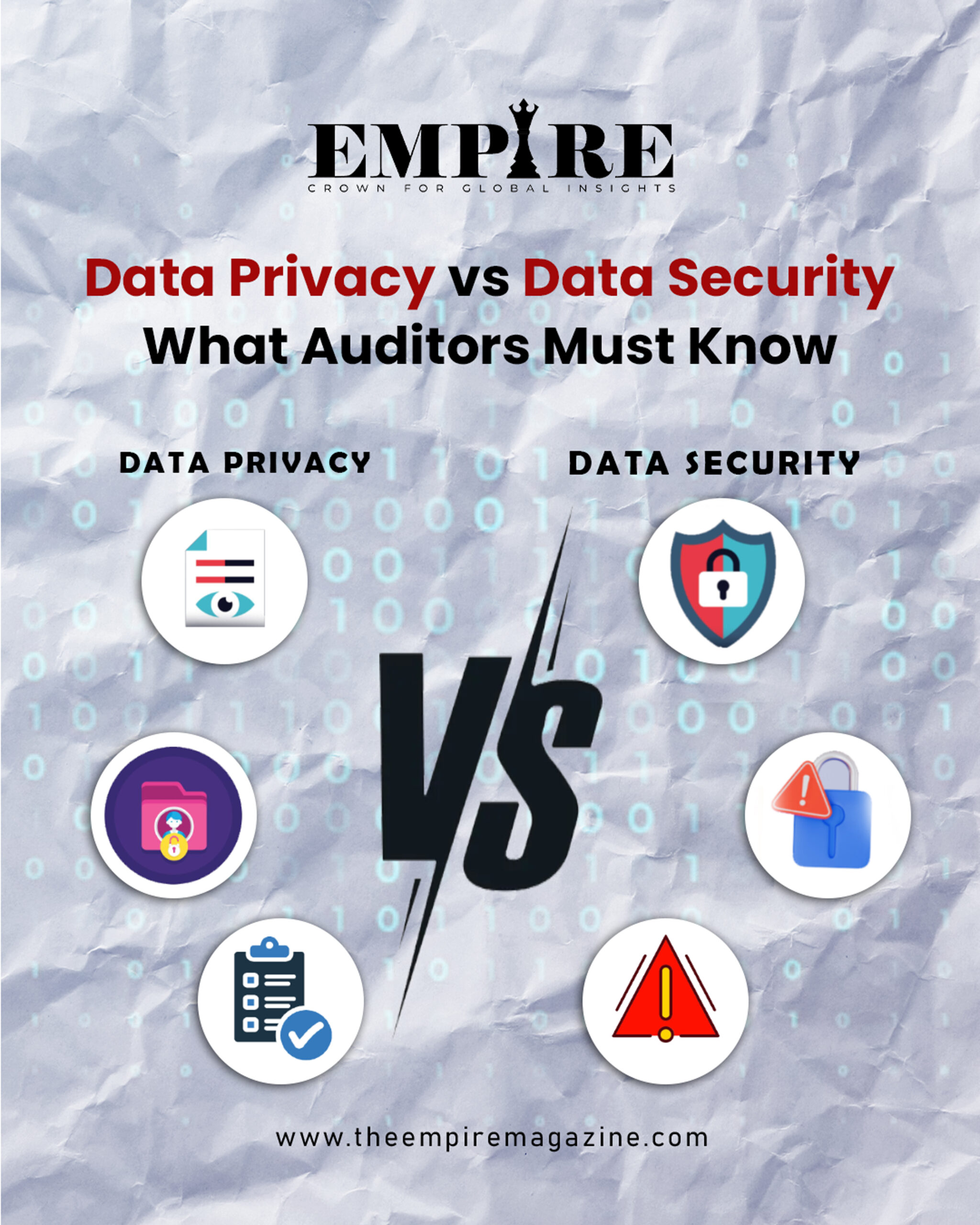
The topic of Data Privacy vs Data Security has become one of the most critical concerns for organizations worldwide. Imagine a highly secure vault protected by advanced locks, surveillance, and biometric systems. Now imagine sensitive customer data being openly discussed in public. That is the difference between security and privacy—and many organizations still fail to understand it.
In today’s digital world, data is one of the most valuable assets a company holds. However, protecting it requires more than just technical defenses. Internal auditors must clearly distinguish between privacy and security, understand how they overlap, and ensure both are effectively managed.
Strategic Importance of Data Privacy vs Data Security
The importance of Data Privacy vs Data Security has grown significantly due to rapid digital transformation, cloud adoption, and artificial intelligence integration. Organizations today generate and manage massive amounts of data, making it increasingly difficult to track and secure.
A failure in data security can lead to:
- Cyberattacks and ransomware
- Data breaches and theft
- Operational disruptions
On the other hand, failure in data privacy results in:
- Regulatory penalties
- Legal consequences
- Loss of customer trust
For leadership teams, this is no longer just an IT issue—it is a governance and risk management priority. Businesses must treat both privacy and security as essential pillars of organizational health.
Understanding the Difference Between Data Privacy vs Data Security
To effectively audit these domains, it is essential to understand their definitions.
What is Data Privacy?
Data Privacy vs Data Security begins with privacy, which focuses on how data is collected, used, stored, and shared. It ensures that personal and sensitive information is handled ethically and with user consent.
Privacy involves questions like:
- Is data collected only when necessary?
- Are users informed about how their data is used?
- Is outdated data deleted properly?
It also includes monitoring third-party vendors and ensuring they comply with privacy agreements.
What is Data Security?
Data security refers to the technical and administrative measures used to protect data from unauthorized access, theft, or loss.
This includes:
- Encryption systems
- Firewalls and network security
- Access control and authentication
- Threat detection and response systems
While privacy sets the rules, security enforces them.
Intersection of Data Privacy vs Data Security
The relationship between Data Privacy vs Data Security is deeply interconnected. You cannot achieve privacy without security, and strong security alone does not guarantee privacy.
For example:
- A company may have strong firewalls but still misuse customer data
- Or it may follow privacy policies but lack protection against cyberattacks
Internal auditors must evaluate how both systems work together to ensure complete protection.
Audit Considerations for Data Privacy vs Data Security
Internal audit teams play a critical role in assessing risks related to Data Privacy vs Data Security.
Risk Assessment
Auditors must evaluate:
- What types of sensitive data are stored
- Where the data is located
- Who has access to it
Special attention is required during mergers or organizational changes, where different data systems and policies may conflict.
Testing Privacy Controls
Key privacy checks include:
- Data retention policies
- Consent management systems
- Third-party data sharing agreements
Auditors must ensure that organizations do not store unnecessary data and comply with user rights.
Testing Security Controls
Security audits involve:
- Access management reviews
- Encryption effectiveness
- Incident response testing
Organizations must also ensure timely updates and patch management to prevent vulnerabilities.
Regulatory Landscape and Compliance
The regulatory environment surrounding Data Privacy vs Data Security is constantly evolving. Governments worldwide are introducing stricter data protection laws.
Recent legislative efforts aim to:
- Standardize data privacy rules
- Limit excessive data collection
- Give users more control over their data
Organizations must stay adaptable to comply with changing regulations while maintaining strong governance practices.
Four Types of Data Privacy
Understanding the different categories of data helps auditors identify risks more effectively.
- Personal Information Privacy
Protects identity-related data such as names and identification numbers - Financial Privacy
Covers banking details, credit card information, and transactions - Medical Privacy
Secures health records and patient data - Communication Privacy
Ensures confidentiality of emails, messages, and digital communication
Breaking data into these categories allows better risk management and compliance.
Role of Internal Audit in Data Privacy vs Data Security
Internal auditors must adopt an integrated approach when evaluating Data Privacy vs Data Security.
Integrated Audit Approach
Audits should not be conducted in isolation. Collaboration between IT, compliance, and operational teams is essential to identify gaps.
Leveraging Technology
Modern auditing requires advanced tools such as:
- Data analytics
- Artificial intelligence
- Continuous monitoring systems
These technologies allow auditors to detect risks in real time rather than relying on outdated methods.
Future of Data Governance and Security
The future of Data Privacy vs Data Security lies in a more integrated and proactive approach. Organizations must move beyond compliance and focus on building trust.
Key future trends include:
- Increased use of AI in auditing
- Stronger data governance frameworks
- Continuous monitoring of risks
By combining privacy and security effectively, organizations can turn compliance into a competitive advantage.
Internal & Social Links
👉 Read more: https://theempiremagazine.com/?p=6165
👉 Follow us:
Instagram: https://www.instagram.com/the_empire_magazine/
Facebook: https://www.facebook.com/profile.php?id=61573749076160
– The Empire Magazine
Crown For Global Insights