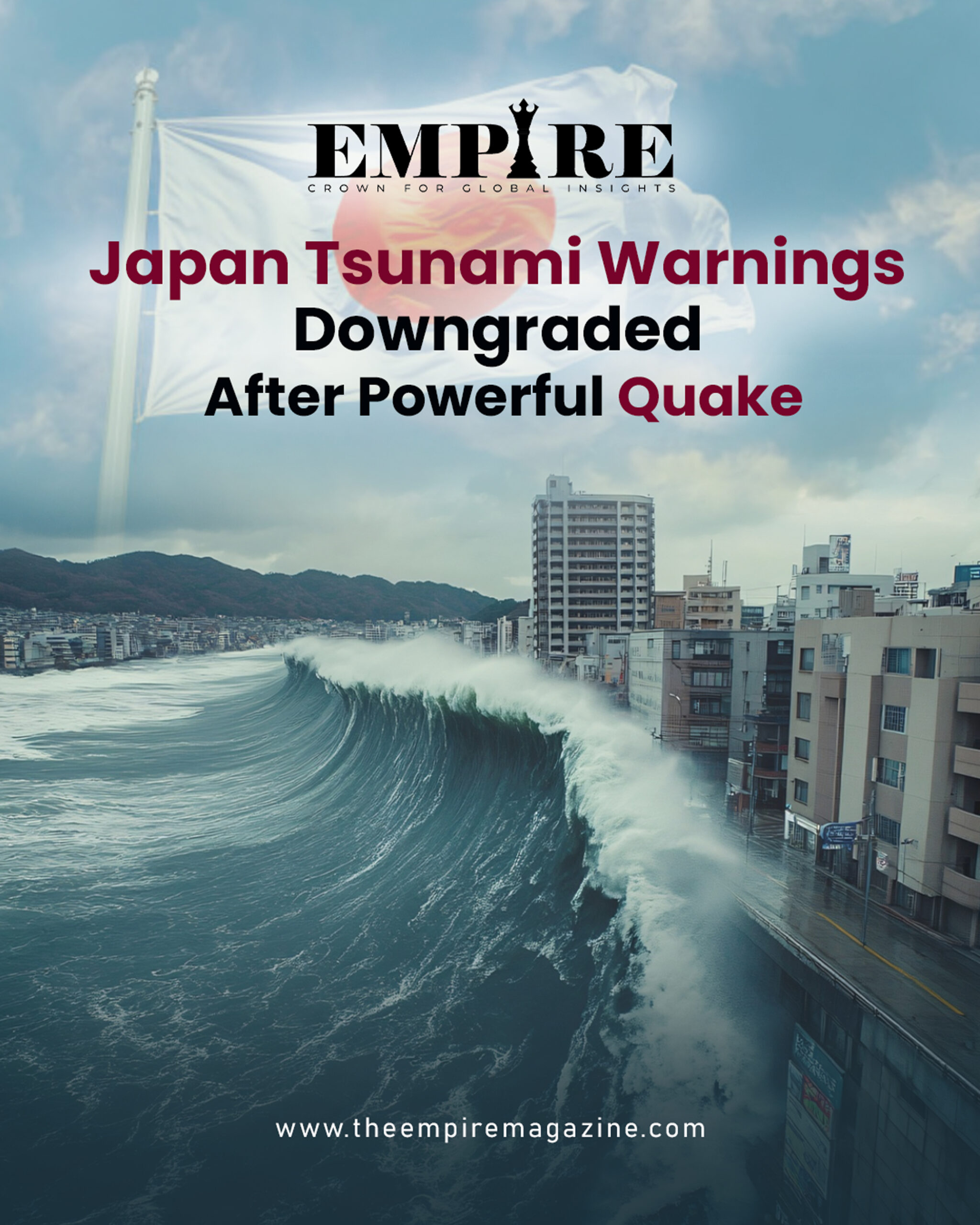
Japan Tsunami Warnings downgraded after powerful quake as authorities urge caution, highlighting disaster preparedness and global lessons in resilience.
Japan Tsunami Warnings downgraded after powerful quake, but the situation remains a strong reminder of how quickly natural disasters can disrupt lives and test national preparedness. A powerful earthquake measuring approximately 7.7 in magnitude struck off Japan’s northeastern coast, triggering widespread alerts, evacuations, and immediate emergency responses across multiple regions.
While the tsunami warnings have now been reduced to advisories, the event highlights not only Japan’s resilience but also the importance of preparedness, infrastructure, and public awareness in minimizing disaster impact.
The Earthquake That Triggered Nationwide Alerts
The earthquake struck with significant force beneath the ocean floor, sending shockwaves through coastal regions. Residents reported feeling a deep rumbling followed by noticeable shaking, with buildings swaying and objects rattling.
What made this event particularly striking was the speed of the emergency alert system. Many individuals received warnings seconds before the quake hit, allowing them to take immediate action. People quickly moved away from coastal areas, demonstrating the effectiveness of Japan’s early warning systems.
This rapid response is not accidental—it is the result of years of investment in disaster management technology and public education.
Immediate Response and Evacuations
Following the earthquake, authorities issued tsunami warnings for several coastal areas. These warnings prompted large-scale evacuations, with thousands of residents instructed to move to higher ground.
Emergency protocols were activated almost instantly:
- Coastal regions were cleared
- Public transportation systems were partially halted
- Emergency services were deployed
- Communication channels were used to guide residents
Approximately 156,000 people were affected by evacuation orders, showing the scale of precaution taken to ensure safety.
Even after the warnings were downgraded, officials advised people to stay away from the coast, emphasizing that the threat had not completely disappeared.
Understanding Tsunami Alerts and Their Importance
Japan uses a structured system for tsunami alerts, designed to communicate risk levels clearly:
- Advisory: Minor waves expected, but still dangerous
- Warning: Larger waves that can cause damage
- Major Warning: Severe waves capable of widespread destruction
In this case, the situation was initially serious enough to trigger higher-level warnings before being downgraded as more data became available.
This tiered system ensures that people understand the level of risk and respond accordingly.
Infrastructure Resilience and System Performance
One of the most reassuring aspects of this event was the performance of critical infrastructure. Despite the earthquake’s intensity, there were no major reports of damage to nuclear facilities, which have historically been a major concern in Japan.
However, there were some disruptions:
- Bullet train services were temporarily suspended
- Power outages affected a limited number of households
- Traffic congestion increased due to evacuations
These disruptions, while significant, were managed effectively, demonstrating the strength of Japan’s infrastructure systems.
Public Behavior: Calm Yet Alert
Eyewitness accounts reveal an important aspect of disaster response: public behavior. While there was a sense of urgency, there was no widespread panic.
People followed instructions, moved to safer areas, and stayed informed through official channels. This calm and coordinated response is a direct result of continuous public education and awareness campaigns.
In a country where earthquakes are relatively common, preparedness is part of everyday life.
Lessons from the Past Shape the Present
Japan’s response to this earthquake cannot be understood without considering its history. The devastating earthquake and tsunami of 2011, which caused massive loss of life and infrastructure damage, fundamentally changed how the country approaches disaster management.
Since then, several improvements have been made:
- Advanced early warning systems
- Stronger building codes
- Better evacuation planning
- Increased public awareness
These measures have significantly reduced the potential impact of similar events.
The Ongoing Risk of Aftershocks
Authorities have warned that aftershocks of similar magnitude could occur in the coming days. This is a standard precaution following major earthquakes, as seismic activity often continues for some time.
Residents have been advised to:
- Stay alert for further tremors
- Avoid unstable structures
- Monitor official updates
- Be prepared for additional evacuations
This ongoing vigilance is essential in minimizing risks after the initial event.
Global Implications of Natural Disasters
While this earthquake occurred in Japan, its implications are global. Natural disasters do not respect borders, and their economic and environmental effects can ripple across the world.
For example:
- Supply chains may be disrupted
- Financial markets may react to uncertainty
- International travel may be affected
Countries around the world can learn from Japan’s approach to disaster management and apply similar strategies to improve their own resilience.
The Role of Technology in Disaster Management
Technology played a crucial role in this event. From early warning systems to real-time communication, digital tools enabled faster and more effective responses.
Key technologies include:
- Seismic monitoring systems
- Mobile alert applications
- Satellite tracking
- Automated emergency notifications
These tools not only save lives but also reduce panic by providing accurate and timely information.
Building a Culture of Preparedness
One of the most important takeaways from this event is the value of a preparedness culture. In Japan, disaster readiness is not just a government responsibility—it is a shared societal commitment.
Schools conduct regular drills, workplaces have emergency plans, and individuals are encouraged to keep emergency kits ready.
This collective approach ensures that when disaster strikes, people know exactly what to do.
The Path Forward: Strengthening Resilience
Although the immediate threat has decreased, the focus now shifts to recovery and future preparedness. Authorities will continue to assess damage, support affected communities, and refine response strategies.
Future priorities include:
- Enhancing infrastructure resilience
- Improving early warning systems
- Strengthening international cooperation
- Expanding public education efforts
Each event provides valuable insights that can be used to improve future responses.
For more insights, visit:
https://theempiremagazine.com/?p=6055
Stay connected:
Instagram: https://www.instagram.com/the_empire_magazine/
Facebook: https://www.facebook.com/profile.php?id=61573749076160
– The Empire Magazine
Crown For Global Insights