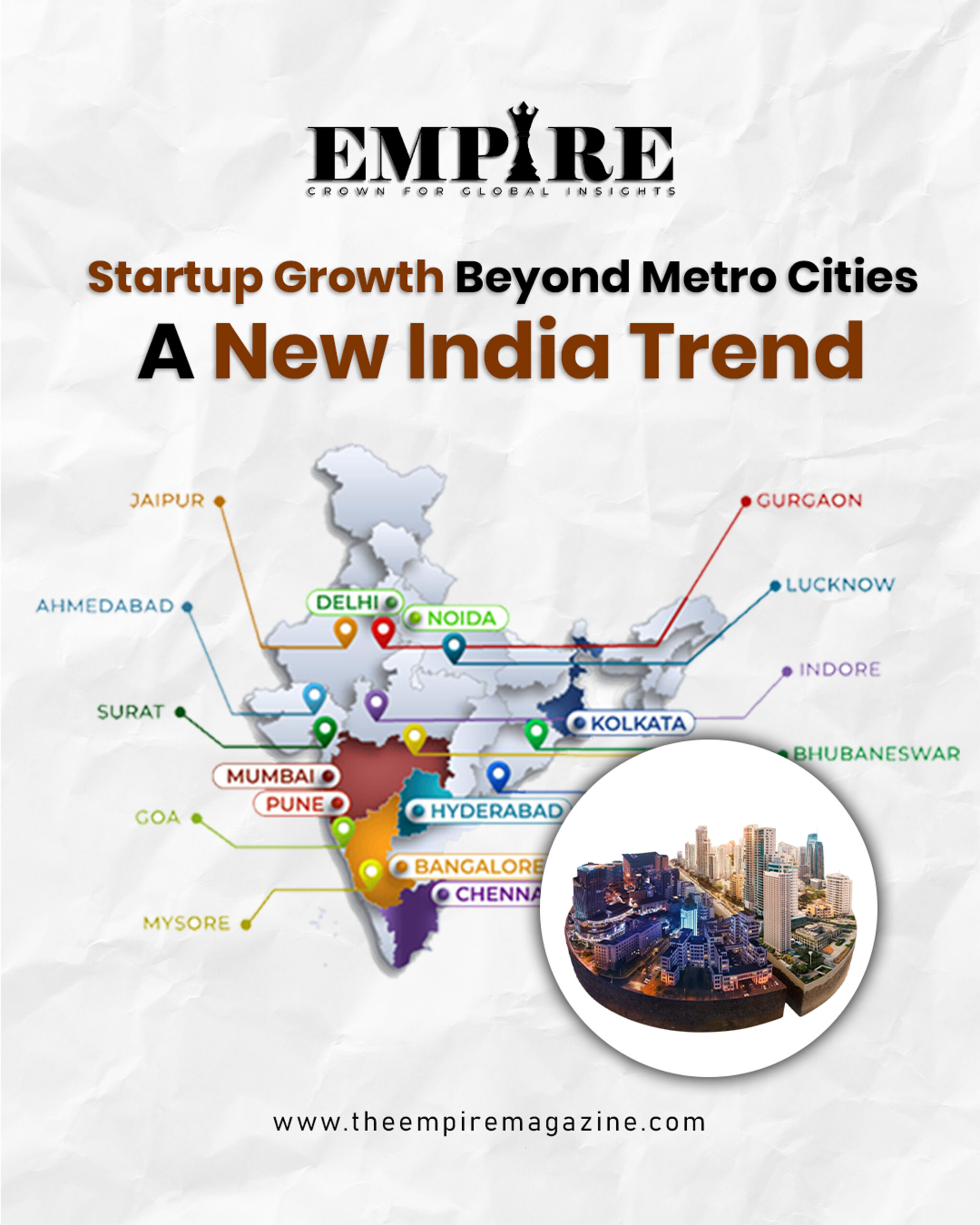
The rise of Startup Growth Beyond Metro Cities marks a powerful shift in India’s entrepreneurial landscape. For years, cities like Bengaluru, Mumbai, and Delhi dominated the startup ecosystem. However, a new wave of innovation is emerging from Tier-2 and Tier-3 cities, transforming the country’s economic and business outlook.
This shift is not sudden—it is the result of evolving digital infrastructure, increased access to resources, and a growing desire among entrepreneurs to solve local problems. Smaller cities are no longer just consumers of innovation; they are becoming creators of impactful businesses.
The Expansion of India’s Startup Ecosystem
India’s startup ecosystem is expanding geographically, with non-metro cities contributing significantly to new venture creation. Over the past decade, thousands of startups have emerged from cities like Jaipur, Indore, Kochi, Surat, and Lucknow.
These regions are becoming important innovation hubs, offering unique advantages:
- Lower operational costs
- Less market saturation
- Access to untapped customer segments
- Strong local demand for solutions
This expansion is helping decentralize entrepreneurship, making it more inclusive and diverse.
Rise of Early-Stage Startup Activity
One of the most notable aspects of Startup Growth Beyond Metro Cities is the strong rise in early-stage funding and startup formation. These regions have become consistent engines for new ideas and business experimentation.
Seed funding has shown steady growth over the years, indicating that investors are increasingly willing to support early-stage ventures in smaller cities. This stage focuses on product development, validation, and market testing, which aligns well with the needs of regional startups.
However, while early-stage activity is growing, the transition to later stages remains a challenge.
The Challenge of Late-Stage Funding
Despite the promising growth, regional startups face difficulties when it comes to scaling. Late-stage funding remains limited and inconsistent, making it harder for startups to expand beyond their initial success.
This creates a gap:
- Startups can launch and validate ideas
- But struggle to access large capital for scaling
- Growth becomes slower compared to metro-based startups
Even though some companies have achieved significant success, such cases are still limited, highlighting the need for stronger financial support systems.
Quiet Entrepreneurship: A New Business Model
A unique aspect of Startup Growth Beyond Metro Cities is the rise of what can be called “quiet entrepreneurship.” These businesses are not focused on rapid scaling or attracting media attention. Instead, they prioritize sustainability, profitability, and long-term stability. Pasted text
Characteristics of this approach include:
- Bootstrapped or self-funded operations
- Focus on solving real local problems
- Gradual and steady growth
- Strong customer relationships
This model is reshaping how success is defined, shifting the focus from valuation to value creation.
Role of Digital Technology
Technology has played a crucial role in enabling startup growth beyond metro cities. With widespread internet access and digital tools, entrepreneurs can now operate efficiently without being located in major cities.
Digital advancements have enabled:
- Online business operations
- Access to national and global markets
- Digital payments and financial services
- Low-cost marketing through social media
Entrepreneurs in smaller cities are using these tools strategically, focusing on functionality rather than visibility.
Support Systems and Ecosystem Development
The growth of startups in non-metro regions is supported by a developing ecosystem that includes:
- Local incubators and accelerators
- Government initiatives promoting entrepreneurship
- Angel investors and seed-stage funding networks
- Educational institutions fostering innovation
These support systems provide mentorship, training, and resources that help entrepreneurs turn ideas into viable businesses.
Women and First-Generation Entrepreneurs
Another important trend in Startup Growth Beyond Metro Cities is the rise of women and first-generation entrepreneurs. Many of these individuals are building businesses in sectors such as:
- Food and hospitality
- Education and training
- Healthcare services
- Handicrafts and local products
These ventures may not always scale nationally, but they play a crucial role in strengthening local economies and creating employment opportunities.
Redefining Success in Entrepreneurship
In smaller cities, success is often defined differently. Instead of focusing on rapid growth or large funding rounds, entrepreneurs prioritize:
- Stable income
- Community trust
- Long-term sustainability
- Work-life balance
This shift in mindset creates businesses that are not only financially viable but also socially impactful.
Challenges Faced by Regional Startups
Despite the progress, several challenges remain:
- Limited access to large-scale funding
- Lack of exposure and networking opportunities
- Infrastructure gaps in some regions
- Difficulty in attracting skilled talent
However, entrepreneurs in these regions are finding innovative ways to overcome these challenges through collaboration, learning, and gradual expansion.
Impact on India’s Economy
The growth of startups beyond metro cities is having a significant impact on India’s economy:
- Reducing migration to major cities
- Creating jobs in smaller towns
- Strengthening local industries
- Promoting inclusive economic growth
This decentralization of entrepreneurship is making the economy more resilient and balanced.
Future Outlook
The future of Startup Growth Beyond Metro Cities looks promising. As digital adoption increases and support systems improve, these regions will continue to play a larger role in India’s startup ecosystem.
Key future trends include:
- Increased investment in mid-stage funding
- Growth of regional innovation hubs
- Greater collaboration between startups and institutions
- Expansion into global markets
With the right support, the next generation of successful startups could emerge from any part of the country.
For more insights, read here:
👉 https://theempiremagazine.com/?p=5818&preview=true
Stay connected with us:
📸 Instagram: https://www.instagram.com/the_empire_magazine/
📘 Facebook: https://www.facebook.com/profile.php?id=61573749076160
– The Empire Magazien
Crown For Global Insights