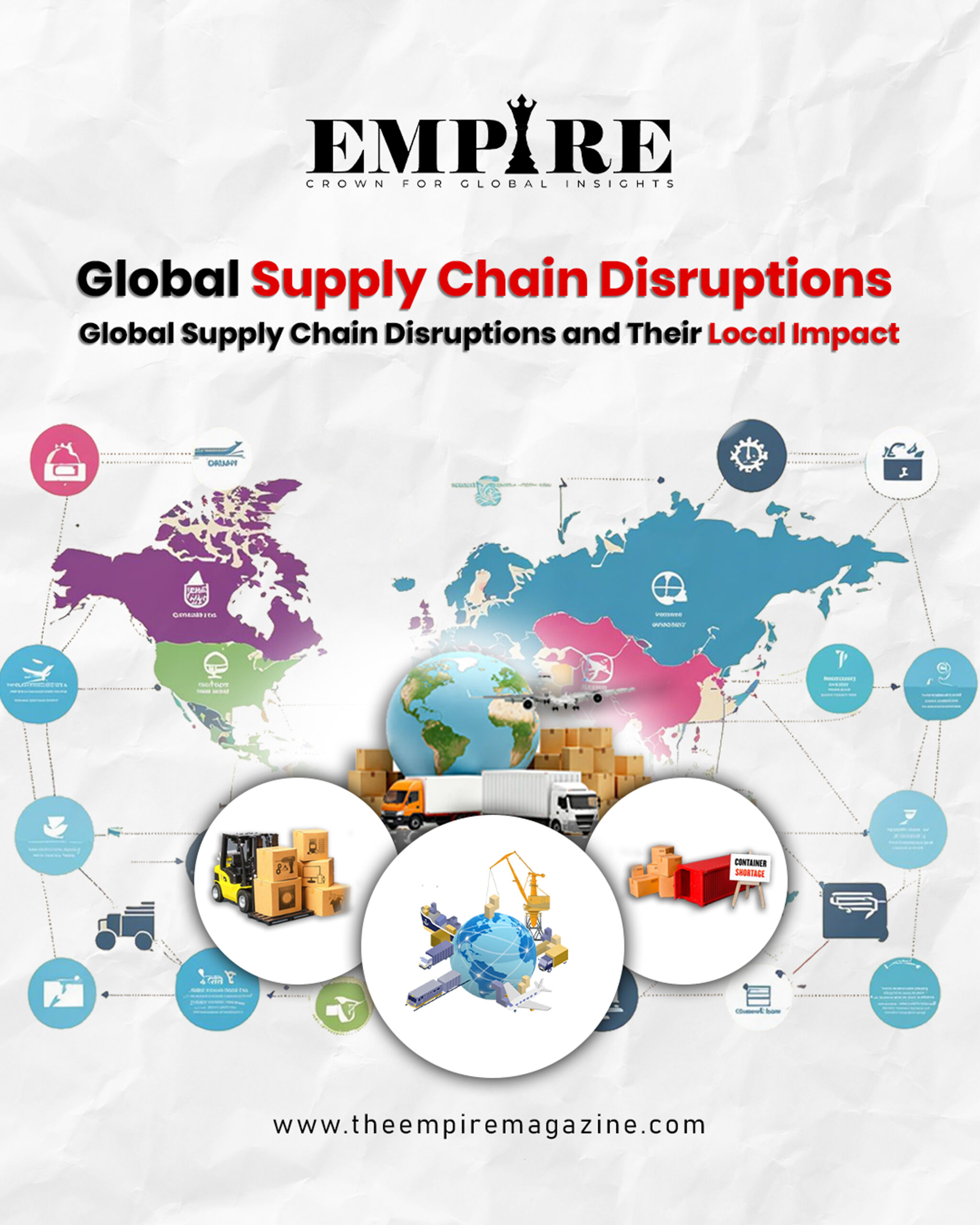
The issue of Global Supply Chain Disruptions has become one of the most important challenges in today’s interconnected world. Businesses no longer operate in isolation, and even a small disruption in one part of the world can quickly affect markets thousands of miles away.
Supply chains are responsible for moving raw materials, finished goods, and services across different regions. When this flow is interrupted, the consequences are felt not just globally, but also at the local level. From rising prices to shortages of essential goods, these disruptions are now part of everyday economic reality.
Understanding how global disruptions influence local markets helps businesses and consumers better prepare for uncertainty.
Understanding Supply Chain Disruptions
A supply chain disruption occurs when the normal movement of goods is delayed or interrupted. These disruptions can happen at any stage—production, transportation, or distribution.
Several factors contribute to such disruptions:
- Extreme weather events and environmental issues
- Political conflicts and trade restrictions
- Sudden increases in demand
- Shortage of raw materials
- Transportation and logistics delays
Even a single issue can trigger a chain reaction, affecting multiple industries and regions.
How Local Markets Feel the Impact
While supply chain disruptions originate globally, their effects are most visible in local markets. Consumers and businesses experience these impacts in several ways.
1. Increase in Prices
One of the first signs of Global Supply Chain Disruptions is rising prices. When it becomes more expensive to produce or transport goods, businesses pass these costs on to customers.
This leads to:
- Higher prices for everyday products
- Increased cost of services
- Pressure on household budgets
Inflation often rises during prolonged disruptions, affecting the overall economy.
2. Shortage of Goods
Another major impact is reduced availability of products. When supply chains are interrupted, businesses may not receive enough stock to meet demand.
This can result in:
- Empty shelves in stores
- Limited product choices
- Delayed delivery times
Shortages can affect both essential items and non-essential goods, disrupting daily life.
3. Struggles for Local Businesses
Small and medium-sized businesses are particularly affected by supply chain issues. Unlike larger corporations, they often lack backup suppliers or financial reserves.
Common challenges include:
- Difficulty sourcing materials
- Increased operational costs
- Delays in fulfilling customer orders
- Reduced profitability
These issues can weaken business stability and, in some cases, lead to closures.
Industries That Are Most Affected
Different sectors face different types of challenges when supply chains are disrupted.
- Manufacturing: Delays in materials can halt production
- Retail: Stock shortages impact sales and customer satisfaction
- Healthcare: Limited access to medical supplies affects services
- Technology: Component shortages delay product launches
- Food Industry: Supply interruptions affect availability and freshness
These disruptions highlight how dependent local industries are on global supply networks.
Demand and Supply Imbalance
Supply chain disruptions often occur when demand and supply are not aligned. For example, a sudden increase in demand can overwhelm production capacity, leading to delays and shortages.
This imbalance can be caused by:
- Economic recovery periods
- Changing consumer behavior
- Increased global demand for certain products
When supply cannot keep up, businesses struggle to maintain stability.
Transportation and Logistics Issues
Transportation is a critical part of supply chains. When logistics systems are disrupted, goods cannot move efficiently from one place to another.
Common problems include:
- Delays at ports and shipping hubs
- Lack of transportation workers
- Rising fuel costs
- Inefficient delivery routes
These challenges slow down the entire supply chain and increase delivery times.
The Role of Technology in Managing Disruptions
Technology is playing a key role in helping businesses manage supply chain challenges. Digital tools allow companies to monitor operations and respond quickly to changes.
Important technologies include:
- Artificial intelligence for forecasting demand
- Real-time tracking systems
- Automation in warehouses
- Data analytics for better decision-making
By using these tools, businesses can improve efficiency and reduce the impact of disruptions.
Strategies to Reduce Supply Chain Risks
To manage Global Supply Chain Disruptions, businesses need to adopt proactive strategies.
1. Diversifying Supply Sources
Relying on multiple suppliers reduces the risk of dependency on a single source.
2. Maintaining Backup Inventory
Keeping extra stock helps manage unexpected delays.
3. Strengthening Communication
Clear communication with suppliers and partners ensures faster problem-solving.
4. Investing in Technology
Digital tools improve visibility and control over operations.
5. Building Flexible Systems
Adaptable business models allow quick response to changing conditions.
These strategies help businesses remain stable during uncertain times.
Long-Term Effects on Local Economies
The impact of supply chain disruptions goes beyond immediate challenges. Over time, these disruptions can reshape local economies.
Some long-term changes include:
- Increased focus on local manufacturing
- Greater investment in infrastructure
- Shift toward sustainable practices
- Changes in consumer buying behavior
Local markets may become more self-reliant, reducing dependence on global systems.
Future Outlook
Supply chain disruptions are likely to remain a part of the global economy. As technology evolves and global trade continues, new challenges and opportunities will emerge.
Future trends may include:
- Greater use of automation and AI
- Stronger regional supply networks
- Improved logistics systems
- Increased focus on sustainability
Businesses that adapt to these changes will be better positioned for long-term success.
For more insights, read here:
👉 https://theempiremagazine.com/?p=5816
Stay connected with us:
📸 Instagram: https://www.instagram.com/the_empire_magazine/
📘 Facebook: https://www.facebook.com/profile.php?id=61573749076160
– The Empire Magazien
Crown For Global Insights