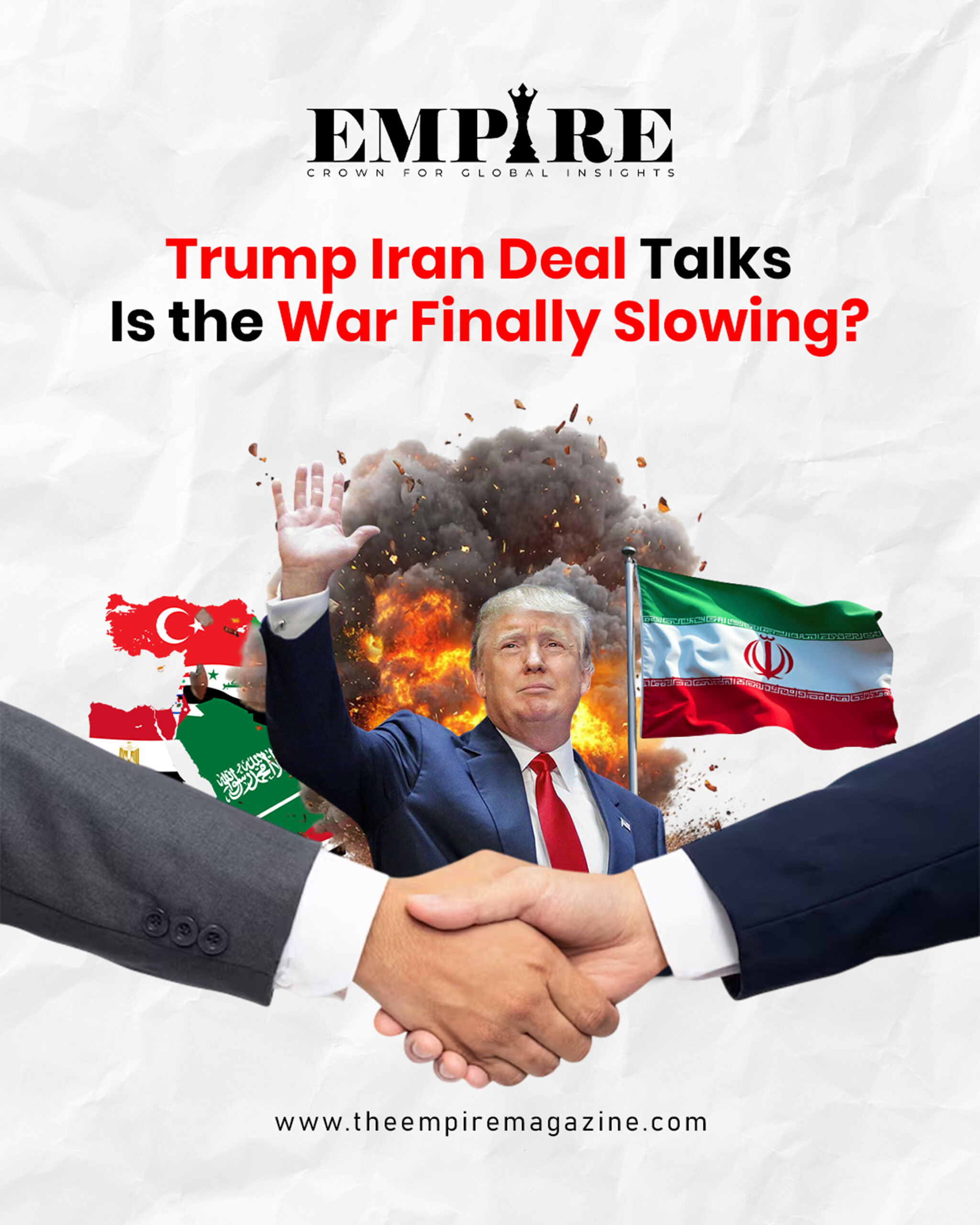
Trump Iran Deal Talks have become the latest turning point in an already dangerous Middle East crisis. After weeks of escalating threats, military pressure, and fears of wider regional fallout, fresh statements from Donald Trump have introduced the possibility of a temporary pause. According to his remarks, the United States and Iran may be moving toward discussions aimed at a “complete and total resolution of hostilities.” That language alone has changed the tone of the conflict, even if major questions remain unanswered.
The central question now is simple but urgent: is the war stopping, or is this only a brief pause before even greater escalation? The answer is far from clear. Trump has delayed threatened strikes on Iranian power plants for five days, presenting the move as the result of productive contacts. At the same time, Iran has denied that such talks are happening at all. That contradiction has created deep uncertainty. One side is signaling possible diplomacy, while the other is rejecting the very existence of negotiations.
This moment matters because the conflict is no longer a regional issue alone. It now carries major consequences for global shipping, energy prices, trade, and economic stability. The Strait of Hormuz remains at the center of the crisis, and as long as it stays contested, the world will continue watching every move from Washington and Tehran.
Why the Latest Trump Statement Matters
Trump’s latest comments stand out because they are more conciliatory than many of his earlier warnings. Only recently, he had threatened to unleash major attacks on Iranian energy infrastructure if Iran did not reopen the Strait of Hormuz. The warning was direct, aggressive, and tied to a strict deadline. That posture suggested a sharp escalation was close.
Now, however, he says talks have taken place and that the deadline for military action has been pushed back. That shift has immediate importance because it suggests that both pressure and diplomacy may be operating at the same time. In conflicts like this, a pause in military action can mean several different things. It can be a genuine opening for negotiations, a tactical delay while both sides reposition, or an attempt to calm markets and allies without truly changing the broader strategy.
Trump’s message appears to combine all of those possibilities. He has spoken about a deal being possible, but he has also warned that if the process fails, strikes could continue. That means the situation is less a peace breakthrough and more a fragile opening that could close very quickly.
Iran’s Denial Changes the Picture
A major obstacle to reading this situation as de-escalation is Iran’s denial. If Tehran says there are no talks, then the public narrative becomes deeply confused. Either contacts are happening through indirect or unofficial channels, or the two sides are presenting the situation very differently for political reasons.
This matters because successful diplomacy usually depends on at least some shared acknowledgment that talks are taking place. If one side says negotiations are real and the other says they are not, then trust is already low. That does not rule out behind-the-scenes communication, but it does make any immediate breakthrough less likely.
It also shows that even if the war appears to be slowing in public language, the political conflict is still intense. Governments often use public messaging to influence domestic audiences, military calculations, and international reaction. That means statements alone should not be mistaken for peace. In this case, they show a change in tone, not yet a confirmed settlement.
The Strait of Hormuz Remains the Core Issue
To understand whether the war is stopping, it is essential to understand the importance of the Strait of Hormuz. This narrow waterway is one of the most critical routes for global energy shipments. When access to it is threatened or blocked, oil and gas markets react immediately. Shipping routes become uncertain, insurance costs rise, and governments fear broader economic shock.
Trump’s earlier ultimatum focused directly on reopening the strait. That shows how central it is to the current confrontation. Reopening the passage is not just about one military objective. It is tied to global trade, energy supply, and strategic influence. That is why even a short postponement of strikes had an immediate impact on oil and gas prices.
If there is genuine progress toward reopening the Strait of Hormuz, the chances of de-escalation improve significantly. But if the waterway remains effectively contested, then the conflict remains active even if some strikes are delayed. In other words, the true test is not rhetoric alone. It is whether shipping security improves and whether both sides reduce direct threats around the strait.
Why Markets Reacted So Quickly
Financial markets responded quickly because they are highly sensitive to geopolitical risk, especially when energy infrastructure is involved. The moment Trump suggested that talks were productive and strikes had been postponed, prices reacted. That is a sign that investors interpreted the statement as reducing immediate danger.
But market relief does not always mean the danger has passed. Sometimes prices move simply because the short-term likelihood of a major strike has been delayed. A five-day postponement can calm panic without solving the underlying conflict. That appears to be what is happening here. Markets saw less immediate risk, but the larger crisis remains unresolved.
This matters for ordinary people as well. Tension in the Gulf can influence fuel prices, transport costs, inflation, and broader confidence in the global economy. That is why the conflict is being watched so closely beyond the Middle East.
Is This a Real Peace Opening or a Tactical Pause?
At this stage, the most realistic interpretation is that the war is not stopping yet, but it may be entering a temporary pause in one area. A postponed strike is not the same as a ceasefire. A statement about talks is not the same as a signed agreement. And public threats remain part of the conversation, which means the risk of renewed escalation is still high.
However, the tone has shifted enough to matter. When leaders move from direct ultimatums to discussing possible agreements, that creates at least some diplomatic space. Even if the gap between the two sides remains wide, pauses like this can matter if they prevent immediate escalation and allow intermediaries or quiet channels to work.
Still, there are several unanswered questions:
- Are the talks direct, indirect, or informal?
- Is Iran genuinely open to de-escalation, or only rejecting public pressure?
- Will the Strait of Hormuz reopen in a meaningful way?
- What happens when the five-day pause ends?
Until those questions are answered, it would be premature to say the war is ending.
Regional and Global Risks Still Remain
Even if the immediate threat of strikes on Iranian power plants has been delayed, the broader risks remain severe. Threats involving energy infrastructure can quickly widen the conflict. If power systems, ports, oil terminals, or shipping lanes are hit, the consequences could go well beyond the battlefield.
There is also the danger of retaliation spreading across the region. Once critical infrastructure becomes part of military calculations, the impact reaches civilians, businesses, and public services. In some countries, power and water systems are closely linked, which means attacks on one can disrupt the other. That raises the humanitarian and strategic cost of any new escalation.
So while the latest development may have reduced immediate pressure, it has not removed the structural risks driving the crisis.
Final Thoughts
Trump Iran Deal Talks have introduced a new layer of uncertainty into the conflict. The delay in threatened strikes suggests that the situation may be softening at the margins, but it does not yet prove that the war is stopping. Trump’s tone has become more conciliatory, yet his warnings remain forceful. Iran’s denial adds even more doubt. The Strait of Hormuz remains closed at the center of the standoff, and the world economy is still exposed to the consequences.
The most accurate conclusion for now is that the conflict may be pausing, but it is not yet resolved. A real end to hostilities would require more than public statements. It would require verifiable talks, reduced threats, restored shipping security, and a clear path away from military escalation.
For now, the world is watching a narrow opening, not a final settlement.
Read more here:
Internal Link: https://theempiremagazine.com/?p=5631
Follow us on social media:
Instagram: https://www.instagram.com/the_empire_magazine/
Facebook: https://www.facebook.com/profile.php?id=61573749076160
– The Empire Magazine
Crown For Global Insights