Table of Contents
- Why AI-Powered Global Care Delivery Matters
- A New Model for Connected Healthcare
- How Artificial Intelligence Can Improve Patient Care
- The Shift From Reactive Treatment to Proactive Wellbeing
- Why Data, Scale, and Security Matter
- What This Means for the Future of Global Healthcare
- Final Thoughts
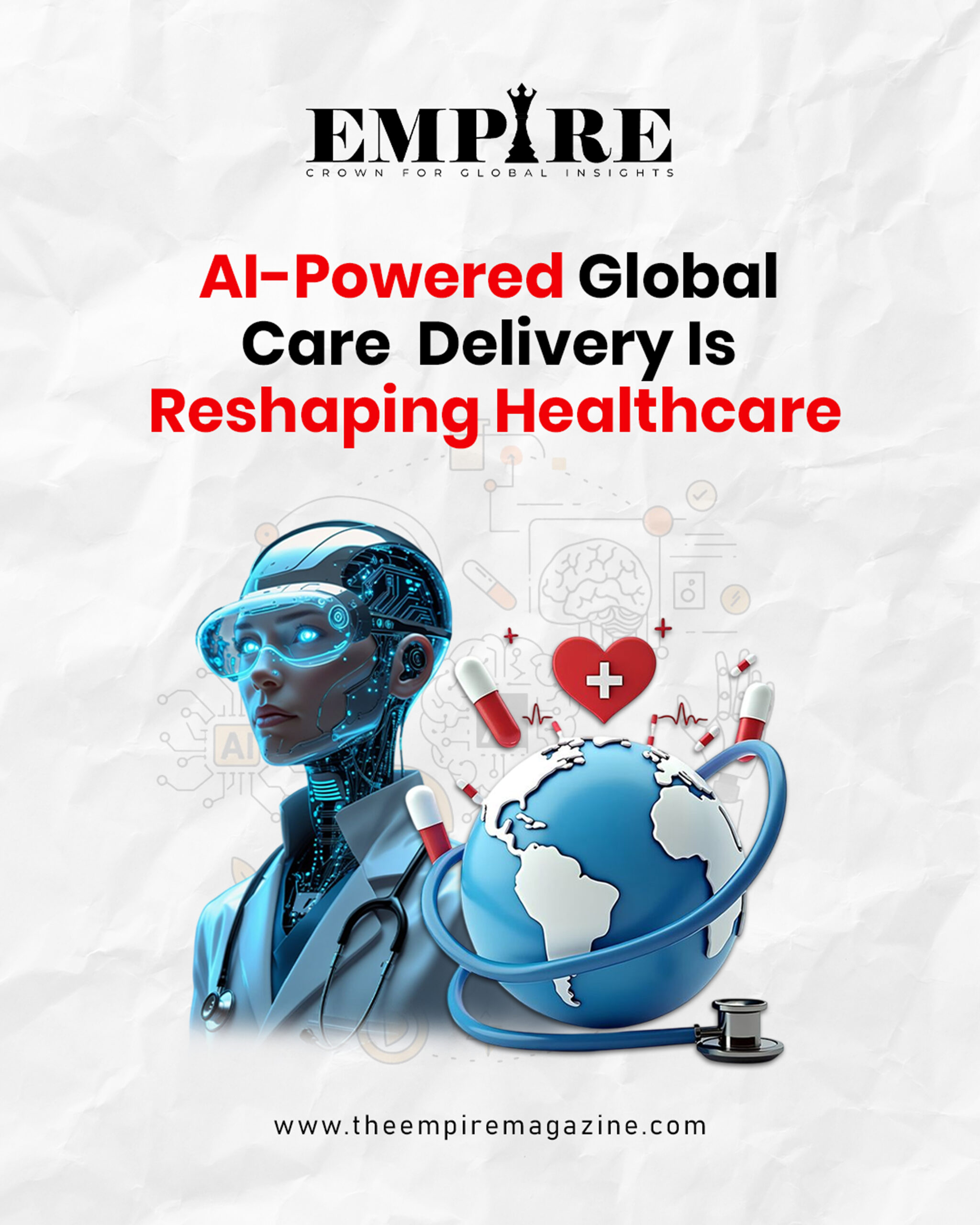
AI-powered global care delivery is becoming one of the most important developments in modern healthcare. Around the world, health systems are under pressure from rising costs, aging populations, chronic disease, workforce shortages, and growing demand for more personalized care. At the same time, patients expect better access, faster decisions, and more connected experiences across every part of the healthcare journey. This is why the move toward AI-enabled healthcare platforms is attracting so much attention.
A major example of this shift can be seen in the strategic effort to create a new AI-based healthcare delivery platform that combines clinical expertise, cloud infrastructure, data integration, and advanced analytics. The goal is not simply to digitize healthcare. The goal is to redesign it so that care becomes smarter, more predictive, more scalable, and more accessible across populations.
This matters because traditional healthcare systems often operate in silos. Clinical care, hospital operations, public health management, research, and patient engagement are frequently separated by disconnected systems and fragmented data. When this happens, providers may struggle to get a complete picture of a patient, leaders may lack visibility into system performance, and researchers may find it harder to turn real-world clinical information into practical medical progress. AI-powered global care delivery aims to address these challenges by connecting information, intelligence, and decision-making in a more unified model.
For more business and transformation insights, you can also read this related feature from The Empire Magazine: The Empire Magazine Business Feature.
Why AI-Powered Global Care Delivery Matters
The rise of AI-powered global care delivery reflects a much bigger change in how healthcare is being reimagined. Health systems today are expected to do more than treat illness after it appears. They are increasingly being asked to predict risk, manage large patient populations, support prevention, improve efficiency, and deliver better outcomes at lower cost.
Artificial intelligence can help make this possible because it can process huge volumes of data, identify patterns, support decision-making, and generate insights in real time. In healthcare, that could mean helping clinicians detect risks earlier, helping administrators understand population trends more clearly, and helping systems allocate resources more effectively.
This is especially important at a global level. Healthcare challenges are no longer isolated to one hospital or one region. Aging populations, chronic disease, rising treatment costs, and uneven access to quality care are affecting countries across the world. That is why AI-powered global care delivery has the potential to become far more than a local innovation. It could shape how nations design future health systems.
A New Model for Connected Healthcare
One of the biggest advantages of AI-powered global care delivery is that it supports a more connected healthcare model. Instead of relying on disconnected platforms and isolated records, this approach brings together clinical applications, cloud systems, data analytics, and intelligent tools in a single ecosystem.
That kind of connected system can help healthcare professionals work with better context. Rather than making decisions based only on isolated encounters, clinicians can draw from broader patterns, historical data, population trends, and more complete records. This can improve the quality of care while also helping reduce unnecessary duplication, delays, or avoidable errors.
Connected care also improves the experience for patients. Many patients today move between specialists, primary care providers, outpatient settings, hospitals, diagnostic centers, and digital health channels. When these systems do not communicate effectively, patients often face frustration and fragmented care. A more intelligent and connected model can help create continuity, making care feel more coordinated and easier to navigate.
How Artificial Intelligence Can Improve Patient Care
The promise of AI-powered global care delivery becomes even clearer when looking at patient outcomes. Artificial intelligence can strengthen diagnostics, support more personalized treatment plans, improve clinical workflows, and help identify risk factors earlier. It can also assist in turning complex medical and operational data into practical recommendations for frontline teams.
For example, AI can help identify which patients may be at greater risk of complications, delayed recovery, or disease progression. It can also help support precision medicine by enabling more tailored treatment strategies based on a patient’s specific profile and health history. In a population health context, AI can reveal trends across communities and help systems intervene before health issues become more severe.
Another important benefit is operational improvement. Healthcare quality is not only shaped by medical expertise. It is also shaped by scheduling, staffing, documentation, workflow design, and system efficiency. AI can help optimize these processes, making it easier for providers to focus more of their time on patient care rather than administrative burden.
The Shift From Reactive Treatment to Proactive Wellbeing
A key theme in AI-powered global care delivery is the move from reactive treatment to proactive wellbeing. Traditional healthcare systems often intervene only after a person becomes seriously ill. But the future of care is increasingly about earlier detection, prevention, and ongoing health intelligence.
This shift is important because chronic diseases and long-term conditions place enormous strain on health systems. If providers can use AI to identify patterns sooner, monitor risk more effectively, and support patients before conditions worsen, the result may be better health outcomes and lower long-term costs.
This is where nation-scale analytics and continuous intelligence become especially powerful. With access to broader public health and clinical data, healthcare systems can better understand which communities are at risk, which interventions are working, and where future pressures may emerge. That transforms healthcare from a system that reacts to problems into one that actively works to reduce them.
This proactive approach also opens new opportunities in research and life sciences. By reducing the gap between clinical care and clinical research, providers may be able to identify suitable trial candidates more effectively, monitor real-world outcomes more closely, and support faster progress in therapies and treatment innovation.
Why Data, Scale, and Security Matter
For AI-powered global care delivery to work effectively, strong data foundations are essential. Artificial intelligence is only as good as the information it can access and interpret. If data is fragmented, inconsistent, incomplete, or poorly governed, the value of AI becomes much more limited.
That is why modern healthcare platforms need more than advanced algorithms. They also need trusted cloud infrastructure, integrated health data, strong privacy protections, and clear governance. In healthcare, security and sovereignty are especially important because patient information is sensitive and highly regulated.
Scalability matters too. A promising healthcare innovation has limited value if it cannot operate across regions, institutions, and large populations. The most important models of AI-powered global care delivery are those designed to work at scale while still supporting local needs, clinical quality, and responsible data use.
What This Means for the Future of Global Healthcare
The broader significance of AI-powered global care delivery is that it may help create a new blueprint for the future of healthcare. This model combines digital infrastructure, clinical insight, operational intelligence, and public health awareness into a more integrated system. It has the potential to improve care access, strengthen financial sustainability, and support better decision-making at every level of the healthcare ecosystem.
If successful, this kind of platform could influence how hospitals, governments, life sciences organizations, and health technology partners work together in the years ahead. It could also show that healthcare transformation is not only about adding new technology, but about building smarter systems around patients, providers, and populations.
That is why this development matters beyond one partnership or one region. It points toward a future in which healthcare is more intelligent, more predictive, more coordinated, and more globally connected.
You can also follow The Empire Magazine for more updates on business, healthcare, and technology on Instagram and Facebook.
Final Thoughts
The rise of AI-powered global care delivery signals a major turning point in healthcare. As health systems face growing complexity, artificial intelligence offers a way to connect clinical care, operations, research, and public health more effectively than before. The result could be a more scalable, affordable, and patient-centered model of care.
What makes this shift especially important is that it is not just about efficiency. It is about enabling better decisions, improving patient outcomes, supporting clinicians, and helping systems move from reactive treatment toward proactive wellbeing. That combination has the potential to reshape healthcare delivery on a global scale.
In the years ahead, the strongest healthcare systems may be the ones that successfully combine data, technology, and clinical expertise into one intelligent model. That is the true promise of AI-powered global care delivery. It is not simply a new tool for healthcare. It is the beginning of a new model for how care may be delivered in the future.
– The Empire Magazine
Crown for Global Insights
Follow The Empire Magazine
Facebook | Instagram | LinkedIn