Table of Contents
- Why AI Layoffs Are Increasing
- The Shift From Routine Jobs to AI Systems
- Why Demand for AI Talent Still Keeps Rising
- The Entry-Level Hiring Problem
- How Today’s Layoffs May Create Tomorrow’s Talent Gap
- What Companies Should Do Now
- Final Thoughts
AI layoffs and talent shortage are becoming two of the most important workforce issues in the modern economy. Artificial intelligence is changing how businesses operate, how tasks are completed, and how companies think about productivity. Across industries, organizations are investing heavily in automation, machine learning, data systems, and AI-powered tools to improve speed and reduce costs. While this shift may help businesses become more efficient, it is also changing the workforce in ways that could create a serious long-term problem.
In the short term, companies are cutting roles that involve repetitive or highly standardized work. In the long term, however, those same companies may discover they have weakened the very talent pipeline needed to support the future of artificial intelligence. This is why the discussion around AI layoffs and talent shortage is so important. The issue is not only about jobs disappearing today. It is also about whether enough skilled professionals will be available tomorrow.
For more insight into leadership, digital transformation, and the future of work, read this related feature from The Empire Magazine: The Empire Magazine Business Feature.
Why AI Layoffs Are Increasing
The rise of AI layoffs and talent shortage concerns begins with a simple business reality. Many companies see artificial intelligence as a way to reduce operating costs and automate routine work. Tasks such as customer support, data processing, document review, simple coding, scheduling, reporting, and repetitive administrative work can increasingly be handled by AI tools.
As businesses direct more money toward data centers, AI infrastructure, automation platforms, and advanced computing systems, they often reduce spending in other areas. That frequently means workforce restructuring. Roles that were once considered necessary for handling routine workflows are now being reviewed through the lens of efficiency and automation.
This has created a wave of concern across the technology sector and beyond. Companies are not only eliminating positions but also slowing hiring in traditional roles. In many cases, layoffs are being framed as part of a long-term AI strategy. Whether all of those cuts are directly driven by artificial intelligence or not, the result is the same: fewer conventional opportunities and more pressure on workers to adapt.
The Shift From Routine Jobs to AI Systems
The reason AI layoffs and talent shortage can happen at the same time is because artificial intelligence does not remove the need for work altogether. It changes the kind of work companies want people to do. Many of the first jobs under pressure are those based on repetition, predictable workflows, and structured outputs.
Businesses are increasingly using AI to handle tasks that once served as training grounds for junior professionals. This includes basic support work, entry-level coding assignments, repetitive analysis, and early-stage operational tasks. These jobs may have been modest in responsibility, but they played a major role in helping workers gain experience and move into more advanced positions.
Now that automation is taking over much of this beginner-level work, the workforce ladder is changing. This is one of the most important reasons the debate around AI layoffs and talent shortage matters so much. If businesses remove the lower steps of the ladder, future experts may never get the chance to climb it.
Why Demand for AI Talent Still Keeps Rising
At the same time that some workers are losing jobs, the demand for advanced skills is growing rapidly. This is what makes AI layoffs and talent shortage such a striking contradiction. Companies need fewer people for certain traditional roles, but they urgently need more people who can build, train, manage, secure, test, and improve AI systems.
Artificial intelligence cannot run effectively without skilled professionals. It needs engineers, data scientists, machine learning specialists, cybersecurity experts, infrastructure teams, and AI product leaders. Businesses also need people who understand governance, compliance, data quality, model performance, and business process redesign.
As AI moves deeper into industries such as healthcare, finance, manufacturing, logistics, education, and cybersecurity, the value of these skills continues to rise. The problem is that advanced talent cannot be created instantly. It takes years of learning, experimentation, project exposure, and practical experience to develop strong AI professionals. That is why today’s cuts may create tomorrow’s shortage.
The Entry-Level Hiring Problem
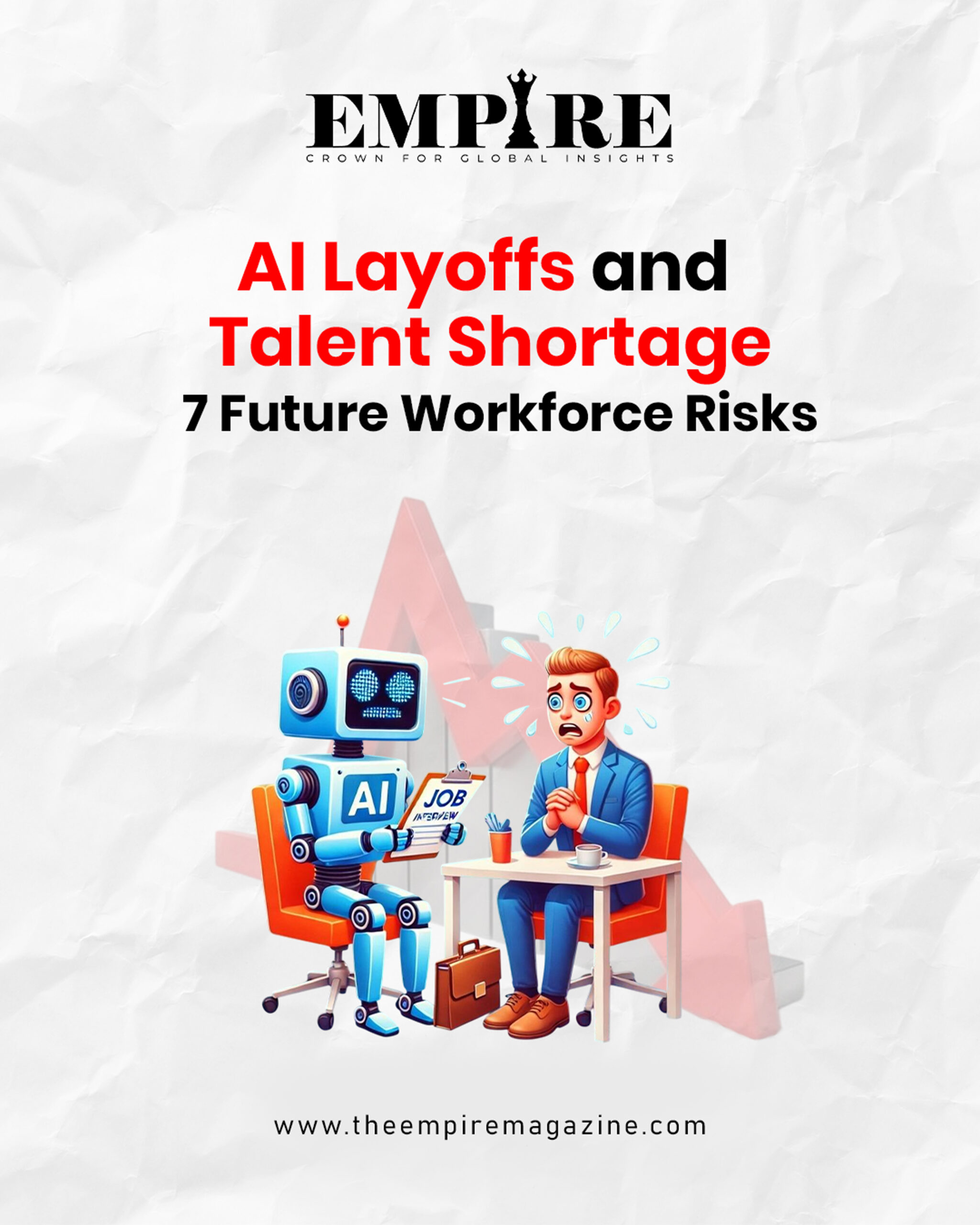
One of the biggest drivers of AI layoffs and talent shortage is the decline of entry-level opportunities. In the past, junior roles gave graduates and early-career professionals the chance to learn systems, workflows, tools, customer behavior, and business operations. These positions built the foundation for more advanced roles later.
But if AI now handles much of the repetitive work that used to belong to junior employees, fewer companies may feel the need to hire at that level. This creates a serious bottleneck. Without beginner roles, many young professionals cannot gain the practical experience needed to grow into more senior positions.
This issue is especially dangerous because the future AI economy still needs experienced people. The industry cannot depend only on hiring a small number of already-skilled experts. It also needs a broad pipeline of learners who can develop over time. If entry-level hiring shrinks too much, the long-term supply of talent becomes weaker.
That is why AI layoffs and talent shortage should not be viewed as separate issues. They are deeply connected. When organizations reduce junior hiring, they are often reducing their future leadership pipeline as well.
How Today’s Layoffs May Create Tomorrow’s Talent Gap
The most important long-term risk in AI layoffs and talent shortage is the possibility of a major skills gap. Artificial intelligence is expanding quickly across industries, but many workers who are losing their jobs today do not automatically have the skills needed for the new roles being created.
This creates a mismatch. On one side, businesses need more AI-capable professionals. On the other side, the workforce is not being developed fast enough to meet that need. If companies continue cutting staff without investing in training and reskilling, they may find themselves struggling to recruit the very people they need a few years from now.
The problem becomes even greater if experienced workers leave the industry while beginners are unable to enter it. In that case, companies may face a future where demand for AI expertise is high, but the available talent pool is too small. That would increase hiring costs, intensify competition for skilled workers, and slow down the very AI adoption that businesses are investing in today.
This is the heart of the AI layoffs and talent shortage challenge. Short-term cost savings may lead to long-term capability problems.
What Companies Should Do Now
Businesses that want to avoid the risks of AI layoffs and talent shortage need to think beyond immediate headcount reduction. The most successful organizations will likely be those that treat AI not only as a cost-cutting tool but also as a workforce redesign challenge.
First, companies should invest in reskilling existing employees. Workers who understand the business already have valuable context, and many can be trained in AI-adjacent skills such as data analysis, automation tools, cybersecurity awareness, and AI-supported workflows.
Second, firms should protect at least some entry-level hiring pathways. Even if junior roles change, companies still need structured ways for new talent to learn and grow. Apprenticeships, rotational programs, AI training tracks, and hybrid early-career roles could all help.
Third, organizations should redesign jobs thoughtfully rather than assuming automation removes the need for people entirely. In many cases, AI works best when paired with human judgment, oversight, creativity, and problem-solving. That means the future workforce should be redesigned, not simply reduced.
Finally, companies should be honest about the role of AI in workforce decisions. Overstating AI’s near-term capability may create fear, damage trust, and discourage workers from learning how to use the technology effectively.
You can also follow The Empire Magazine for more business and technology updates on Instagram and Facebook.
Final Thoughts
The discussion around AI layoffs and talent shortage reveals one of the biggest contradictions of the AI era. Companies are cutting certain jobs today in order to invest in artificial intelligence, yet artificial intelligence itself will require more highly skilled professionals in the years ahead. If businesses reduce entry-level opportunities, slow hiring too aggressively, and fail to train workers for new roles, they may create a serious shortage of future AI talent.
Artificial intelligence is not simply removing work. It is changing the structure of work. That shift requires smarter planning, stronger workforce development, and a longer-term view of talent. Companies that focus only on immediate savings may weaken their future capability. Those that balance automation with reskilling, hiring pathways, and thoughtful job redesign will be better prepared for the next stage of the AI economy.
In the end, AI layoffs and talent shortage are not just labor-market headlines. They are a warning sign. The businesses that understand this now will be the ones best positioned to lead later.
– The Empire Magazine
Crown for Global Insights
Follow The Empire Magazine
Facebook | Instagram | LinkedIn