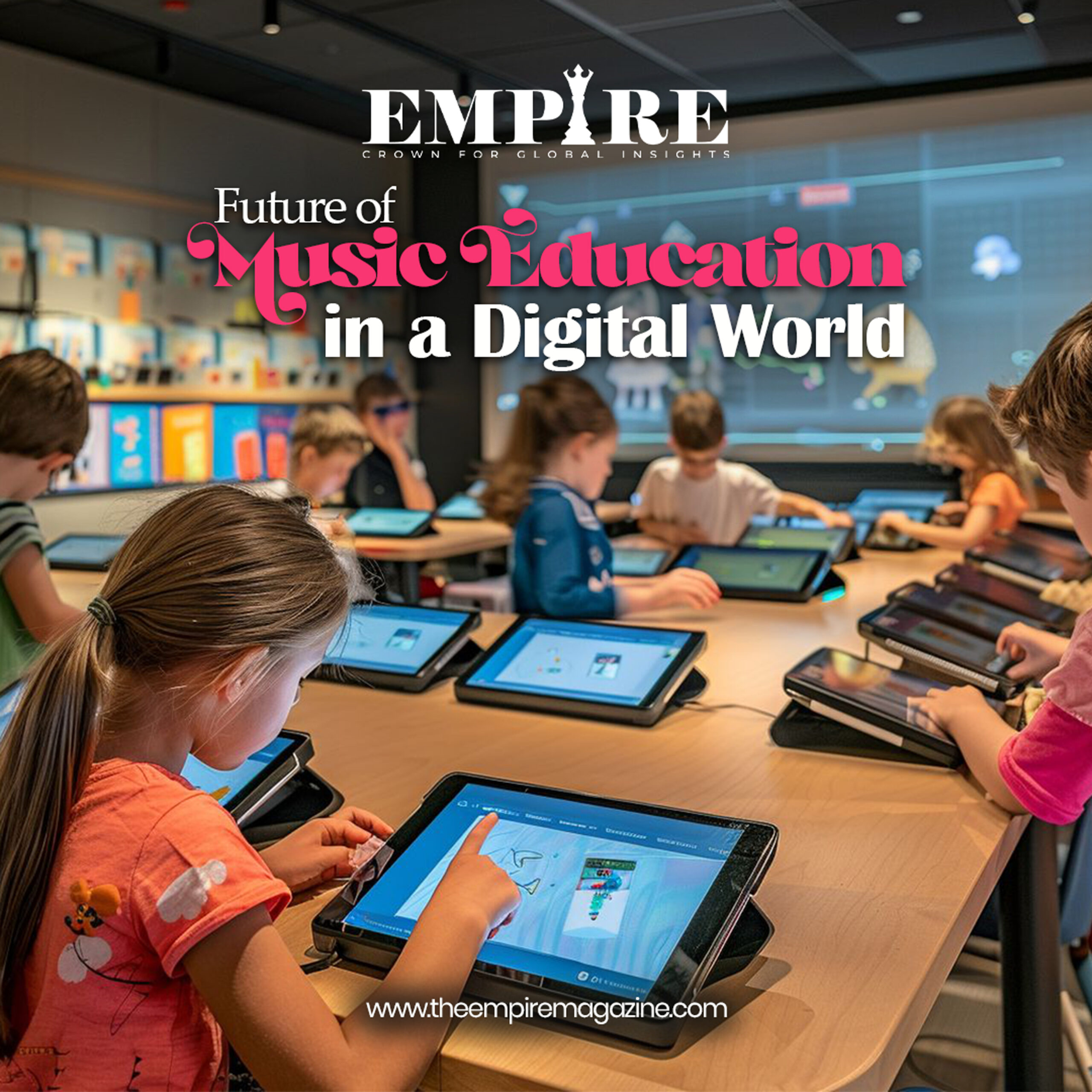
Future of Music Education in a Digital World is no longer a distant idea—it is a powerful transformation happening right now. Music has always been a deeply spiritual and cultural force. From classical ragas performed in ancient temples to contemporary global collaborations streamed online, music continues to evolve with every generation. Today, technology is reshaping not only how music is created but also how it is taught and learned across the globe.
We are witnessing a remarkable shift where creativity meets innovation. The digital world is redefining accessibility, enhancing learning experiences, and opening global opportunities for both students and educators.
A New Era of Accessibility
For centuries, music education depended on physical presence. Students traveled long distances to learn from respected gurus or attended established institutions to receive formal training. While this traditional system produced legendary artists and remains culturally significant, it was not accessible to everyone.
The digital revolution has changed that reality. Today, a student in a small town in India can learn piano from a European conservatory-trained instructor through online classes. A young vocalist can attend masterclasses conducted by international maestros without leaving home. Digital platforms have eliminated geographical barriers, making quality music education available to anyone with an internet connection.
This shift is especially impactful in developing regions where talent is abundant but professional training may be limited. Digital platforms are bridging this gap and creating equal opportunities for aspiring musicians worldwide.
The Growth of Self-Paced Learning
Traditional music lessons typically follow structured weekly schedules. While effective, this format may not suit every learner. Digital education introduces flexibility through recorded sessions, interactive tutorials, and downloadable practice materials.
Students can now pause, rewind, and revisit lessons multiple times. This approach builds confidence and reduces performance anxiety. Learners can focus on challenging sections without feeling rushed or judged.
Self-paced learning is particularly beneficial for working professionals and adult learners who want to pursue music alongside their careers. The digital format allows them to practice during flexible hours—early mornings, late nights, or weekends—making music a natural part of life rather than a rigid commitment.
Artificial Intelligence as a Practice Companion
Artificial Intelligence is quietly transforming music education. Modern applications can listen to a student’s performance and provide real-time feedback on pitch, rhythm, tempo, and accuracy.
Although AI cannot replace the emotional mentorship of a human teacher, it serves as a powerful practice assistant. Students no longer have to wait for the next lesson to correct mistakes. Instant feedback accelerates improvement and makes practice sessions more productive.
For teachers, AI tools reduce time spent correcting technical errors, allowing them to focus more on interpretation, expression, and artistry. This balance enhances the overall learning experience.
Immersive Learning with VR and AR
Virtual Reality (VR) and Augmented Reality (AR) are introducing immersive dimensions to music education. Through VR, students can simulate performing in a grand concert hall, helping them overcome stage fear and build performance confidence.
AR technology enables three-dimensional demonstrations of finger placement, bowing techniques, or instrument positioning. These visual overlays make complex techniques easier to understand.
As these technologies become more affordable and widely adopted, they are expected to become essential tools in modern music academies. They offer experiential learning that goes beyond traditional methods.
In many ways, this technological integration reflects broader digital transformation trends seen across industries, similar to the insights explored in experiential evolution in marketing, as discussed here:
https://theempiremagazine.com/future-of-experiential-marketing-trends-2026/
Rise of Global Online Communities
Music has always been a shared experience. Digital platforms have now created vibrant global communities where musicians connect, collaborate, and grow together.
Students can upload performances, receive international feedback, and participate in global competitions. Teachers can host workshops attended by learners from different continents. Cultural boundaries are fading as diverse musical traditions blend seamlessly online.
This global exposure enriches creativity and broadens artistic perspectives. The internet has effectively become a modern “gurukul,” where shared passion drives collaborative learning.
New Opportunities for Educators
The digital era has expanded possibilities for teachers and institutions. Educators can now build global audiences, conduct specialized online workshops, and create digital courses that reach thousands of students.
Institutions are adopting hybrid models that combine in-person instruction with digital resources. Online concerts, livestream recitals, and global collaborations are becoming common features of music academies.
This fusion ensures that traditional mentorship remains intact while modern tools enhance efficiency and reach.
Challenges in the Digital Shift
Despite its advantages, the digital transformation of music education presents challenges. Access to reliable internet and quality devices remains uneven. Some students struggle with the lack of personal interaction in virtual classrooms.
Teachers must adapt to new technologies and refine their digital teaching strategies. Maintaining engagement and discipline online requires innovative approaches.
However, with thoughtful integration, parental support, and continued innovation, these challenges can be addressed effectively.
A Harmonious Future Ahead
The Future of Music Education in a Digital World is not about replacing tradition—it is about enriching it. Technology amplifies opportunities while preserving the emotional and cultural essence of music.
Students can learn from global mentors, practice with AI tools, perform in virtual spaces, and collaborate across borders. Teachers can expand their reach and preserve cultural heritage through digital archives.
As innovation continues to evolve, the goal should remain clear: embrace technology while protecting the soul of music.
Music is more than sound—it is emotion, identity, and connection. The digital era is simply giving it a broader stage and a stronger voice.
– The Empire Magazine
Crown For Global Insights