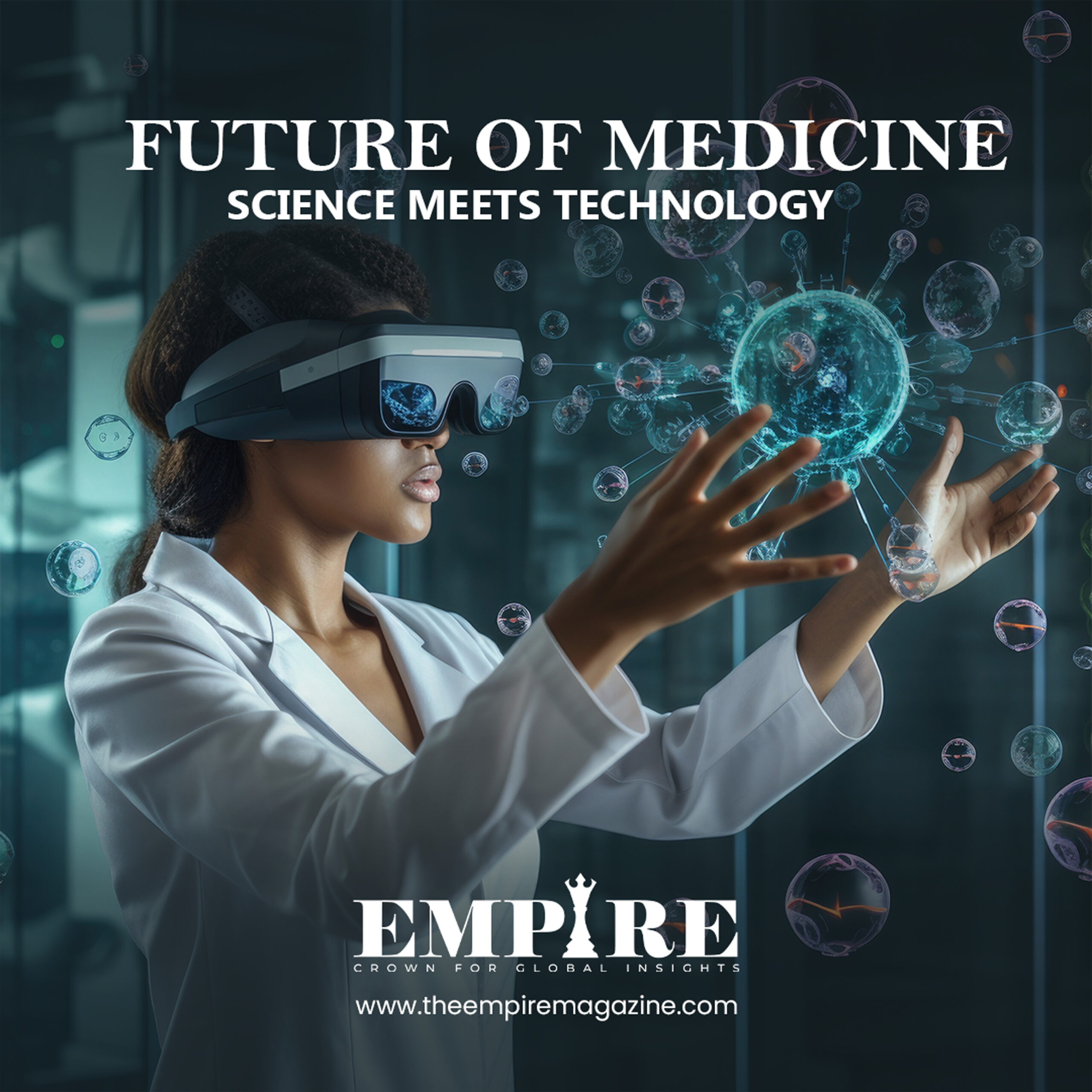
Future of Medicine
Future of Medicine is no longer a distant vision confined to research laboratories or speculative forecasts. It is unfolding in real time, driven by the convergence of science, data, and advanced technology. Artificial intelligence, computational biology, genomics, and digital health platforms are redefining how diseases are detected, treated, and even prevented. The transformation is not incremental—it is foundational.
The boundaries that once separated biology, engineering, data science, and clinical practice are dissolving. Medicine is becoming predictive rather than reactive, personalized rather than generalized, and digitally connected rather than institutionally confined.
Breaking Silos Through Interdisciplinary Innovation
The Future of Medicine rests on interdisciplinary collaboration. Historically, medical research operated in specialized silos—biology, chemistry, pharmacology, and clinical sciences often worked independently. However, complex diseases such as cancer, autoimmune disorders, and neurodegenerative conditions do not adhere to disciplinary boundaries.
Systems biology and computational modeling now allow researchers to analyze entire biological networks rather than isolated components. By integrating physics, mathematics, and life sciences, scientists can understand cascading effects within the human body. This systems-based perspective enables earlier detection of disease patterns and more targeted therapeutic interventions.
Genomics has further accelerated this shift. The ability to sequence and analyze DNA at scale, combined with computational power, allows physicians to assess genetic risk factors and tailor treatments accordingly. The Future of Medicine is therefore rooted in personalization—healthcare built around the individual rather than the average.
For a broader perspective on leadership and innovation shaping tomorrow’s healthcare systems, explore this discussion:
https://theempiremagazine.com/?p=5215
Artificial Intelligence as a Clinical Partner
Artificial Intelligence is becoming a defining pillar of the Future of Medicine. AI-driven diagnostic tools can analyze imaging scans, electronic medical records, and laboratory data with remarkable speed and precision. In radiology, deep learning algorithms assist in identifying early-stage tumors. In cardiology, predictive analytics detect irregular heart patterns before symptoms become critical.
AI does not replace physicians; it augments their decision-making. By automating data-heavy tasks, it allows clinicians to focus on patient interaction and complex judgment calls. Predictive models can also forecast disease progression, enabling preventative care strategies that reduce hospitalizations.
However, this digital transformation must be guided responsibly. AI systems must be trained on diverse data to prevent bias, and transparency in algorithmic decision-making is essential to maintain trust.
Revolutionizing Drug Discovery
The Future of Medicine is also reshaping pharmaceutical innovation. Traditional drug development often required more than a decade of research and billions of dollars in investment. Today, AI-powered molecular simulations accelerate this process dramatically.
Computational models analyze thousands of molecular interactions, identify promising compounds, and predict potential side effects before human trials begin. This reduces development time and increases efficiency. During global health crises, such digital acceleration has proven invaluable in identifying therapeutic candidates and optimizing clinical trials.
Beyond speed, AI enhances precision. Biomarker identification helps determine which patients are most likely to benefit from specific treatments, reducing trial failures and improving outcomes.
Telemedicine and Remote Care
Digital health platforms are redefining accessibility. Telemedicine enables patients to consult healthcare providers from their homes, bridging geographic and socioeconomic gaps. Remote monitoring devices track vital signs in real time, transmitting data directly to clinicians.
The Future of Medicine includes wearable technologies that monitor chronic conditions continuously, allowing early interventions and reducing emergency admissions. This participatory model empowers patients to take an active role in their health.
Rural populations, elderly individuals, and underserved communities benefit significantly from these advancements. Digital connectivity transforms smartphones and wearable devices into gateways for care.
Ethics and Data Responsibility
As medicine becomes increasingly data-driven, ethical considerations grow more complex. Who owns genetic data? How secure are cloud-based health records? What happens if an algorithm produces an inaccurate recommendation?
The Future of Medicine must prioritize data protection, informed consent, and accountability frameworks. Regulatory oversight must evolve alongside innovation to ensure patient rights are safeguarded.
Technology must remain a tool of empowerment, not exploitation. Ethical governance ensures that advancements enhance care while preserving privacy and dignity.
Addressing Global Health Equity
A major challenge within the Future of Medicine is equitable access. High-tech solutions often emerge in well-funded urban institutions, potentially widening disparities between affluent and underserved populations.
To prevent inequality, global collaboration is essential. Public-private partnerships, open research initiatives, and inclusive policy frameworks can help distribute innovation more broadly. Healthcare breakthroughs must reach rural clinics, developing nations, and marginalized communities.
Technology has the power to democratize healthcare—but only if inclusivity remains central to design and deployment.
A Vision for Tomorrow
The Future of Medicine is predictive, preventative, precise, and participatory. Diseases may soon be detected before symptoms arise. Treatments will be customized to individual genetic profiles. Healthcare systems will shift from crisis response to continuous wellness management.
Yet, amidst all this progress, one principle remains constant: medicine is fundamentally human. Compassion, empathy, and ethical judgment cannot be automated. The most powerful innovations will be those that amplify human expertise rather than replace it.
Science, data, and technology are shaping a transformative era—but responsibility must guide every step forward. The future we build must balance innovation with integrity, ensuring healthier lives for all.
– The Empire Magazine
Crown For Global Insights