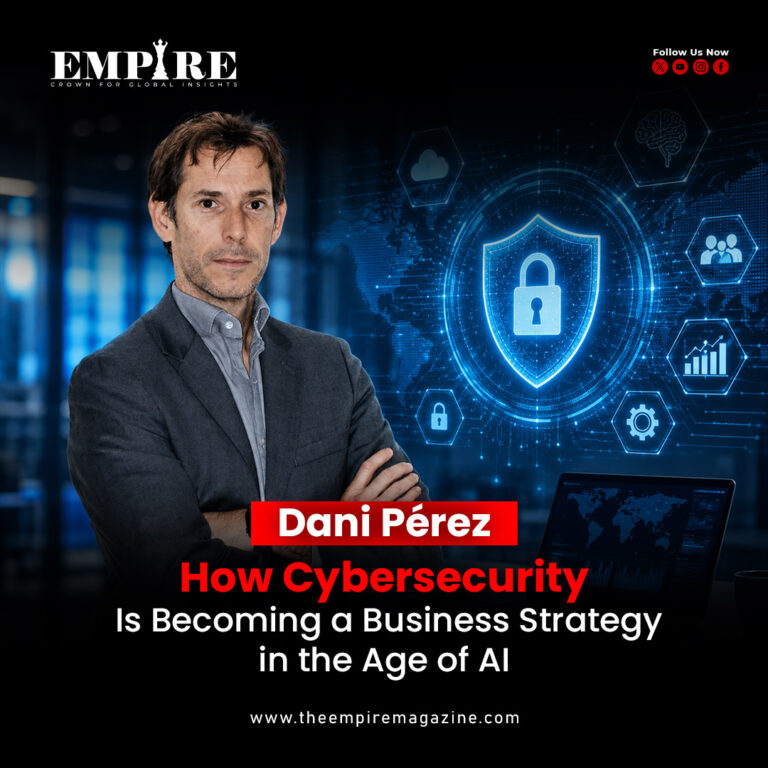

In today’s hyperconnected economy, cybersecurity is no longer a technical concern delegated to the IT department. It is a boardroom priority. As digital transformation accelerates across industries, the need for Cybersecurity Leadership for Business has become more urgent than ever.
From ransomware attacks crippling global supply chains to data breaches exposing millions of customer records, the threat landscape has evolved into a strategic risk that can destabilize even the strongest enterprises. Business leaders must now view cybersecurity not as an operational function, but as a pillar of long term growth, resilience, and trust.
The Era of Executive Accountability
The modern cyber threat is sophisticated, organized, and relentless. Cybercriminal networks operate like businesses. Nation state actors deploy advanced tools. Supply chain vulnerabilities create hidden entry points. In this environment, passive oversight is no longer acceptable.
Cybersecurity Leadership for Business requires executive accountability. CEOs and board members must understand:
- Their organization’s critical digital assets
- Industry specific cyber risks
- Regulatory exposure
- The financial impact of downtime
- The reputational cost of public breach disclosure
Recent high profile attacks have demonstrated that the consequences extend far beyond IT systems. Operations stop. Stock prices fall. Customer trust erodes. Legal liabilities multiply.
Leadership must therefore shift from reactive response to proactive governance.
Cyber Risk Is Business Risk
One of the biggest lessons from today’s cyber attacks is simple. Cyber risk is business risk.
A breach can:
- Interrupt revenue generating systems
- Expose intellectual property
- Trigger compliance penalties
- Impact investor confidence
- Damage brand reputation
For forward thinking executives, cybersecurity is now integrated into enterprise risk management. Security metrics are discussed alongside financial performance. Incident response plans are treated with the same seriousness as disaster recovery strategies.
True Cybersecurity Leadership for Business means embedding security into strategic planning, mergers, product development, and digital innovation initiatives.
Culture Starts at the Top
Technology alone cannot protect an organization. Culture does.
Employees remain one of the most common attack vectors. Phishing emails, weak passwords, and social engineering tactics exploit human behavior. This is why leadership must establish a security first culture.
Effective leaders:
- Promote cybersecurity awareness across departments
- Encourage reporting of suspicious activity
- Remove blame culture around honest mistakes
- Invest in regular training programs
- Lead by example in compliance and digital discipline
When leadership treats cybersecurity as a shared responsibility, resilience increases exponentially.
Investing in the Right Capabilities
Cybersecurity Leadership for Business also means making strategic investment decisions. Security budgets should not be seen as expenses, but as long term risk mitigation tools.
Critical areas for investment include:
- Multi factor authentication across systems
- Zero trust architecture models
- Continuous threat monitoring
- Third party vendor risk assessments
- Incident response simulation exercises
- Cybersecurity talent acquisition and retention
The global cybersecurity skills gap continues to widen. Organizations that build strong in house capabilities or partner with credible security firms gain a competitive advantage.
Learning from Real World Breaches
Every major cyber incident provides valuable insight for business leaders.
Speed matters. Organizations with tested response frameworks recover faster.
Communication matters. Transparent disclosure builds credibility, while silence damages reputation.
Preparation matters. Companies that conduct scenario planning and tabletop exercises are better positioned to manage crises calmly.
For deeper insight into leadership responsibility in high risk environments, read our related feature here:
👉 https://theempiremagazine.com/?p=5149&preview=true
Strong leadership is defined not by avoiding risk, but by preparing for it intelligently.
Supply Chain and Ecosystem Risk
Modern enterprises operate within digital ecosystems. Vendors, cloud providers, and software partners are deeply integrated into operations. This interconnectivity increases exposure.
Cybersecurity Leadership for Business requires:
- Third party due diligence
- Contractual security standards
- Vendor compliance verification
- Continuous monitoring of ecosystem vulnerabilities
A secure organization is only as strong as its weakest digital partner.
Cyber Insurance and Regulatory Evolution
Regulators across the globe are tightening cybersecurity requirements. From data protection frameworks to mandatory breach disclosures, compliance expectations are rising.
Cyber insurance can provide financial cushioning, but insurers now demand proof of strong internal controls before issuing coverage.
Leadership must therefore treat compliance as proactive strategy rather than forced obligation.
The Strategic Advantage of Trust
In 2025, digital trust is currency.
Customers choose brands they believe will protect their data. Investors support companies with transparent governance. Employees stay with organizations that demonstrate responsibility.
Cybersecurity Leadership for Business creates trust.
Trust strengthens loyalty.
Trust protects valuation.
Trust fuels sustainable growth.
Organizations that treat cybersecurity as a strategic differentiator rather than a defensive afterthought position themselves ahead of competitors.
The Road Ahead
The cyber threat landscape will continue evolving. Artificial intelligence driven attacks, deepfake fraud, and advanced ransomware operations are already emerging.
The leaders who will define the next decade are those who:
- Anticipate rather than react
- Align cybersecurity with corporate strategy
- Empower teams with knowledge and tools
- Balance innovation with protection
- Treat security as leadership responsibility
Cybersecurity is no longer optional governance. It is executive stewardship.
In the digital age, leadership is measured not only by revenue growth but by resilience.
And resilience begins with Cybersecurity Leadership for Business.
– The Empire Magazine
Crown For Global Insights