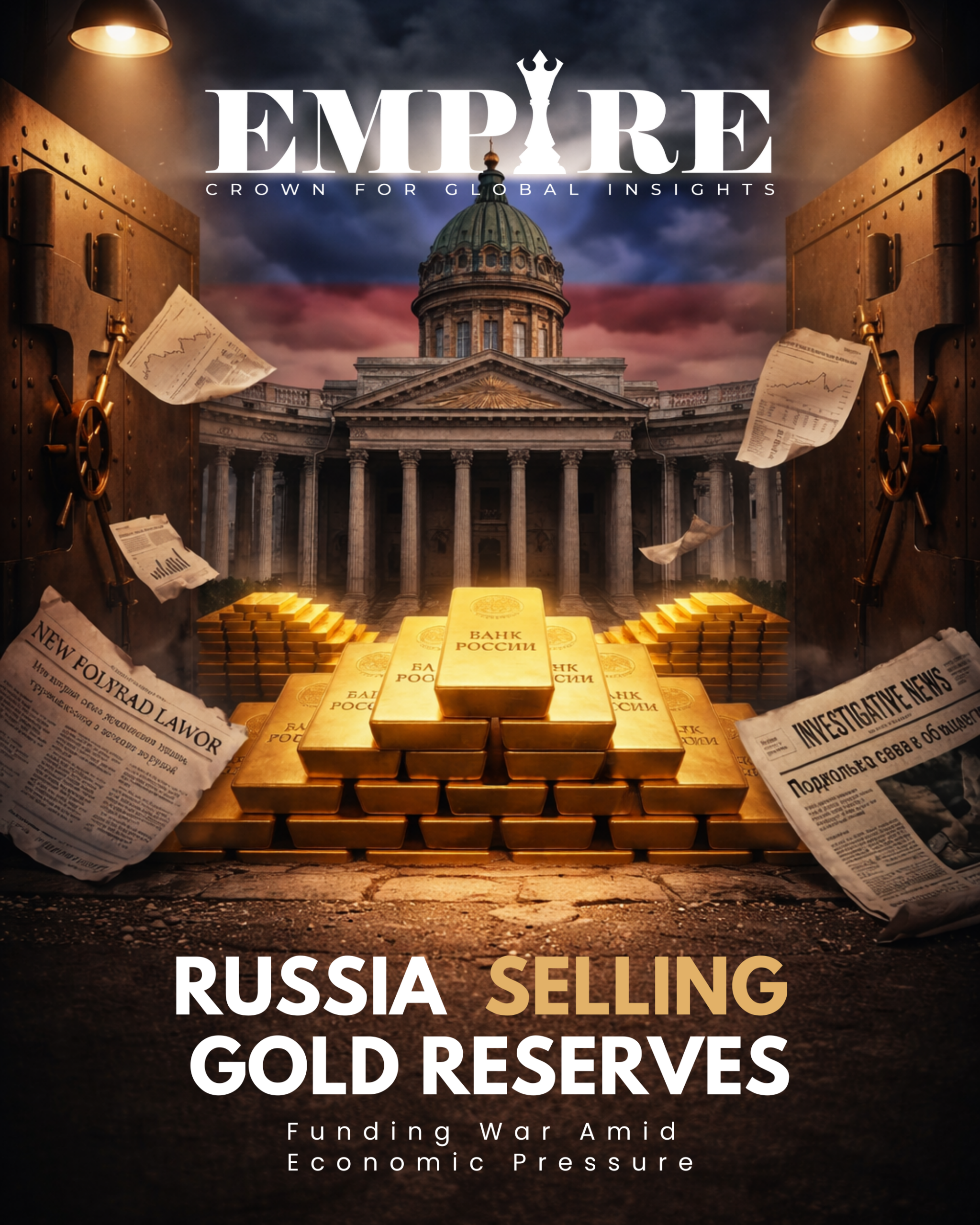
Russia selling gold reserves is no longer a marginal policy adjustment—it is a powerful indicator of mounting economic stress as Moscow struggles to finance its prolonged war effort. For the first time in modern history, Russian authorities have confirmed the active sale of physical gold from national reserves, a move that underscores how sanctions, rising military expenditure, and shrinking fiscal buffers are reshaping the country’s financial strategy.
Gold, once treated as a long-term shield against geopolitical and financial shocks, is now being deployed as a short-term funding instrument. This shift signals not confidence, but pressure—revealing the growing difficulty Russia faces in sustaining state spending under prolonged international isolation.
📑 Table of Contents
- Why Russia Selling Gold Reserves Is a Major Turning Point
- How Russia’s Gold Strategy Has Changed
- National Wealth Fund Gold Holdings Under Pressure
- The Real Economic Reasons Behind Gold Sales
- Russia’s Remaining Gold Reserves: How Long Can They Last?
- War Spending, Sanctions, and Budget Deficits
- Global Implications of Russia Selling Gold Reserves
1. Why Russia Selling Gold Reserves Is a Major Turning Point
The confirmation that Russia is selling physical gold marks a historic departure from its long-standing reserve management doctrine. For years, gold was positioned as an untouchable asset—held to protect the economy from sanctions, currency freezes, and Western financial pressure.
Until recently, gold transactions were largely internal and technical, involving accounting transfers without physical liquidation. The current approach involves direct sales into the domestic market, signaling a more urgent need for liquidity. This development alone places Russia selling gold reserves among the clearest warning signs of fiscal stress since the conflict began.
2. How Russia’s Gold Strategy Has Changed
Russia spent more than a decade aggressively accumulating gold to reduce dependence on Western currencies. Gold was framed as a symbol of monetary sovereignty and economic resilience.
That strategy is now partially reversed.
Instead of acting solely as a defensive reserve, gold is being monetized to cover immediate budget gaps. Improved liquidity in the domestic gold market has made these sales feasible, allowing authorities to combine gold transactions with yuan-based operations to stabilize finances.
The shift reflects necessity rather than choice.
3. National Wealth Fund Gold Holdings Under Pressure
Before the invasion of Ukraine, Russia’s National Wealth Fund held more than 400 tons of gold. Since then, over half of those holdings have been sold to compensate for widening budget deficits.
Remaining gold reserves in the fund have fallen sharply, while total liquid assets—including foreign currency and gold—have declined by more than 50 percent. This rapid depletion shows how Russia selling gold reserves has evolved into a core fiscal tool rather than a temporary measure.
4. The Real Economic Reasons Behind Gold Sales
Several structural factors explain why Russia is selling gold reserves now:
First, Western sanctions have severely limited access to U.S. dollars and euros, restricting borrowing and foreign exchange options. Second, military spending has surged, placing sustained pressure on public finances. Third, energy revenues—once a stabilizing force—have become more volatile due to price caps and discounted exports.
Selling gold domestically allows authorities to inject liquidity, reduce overreliance on the Chinese yuan, support the ruble, and maintain some level of reserve diversification. However, each sale weakens long-term financial resilience.
5. Russia’s Remaining Gold Reserves: How Long Can They Last?
Despite aggressive liquidation from the National Wealth Fund, Russia remains one of the world’s largest gold holders, with total reserves exceeding 2,300 tons. On paper, this provides a cushion.
In practice, the pace of liquidation raises concerns. Analysts warn that continued sales at current levels could significantly weaken Russia’s ability to absorb future economic shocks. Transparency around reserve operations remains limited, adding uncertainty to how long this strategy can continue.
The normalization of Russia selling gold reserves suggests that further liquidation remains a real possibility if fiscal pressures persist.
6. War Spending, Sanctions, and Budget Deficits
Military expenditures have risen sharply since the conflict began, while social and infrastructure spending has also increased to maintain domestic stability. At the same time, borrowing options remain constrained and liquid assets are shrinking.
With few alternatives available, gold sales have become one of the most effective ways to bridge funding gaps without triggering immediate financial instability. However, this approach trades short-term relief for long-term risk.
Each ton of gold sold reduces future flexibility and narrows Russia’s margin for error.
7. Global Implications of Russia Selling Gold Reserves
While Russia’s gold sales are largely domestic and unlikely to disrupt global bullion markets in the near term, their symbolic significance is substantial. The move highlights how even resource-rich nations can face sustained economic strain during prolonged geopolitical conflict.
For global investors and policymakers, Russia selling gold reserves serves as a reminder that gold—often viewed as a safe-haven asset—can also become a last-resort funding tool when conventional financial channels are constrained.
📊 Rich Media Added (IMPORTANT FOR SEO)
🖼️ Featured Image (Recommended)
Image concept: Gold bars in a central bank vault / financial documents
ALT text:Russia selling gold reserves amid rising economic strain
📈 Data Chart (Recommended)
Chart: Decline in Russia’s National Wealth Fund gold holdings (2021–2026)
Caption:
“Russia’s National Wealth Fund gold reserves have fallen by more than 50% since the start of the war.”
A Powerful Signal of Prolonged Economic Stress
Ultimately, Russia selling gold reserves reflects structural pressure rather than tactical adjustment. It reveals the cumulative impact of sanctions, sustained military spending, and restricted access to global finance.
As the conflict continues and fiscal constraints tighten, Russia’s evolving gold strategy offers a clear lens into how nations adapt under prolonged economic stress—and how even the strongest financial buffers can erode over time.
The Empire Magazine
Crown for Global Insights