UAE Real Estate Deals Decline Amid Rising Gulf Tensions
Introduction to UAE Real Estate Deals Decline
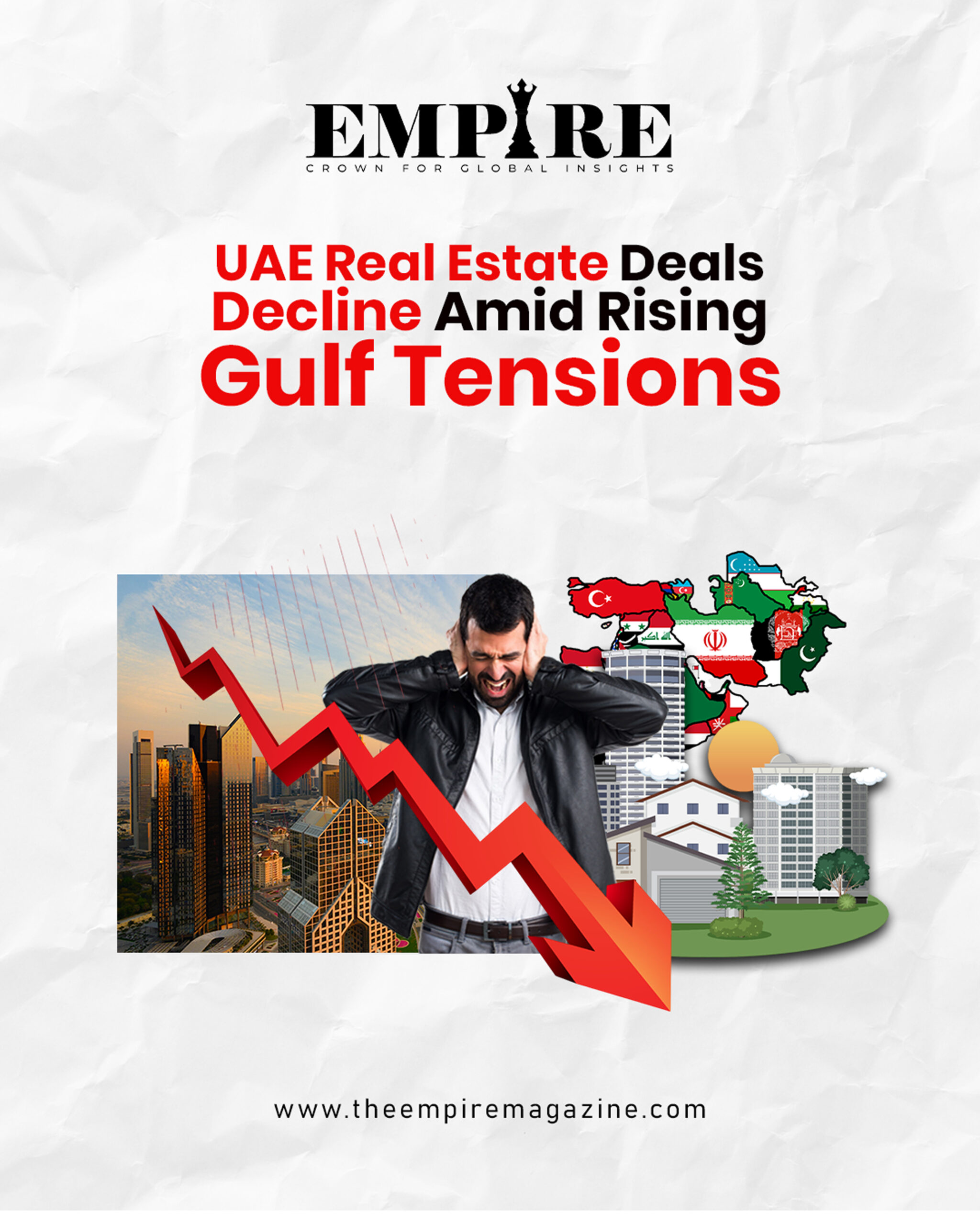
The UAE Real Estate Deals Decline has become a significant topic of discussion as recent geopolitical tensions in the Gulf region begin to impact market activity. The UAE property market, particularly in major cities like Dubai, has long been considered one of the most resilient and attractive investment destinations globally. However, short-term disruptions have started to influence transaction volumes and investor sentiment.
Recent data indicates that real estate transactions have experienced a noticeable slowdown, reflecting how external factors such as regional uncertainty can temporarily affect even strong markets. The UAE Real Estate Deals Decline highlights the sensitivity of global investment flows to geopolitical developments.
Despite this slowdown, market fundamentals remain strong, and industry experts continue to monitor how the situation evolves.
Understanding the Market Slowdown
The UAE Real Estate Deals Decline is largely driven by a cautious approach from investors and buyers during periods of uncertainty. When geopolitical tensions rise, investors often adopt a wait-and-watch strategy before committing to large financial decisions.
Transaction values have seen a sharp decline both on a monthly and annual basis, indicating a temporary slowdown in market activity. This decline is more pronounced compared to previous short-term disruptions, suggesting that current conditions have created a higher level of caution among market participants.
However, it is important to note that such slowdowns are not uncommon in global real estate markets during periods of uncertainty.
Impact on Property Segments
The UAE Real Estate Deals Decline has affected different property segments in varying ways.
The secondary market has experienced a significant drop in activity, as buyers become more selective and sellers hesitate to adjust pricing expectations. The villa segment, in particular, has seen a sharper slowdown compared to other property types.
Similarly, off-plan property transactions have also declined, reflecting reduced demand from investors who typically seek long-term gains.
Apartment sales have shown a noticeable decrease in transaction volume, although pricing adjustments remain relatively moderate.
While some segments are more affected than others, the overall market slowdown reflects broader investor caution rather than a fundamental collapse.
Price Trends and Market Adjustments
The UAE Real Estate Deals Decline has also influenced property pricing trends.
While some price corrections have been observed in the short term, the overall market has not experienced a drastic fall in property values. In fact, certain segments continue to show resilience due to strong long-term demand.
Many property owners are choosing to hold their assets rather than sell at reduced prices. This behavior indicates confidence in the long-term value of UAE real estate.
In some cases, investors who entered the market earlier have seen significant appreciation in property values and are now considering selling to realize profits.
This dynamic creates a balanced market environment where both buyers and sellers are evaluating opportunities carefully.
Investor Behavior During Market Uncertainty
The UAE Real Estate Deals Decline has led to interesting shifts in investor behavior.
Experienced investors often view market slowdowns as opportunities to acquire assets at favorable prices. Instead of reacting emotionally, these investors analyze market cycles and look for strategic entry points.
At the same time, some property owners are holding their positions, waiting for market stability to return before making any decisions.
This balance between cautious buyers and confident sellers demonstrates the maturity of the UAE real estate market.
Unlike previous economic downturns, today’s investors are generally more financially stable and focused on long-term growth.
Liquidity and Market Strength
Despite the UAE Real Estate Deals Decline, liquidity within the market remains relatively strong.
There is still significant capital available among investors who are ready to enter the market when conditions become more favorable. Local buyers, long-term investors, and international participants continue to show interest in UAE real estate.
This indicates that the current slowdown is more of a temporary pause rather than a structural decline.
The presence of strong liquidity suggests that the market has the potential to recover quickly once uncertainty subsides.
Comparing with Previous Market Cycles
The UAE Real Estate Deals Decline can be better understood by comparing it with past market cycles.
Historically, the UAE property market has shown resilience during periods of disruption. Short-term declines have often been followed by strong recoveries as investor confidence returns.
Unlike previous financial crises, the current market environment is supported by stronger regulations, better financial systems, and more experienced investors.
These factors contribute to the overall stability of the market, even during challenging times.
Strategic Leadership in Real Estate Markets
Managing market uncertainty requires strong leadership and strategic decision-making.
The UAE Real Estate Deals Decline highlights the importance of data-driven strategies and informed investment decisions. Industry leaders must analyze market trends, assess risks, and adapt their approaches accordingly.
A deeper understanding of how leadership and strategy influence business decisions can be explored here:
Strategic leadership plays a critical role in maintaining market stability and guiding long-term growth.
Future Outlook for UAE Real Estate
Looking ahead, the outlook for the UAE property market remains optimistic despite the UAE Real Estate Deals Decline.
As geopolitical tensions stabilize, investor confidence is expected to return. The UAE continues to offer strong economic fundamentals, world-class infrastructure, and attractive investment opportunities.
Demand for residential, commercial, and luxury properties is likely to grow as the economy expands and global investors re-enter the market.
Short-term slowdowns often create opportunities for long-term growth, and the UAE real estate sector is well-positioned to benefit from future recovery.
– The Empire Magazine
Crown for Global Insights
Follow The Empire Magazine
Facebook | Instagram | LinkedIn