Microsoft AI Transformation: How Satya Nadella Rebuilt a Tech Giant for the AI Era
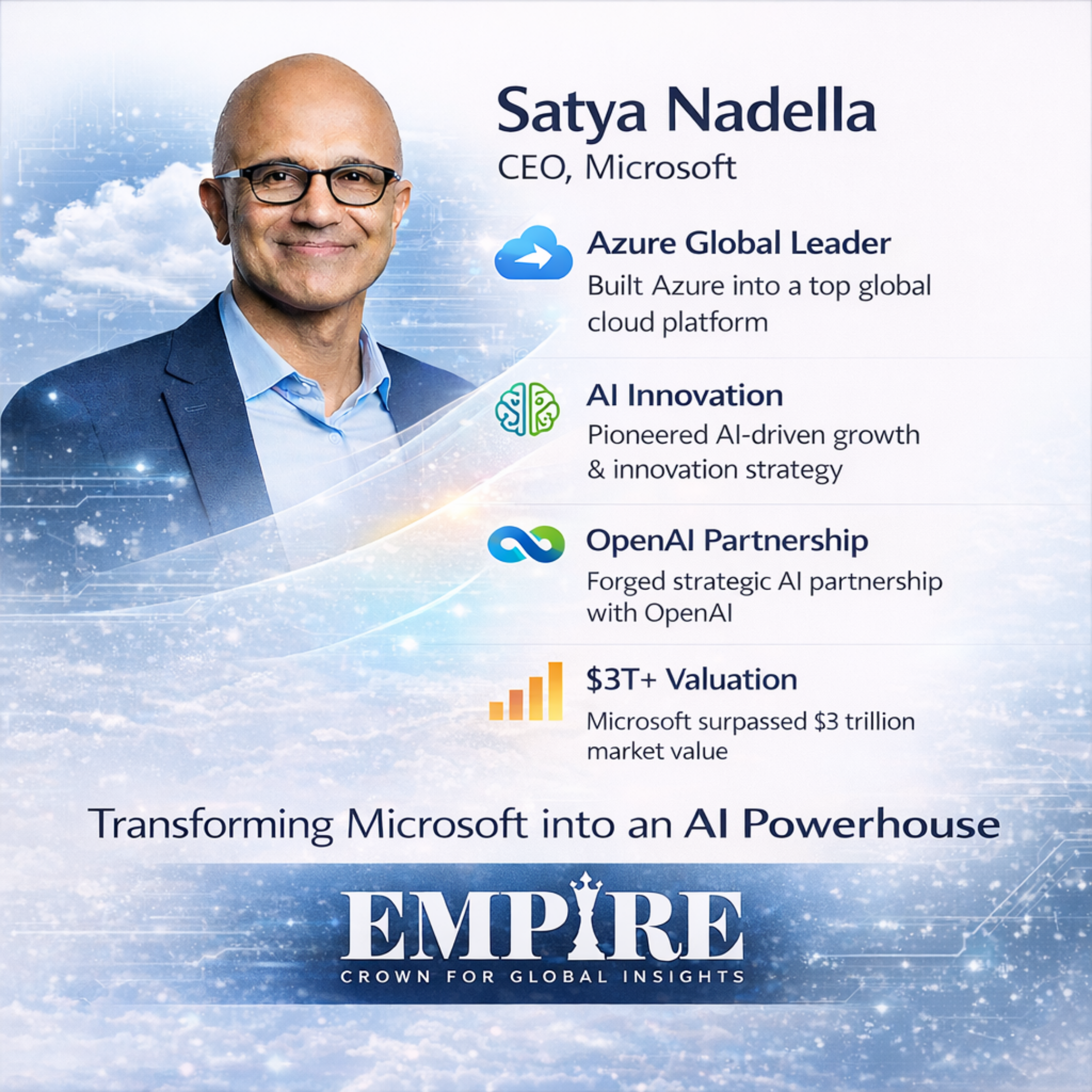
The Microsoft AI transformation stands as one of the most significant corporate reinventions in modern business history. Once known primarily as a software company anchored to Windows and Office, Microsoft has evolved into a cloud-first, AI-driven global technology powerhouse. This transformation did not happen overnight. It was the result of a clear long-term vision, cultural reinvention, and bold strategic decisions led by Satya Nadella, who became CEO in 2014.
Under Nadella’s leadership, Microsoft has not only reclaimed its relevance in the technology sector but has positioned itself at the center of the artificial intelligence revolution—reshaping how businesses, governments, and individuals interact with technology.
The Turning Point in Microsoft’s Strategy
When Nadella took charge, Microsoft faced mounting challenges. The company was struggling to compete with cloud-native rivals, innovation cycles were slowing, and internal culture was widely seen as rigid and risk-averse. The market had begun to question whether Microsoft could adapt to a rapidly changing digital landscape.
Nadella responded by redefining Microsoft’s core identity. Instead of protecting legacy products, he embraced a cloud-first and AI-first strategy, signaling a fundamental shift in priorities. This strategic reset became the foundation of the Microsoft AI transformation.
Rather than focusing solely on consumer dominance, Microsoft repositioned itself as a global platform company—one that empowers enterprises, developers, and institutions through intelligent cloud services and data-driven solutions.
Azure: The Backbone of Microsoft AI Transformation
A critical pillar of Microsoft’s AI transformation has been the rapid expansion of Microsoft Azure. Azure was elevated from a supporting service into the company’s primary growth engine. Nadella recognized early that artificial intelligence could not scale without robust cloud infrastructure.
Azure evolved into one of the world’s leading cloud platforms, offering enterprises secure, scalable, and hybrid solutions that integrate seamlessly with existing IT environments. This enterprise-friendly approach allowed Microsoft to compete directly with other major cloud providers while differentiating itself through flexibility and trust.
AI services built on Azure—including machine learning, data analytics, and intelligent automation—became central to Microsoft’s value proposition. Today, Azure acts as the backbone for AI workloads across industries, from finance and healthcare to manufacturing and government.
Generative AI and the OpenAI Partnership
A defining moment in the Microsoft AI transformation came with the company’s strategic partnership with OpenAI. Long before generative AI captured global attention, Microsoft made a decisive move to invest deeply in advanced AI research and commercialization.
This partnership allowed Microsoft to integrate powerful AI models directly into its ecosystem. Rather than treating AI as a standalone feature, Microsoft embedded intelligence into everyday tools—transforming productivity software, developer platforms, and enterprise workflows.
Products like AI-powered copilots, intelligent coding assistants, and enterprise AI solutions demonstrated Microsoft’s ability to translate cutting-edge research into real-world applications. This practical, scalable approach helped Microsoft emerge as a global leader in AI services, not just AI research.
Reinventing Productivity Through AI
One of the most visible outcomes of the Microsoft AI transformation is the reinvention of workplace productivity. AI is now embedded across Microsoft’s core offerings, enabling users to automate tasks, analyze information faster, and make smarter decisions.
Rather than replacing human effort, Microsoft’s AI strategy emphasizes augmentation—helping professionals work more efficiently and creatively. From drafting content and analyzing data to writing code and managing workflows, AI has become a seamless layer across Microsoft’s ecosystem.
This integration has strengthened customer loyalty and increased the value of Microsoft’s subscription-based business model, reinforcing long-term revenue stability.
Financial Growth and Market Leadership
The business impact of Microsoft’s AI transformation has been profound. Under Nadella’s tenure, Microsoft’s market capitalization surged beyond $3 trillion, placing it among the most valuable companies in the world. This growth reflects strong investor confidence in Microsoft’s AI-driven strategy and diversified revenue streams.
Cloud services, AI-powered enterprise solutions, and recurring subscriptions have reduced dependence on cyclical markets. Microsoft is now better positioned to withstand economic uncertainty while continuing to invest heavily in future technologies.
Importantly, this financial success has been achieved without sacrificing long-term vision for short-term gains—a hallmark of Nadella’s leadership approach.
Culture as a Catalyst for Innovation
Technology alone did not drive Microsoft’s AI transformation. Equally important was a deep cultural shift within the organization. Nadella introduced a mindset change from a “know-it-all” culture to a “learn-it-all” culture, encouraging curiosity, collaboration, and continuous learning.
Empathy became a core leadership principle, influencing how teams worked internally and how Microsoft engaged with customers and partners. This cultural reset enabled faster innovation, reduced internal friction, and attracted top global talent in AI and engineering.
By aligning culture with strategy, Microsoft created an environment where innovation could scale sustainably.
Responsible AI and Global Influence
As artificial intelligence becomes more powerful, Nadella has emphasized the importance of responsible AI development. Microsoft has taken a proactive role in advocating for ethical frameworks, transparency, and governance around AI technologies.
The company actively collaborates with governments, academic institutions, and international organizations to shape policies that balance innovation with accountability. This approach strengthens Microsoft’s credibility as a trusted technology partner at a time when AI regulation and public trust are critical global issues.
Through its AI platforms, cloud infrastructure, and digital services, Microsoft now plays a foundational role in global digital economies.
The Future of Microsoft AI Transformation
The Microsoft AI transformation is still unfolding. As AI capabilities advance, Microsoft continues to invest heavily in infrastructure, research, and partnerships that will define the next phase of digital innovation.
From enterprise automation and intelligent cloud services to responsible AI leadership, Microsoft’s evolution under Satya Nadella offers a blueprint for how legacy companies can reinvent themselves in the age of artificial intelligence.
What began as a strategic pivot has become a defining era—one that positions Microsoft not just as a technology company, but as a global architect of the AI-powered future.
The Empire Magazine
Crown for Global Insights