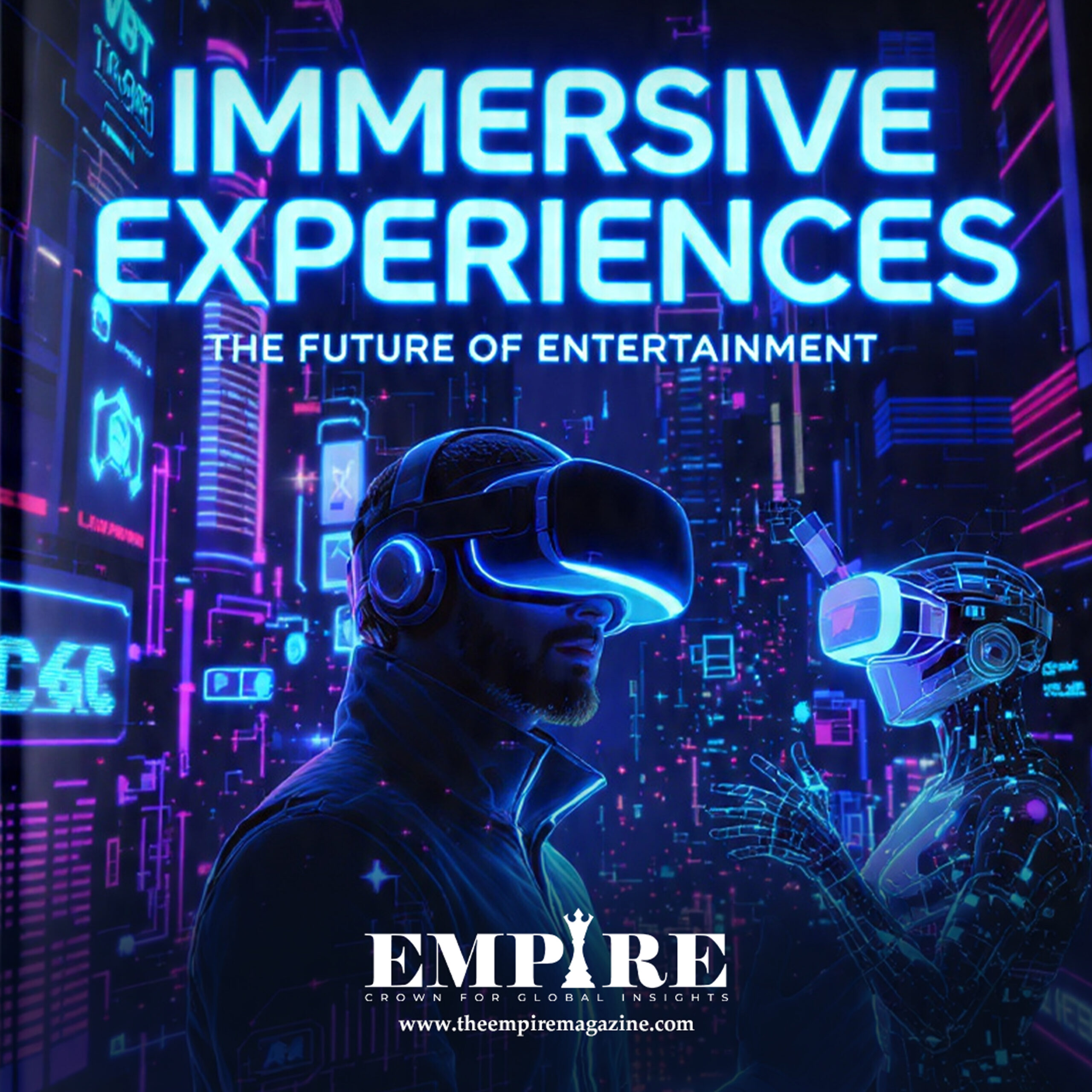
Immersive Experiences: The Future of Entertainment
Introduction: The Rise of Immersive Experiences
Immersive Experiences are redefining the future of entertainment. For over a century, cinema served as our gateway into imagined worlds. Audiences gathered in dark theatres, watched stories unfold on glowing screens, and emotionally connected with characters from a distance. But the digital age is transforming that passive relationship.
Entertainment is no longer about observing from the outside. It is about stepping inside the story. Immersive Experiences mark a structural shift in how content is created, consumed, and emotionally processed. The audience is no longer a spectator. It is becoming a participant.
This transformation is not a passing trend. It is the next evolutionary stage of storytelling.
The Shift from Passive Viewing to Participation
For decades, storytelling followed a one-directional model. Directors created. Audiences consumed. Interaction was limited.
Today, that model is changing.
Immersive Experiences invite users into the narrative. Whether through virtual reality (VR), augmented reality (AR), interactive gaming, immersive theatre, or digital installations, audiences now influence and inhabit the story world.
This shift reflects a deeper psychological desire: presence.
Modern audiences crave connection, emotional depth, and personal involvement. Watching a hero save the world is powerful. Becoming part of that world is transformative.
Technology Powering Immersive Experiences
The rise of Immersive Experiences is being accelerated by advanced technologies:
- Virtual Reality (VR) creates fully simulated environments.
- Augmented Reality (AR) layers digital elements onto real surroundings.
- Mixed Reality (MR) blends physical and digital interaction.
- Artificial Intelligence (AI) adapts storylines based on audience behavior.
- Spatial audio and motion tracking enhance realism.
Gaming was the first industry to master this integration. Titles like The Last of Us and Red Dead Redemption demonstrated how interactive storytelling could rival cinematic emotion.
Today, immersive production techniques are expanding into film, education, tourism, healthcare, and live entertainment.
For deeper insight into how technology is reshaping creative ecosystems and innovation globally, read our previous feature here:
👉 https://theempiremagazine.com/?p=5084&preview=true
The Global Movement Toward Immersion
Across the world, Immersive Experiences are becoming cultural landmarks.
- In Tokyo, digital art installations respond to visitor movement.
- In Paris, projection mapping transforms museums into emotional journeys.
- In New York, experiential spaces blend nostalgia and digital storytelling.
- In India, immersive art festivals and 360-degree theatres are rising rapidly.
Germany has emerged as a leader in immersive design, merging engineering precision with theatrical tradition. Creative studios are building interactive environments rooted in psychology, design thinking, and storytelling heritage.
Immersive Experiences are no longer experimental. They are mainstream.
The Emotional Power Behind Immersive Experiences
Technology alone does not define Immersive Experiences. Emotion does.
The true power of immersion lies in empathy.
Consider a traditional documentary about climate change. Now imagine standing inside a melting glacier through VR, hearing cracking ice, witnessing environmental collapse in scale. That shift from observation to presence deepens emotional understanding.
Immersive Experiences transform awareness into connection.
This is why educators, filmmakers, and brands are embracing immersive formats. Engagement levels increase dramatically when people feel part of an environment rather than distant observers.
Why Audiences Crave Immersive Experiences
Modern audiences are overwhelmed by content. Endless scrolling, constant releases, and algorithm-driven recommendations create saturation.
In this environment, meaning matters more than volume.
Immersive Experiences offer:
- Higher emotional retention
- Stronger memory formation
- Greater personal connection
- Deeper engagement
Research shows experiential storytelling significantly increases recall and emotional impact. Education platforms, tourism companies, and global brands are leveraging immersive strategies to build loyalty and differentiation.
Spectators become participants.
Participants become advocates.
Challenges Facing Immersive Experiences
Despite rapid growth, Immersive Experiences face key challenges:
- High production costs
- Limited accessibility
- Hardware dependency
- Ethical concerns around hyper-real simulation
- Data privacy considerations
Creators must balance technological ambition with artistic integrity and ethical responsibility.
Immersive Experiences should enhance humanity — not replace it.
The Future of Immersive Experiences
The evolution from cinema to simulation does not signal the death of traditional storytelling. It signals expansion.
Directors are becoming world-builders. Writers are designing branching narratives. Designers collaborate with engineers, psychologists, and musicians.
The entertainment ecosystem is converging into experience design.
In the future:
- Audiences will shape narratives.
- Stories will adapt dynamically.
- Emotional engagement will deepen.
- Physical and digital spaces will merge seamlessly.
Immersive Experiences represent the next chapter in human storytelling — not driven by technology alone, but by the timeless desire to connect.
Conclusion: Living the Story
Immersive Experiences redefine what entertainment means in the digital age. They move storytelling beyond screens into environments that can be walked through, touched, and emotionally inhabited.
Human beings have always sought ways to bring imagination to life — from cave paintings to cinema. Today, we are building interactive worlds.
The future of entertainment will not simply be watched.
It will be lived.
– The Empire Magazine
Crown For Global Insights