
How Much Water Should You Drink Daily Explained
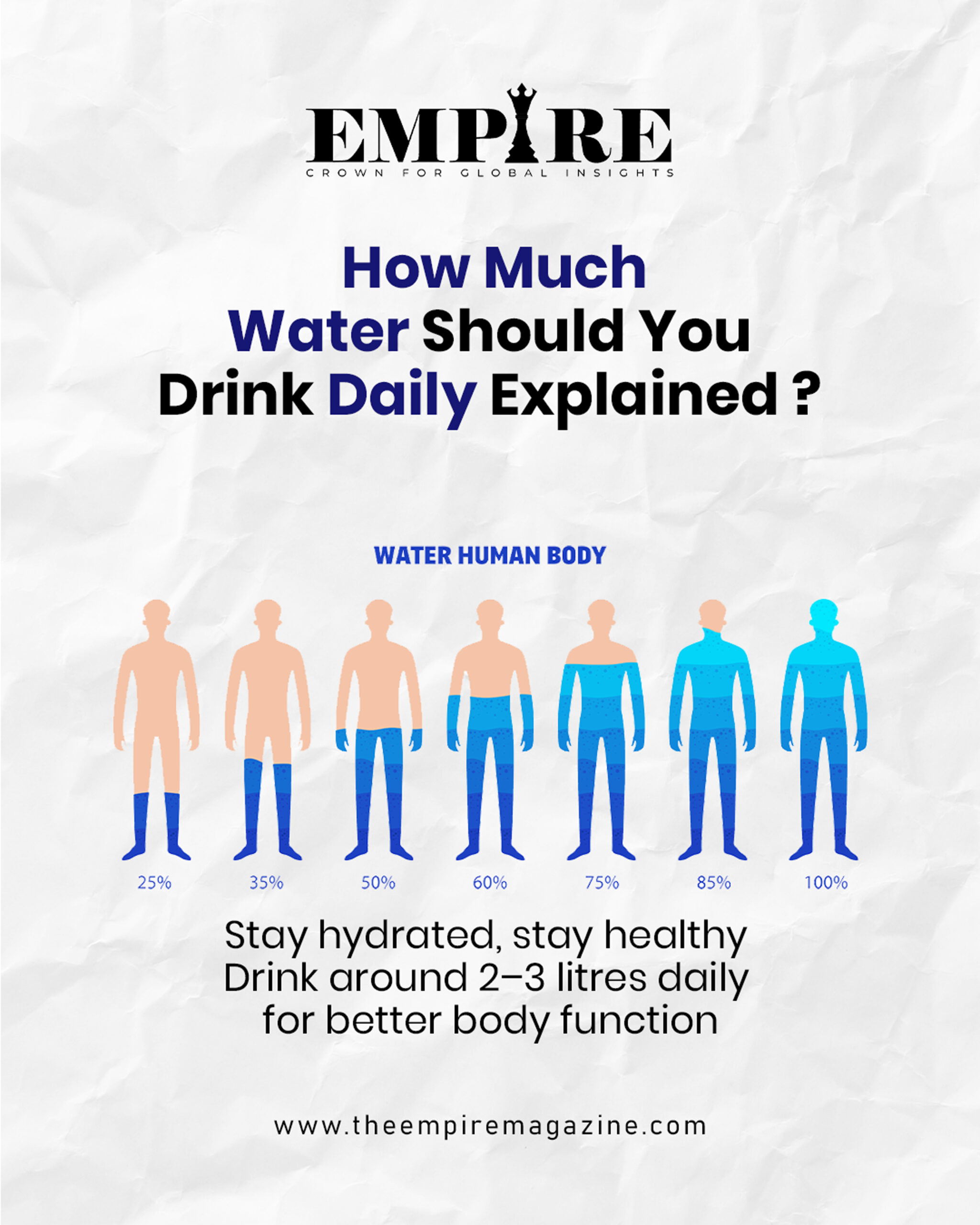
Introduction to How Much Water Should You Drink Daily
Understanding how much water should you drink daily is essential for maintaining good health, energy levels, and overall well-being. While many people follow the popular “8-by-8 rule,” which suggests drinking eight glasses of water per day, this guideline is not suitable for everyone.
Hydration needs vary widely depending on lifestyle, environment, and individual body requirements. Relying on a fixed number may not always ensure optimal hydration. Instead, it’s important to understand how your body responds to water intake and adjust accordingly.
The Truth Behind the 8-by-8 Rule
The widely known 8-by-8 rule recommends consuming around 64 ounces (about 1.9 liters) of water daily. While this is easy to remember, it is not scientifically tailored for individual needs.
The idea became popular because it provides a simple structure for people who struggle with hydration habits. However, it does not consider factors such as body weight, physical activity, or climate conditions.
In reality, how much water should you drink daily depends on a variety of personal factors. For some, 64 ounces may be sufficient, while for others it may be too little or even excessive.
Recommended Daily Water Intake
Health guidelines suggest an “adequate intake” level for hydration. On average:
- Men may require around 3.7 liters (about 125 ounces) of fluids daily
- Women may require around 2.7 liters (about 91 ounces) of fluids daily
This includes not only water but also fluids from beverages like tea or milk, as well as water-rich foods such as fruits, vegetables, and soups.
These numbers provide a general benchmark, but they are not strict rules. The key is to observe your body and adjust your intake based on your daily routine.
Factors That Affect How Much Water You Should Drink
Several important factors influence how much water should you drink daily. Understanding these can help you personalize your hydration strategy.
1. Physical Activity
If you exercise regularly or have an active job, your body loses more fluids through sweat. This increases your need for water to maintain balance.
2. Climate and Environment
Hot or dry weather can lead to increased fluid loss. People living in warmer climates typically need more water than those in cooler regions.
3. Body Size and Metabolism
Larger individuals or those with higher metabolic rates often require more water compared to others.
4. Health Conditions
Certain conditions such as pregnancy, breastfeeding, or illness can increase hydration needs significantly.
Signs Your Body Needs More Water
Your body provides clear signals when hydration levels are low. Recognizing these signs is essential in understanding how much water should you drink daily.
Common signs of dehydration include:
- Fatigue and low energy
- Headaches or dizziness
- Dry skin or chapped lips
- Muscle cramps
- Dark yellow urine
One of the simplest ways to monitor hydration is by checking urine color. Light yellow usually indicates proper hydration, while darker shades suggest the need for more fluids.
Practical Hydration Tips for Daily Life
Instead of following rigid rules, adopting flexible habits can help you stay hydrated consistently.
Here are a few effective strategies:
- Drink water when you feel thirsty, as your body naturally signals its needs
- Build habits like drinking a glass of water before or after meals
- Keep a water bottle nearby to remind yourself to drink regularly
Another useful approach is linking hydration with daily routines, such as drinking water after waking up or before leaving home. These small habits can make a big difference over time.
Smarter Hydration Guidelines
Some people prefer structured methods to track their intake. While not perfect, these can serve as helpful starting points.
A commonly used method is drinking half your body weight in ounces of water daily. For example, a person weighing 150 pounds may aim for around 75 ounces of water.
However, this method should still be adjusted based on activity level and environmental conditions.
Key hydration approaches include:
- Drinking based on thirst signals
- Following body-weight-based intake guidelines
- Building consistent hydration habits
The goal is not perfection but consistency and awareness.
Why Proper Hydration Matters
Knowing how much water should you drink daily is important because water plays a vital role in nearly every bodily function.
It helps regulate body temperature, supports digestion, improves circulation, and enhances cognitive performance. Proper hydration also contributes to healthier skin and better physical endurance.
When hydration levels are balanced, the body functions more efficiently, leading to improved overall health and productivity.
The Future of Personalized Hydration
As health awareness grows, the approach to hydration is becoming more personalized. Instead of relying on generic rules, people are focusing on individual needs and lifestyle factors.
Technology and health tracking tools are also making it easier to monitor hydration levels and build better habits. This shift is helping individuals understand how much water should you drink daily in a more accurate and practical way.
For more insights on health and innovation, visit:
https://theempiremagazine.com/?p=5614&preview=true
– The Empire Magazine
Crown for Global Insights
Follow us:
Instagram: https://www.instagram.com/the_empire_magazine/
Facebook: https://www.facebook.com/profile.php?id=61573749076160