Introduction
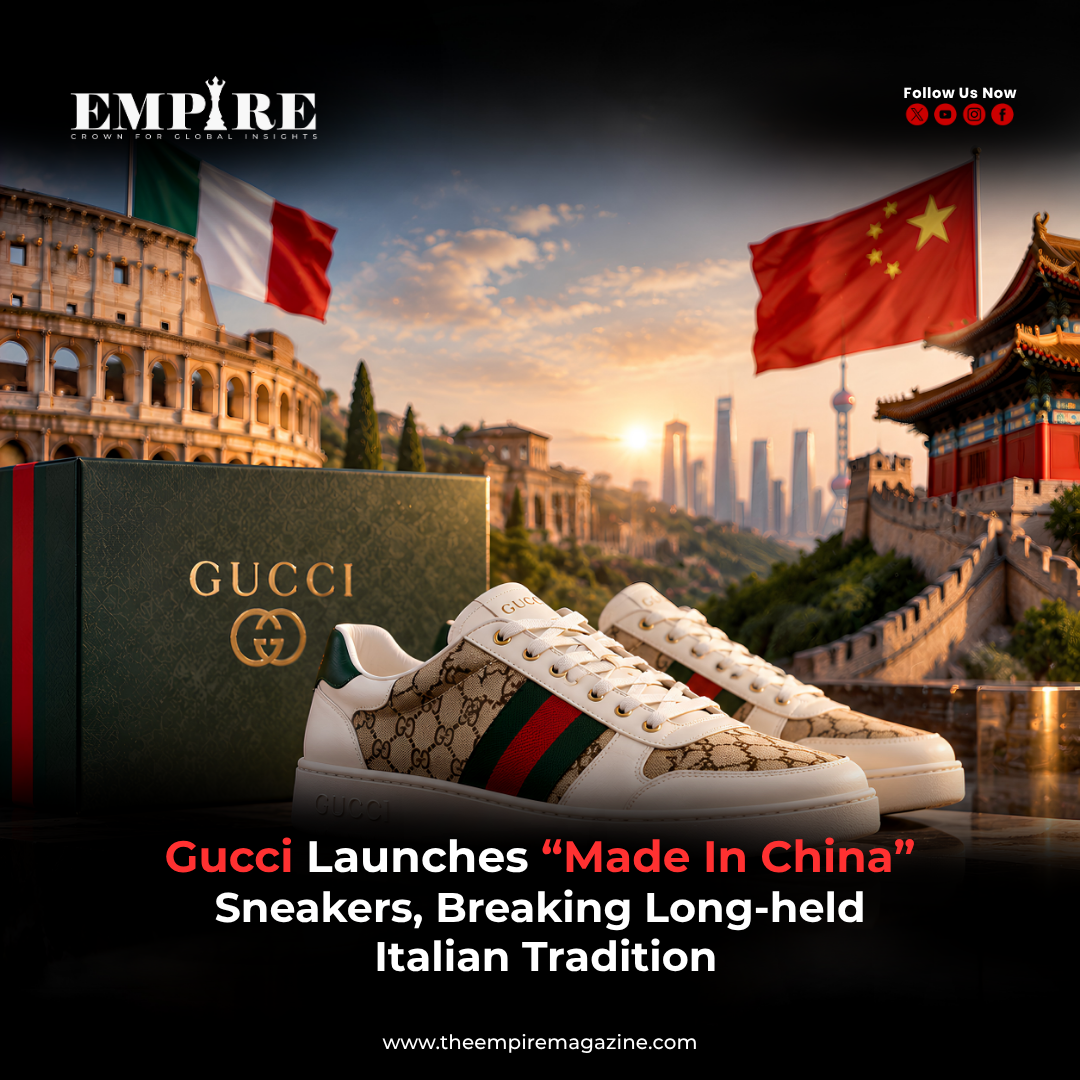
Gucci’s decision to launch sneakers manufactured in China marks a significant shift in the luxury fashion industry, challenging long-standing perceptions around Italian craftsmanship and the meaning of “Made in Italy.”
For decades, Gucci has been closely associated with Italian heritage, artisanal production, and the reputation of Florence and other Italian regions as centres of luxury craftsmanship. The brand’s identity has been built around a combination of traditional techniques, premium materials, and European manufacturing expertise.
The introduction of “Made in China” sneakers represents a broader transformation taking place across the luxury sector, where global brands are balancing heritage, supply chain efficiency, production capacity, and changing consumer expectations.
The move also raises a larger industry question: how are luxury brands redefining craftsmanship in a globalised manufacturing environment?
Gucci’s Shift Beyond Traditional Italian Production
Gucci, one of the world’s most recognised luxury fashion houses, has historically highlighted its Italian roots through its products, marketing, and brand storytelling.
The phrase “Made in Italy” has played an important role in luxury fashion because consumers often associate it with:
- Skilled craftsmanship
- Heritage manufacturing
- Premium quality
- Attention to detail
However, luxury companies today operate within complex global supply chains. Brands increasingly source materials, manufacture products, and manage production across multiple countries to meet global demand.
Gucci’s move into China-made sneakers reflects this changing reality, where manufacturing decisions are influenced by factors beyond tradition alone.
Why Gucci Is Producing Sneakers in China
China has become one of the world’s largest manufacturing hubs, with advanced production capabilities across footwear, electronics, textiles, and consumer goods.
Modern Chinese manufacturing has evolved significantly, offering:
- Advanced production technology
- Large-scale manufacturing capacity
- Skilled labour networks
- Efficient supply chain systems
For luxury brands, working with global manufacturing partners can help manage production volumes while maintaining product standards.
The decision does not necessarily represent a complete shift away from Italian craftsmanship but highlights how luxury companies are adapting their production strategies in a competitive global market.
The Changing Meaning of Luxury Manufacturing
Luxury fashion has traditionally been linked with geographic identity.
Brands have often used country-of-origin labels as part of their storytelling:
Made in Italy → Heritage and craftsmanship
Made in France → Fashion tradition
Swiss Made → Precision and engineering
However, globalisation has changed how products are created.
Today, luxury products often involve international supply chains where:
- Design may happen in one country
- Materials may come from multiple regions
- Manufacturing may take place in different locations
- Final quality checks may occur separately
The luxury industry is increasingly focused on combining heritage with modern operational efficiency.
How This Impacts Gucci’s Brand Identity
Gucci’s brand value has historically been connected to exclusivity, craftsmanship, and Italian fashion culture.
The introduction of China-made sneakers creates a new challenge: maintaining consumer trust while expanding production capabilities.
Luxury consumers often evaluate products based on:
- Brand reputation
- Design
- Materials
- Craftsmanship
- Authenticity
For Gucci, communication will be important. The company must explain how global manufacturing fits within its quality standards and luxury positioning.
China’s Growing Role in the Luxury Supply Chain
China has increasingly become an important part of global luxury manufacturing.
While Italy remains a major centre for luxury craftsmanship, Chinese factories have developed expertise in producing high-quality goods across various industries.
The country’s manufacturing ecosystem includes:
- Advanced machinery
- Experienced production teams
- Large supplier networks
- Technology-driven processes
This evolution has changed perceptions of Chinese manufacturing, which was historically associated mainly with mass production.
Today, many global companies rely on Chinese manufacturing capabilities for sophisticated products.
The Business Strategy Behind the Decision
From a business perspective, global production strategies help luxury brands address several challenges:
Meeting Global Demand
Luxury brands operate across international markets with millions of customers. Efficient supply chains help companies respond to demand.
Managing Costs
Manufacturing decisions influence production costs, pricing strategies, and profitability.
Expanding Product Categories
Sneakers have become a major segment of luxury fashion, combining streetwear culture with premium branding.
Gucci’s move reflects the importance of footwear in the modern luxury market.
Luxury Sneakers Become a Major Growth Market
Luxury sneakers have transformed from casual footwear into a significant fashion category.
Brands including Gucci, Louis Vuitton, Dior, Balenciaga, and others have invested heavily in premium sneakers.
The growth of luxury sneakers has been driven by:
- Younger consumers
- Streetwear influence
- Celebrity culture
- Changing fashion preferences
Sneakers now represent a connection between luxury heritage and contemporary lifestyle.
For Gucci, expanding sneaker production allows the brand to compete in a rapidly growing segment.
Challenges and Consumer Reaction
The biggest challenge for Gucci is managing consumer perception.
Some luxury customers may question whether products manufactured outside Italy can maintain the same level of craftsmanship associated with the brand.
Potential concerns include:
- Brand authenticity
- Quality expectations
- Heritage perception
- Consumer trust
However, others argue that manufacturing location alone does not determine product quality. Modern luxury depends on design, materials, quality control, and overall brand experience.
The debate reflects a larger conversation happening across the fashion industry.
The Future of Global Luxury Manufacturing
Gucci’s China-made sneakers highlight a wider trend: luxury brands are becoming more global in their production strategies.
The future of luxury manufacturing may involve a combination of:
- Traditional craftsmanship
- Advanced technology
- Global supply chains
- Sustainable production methods
Luxury companies will increasingly need to balance heritage with innovation.
The definition of luxury is evolving from simply where a product is made toward how it is designed, produced, and experienced by customers.
Frequently Asked Questions
Why is Gucci making sneakers in China?
Gucci’s move reflects the changing nature of global luxury manufacturing, where brands use international production networks to support demand and efficiency.
Does “Made in China” affect Gucci’s luxury image?
The impact depends on consumer perception, product quality, and how Gucci communicates its manufacturing standards.
Is Gucci moving away from Italian craftsmanship?
The production of China-made sneakers does not necessarily mean Gucci is abandoning Italian craftsmanship. Luxury brands often use multiple manufacturing locations across global supply chains.
Why are luxury brands expanding sneaker production?
Luxury sneakers have become a major growth category due to changing consumer preferences, streetwear influence, and demand from younger buyers.
Explore more global business, technology and innovation coverage in The Empire Magazine’s article archive.
Read our related business coverage: google-project-suncatcher-ai-chips-space/
Follow The Empire Magazine for global business, technology, innovation, and leadership insights:
Facebook: The Empire Magazine
Instagram: @the_empire_magazine
The Empire Magazine | Crown For Global Insights