Bootstrapping vs Funding: Which Builds a Stronger Empire?
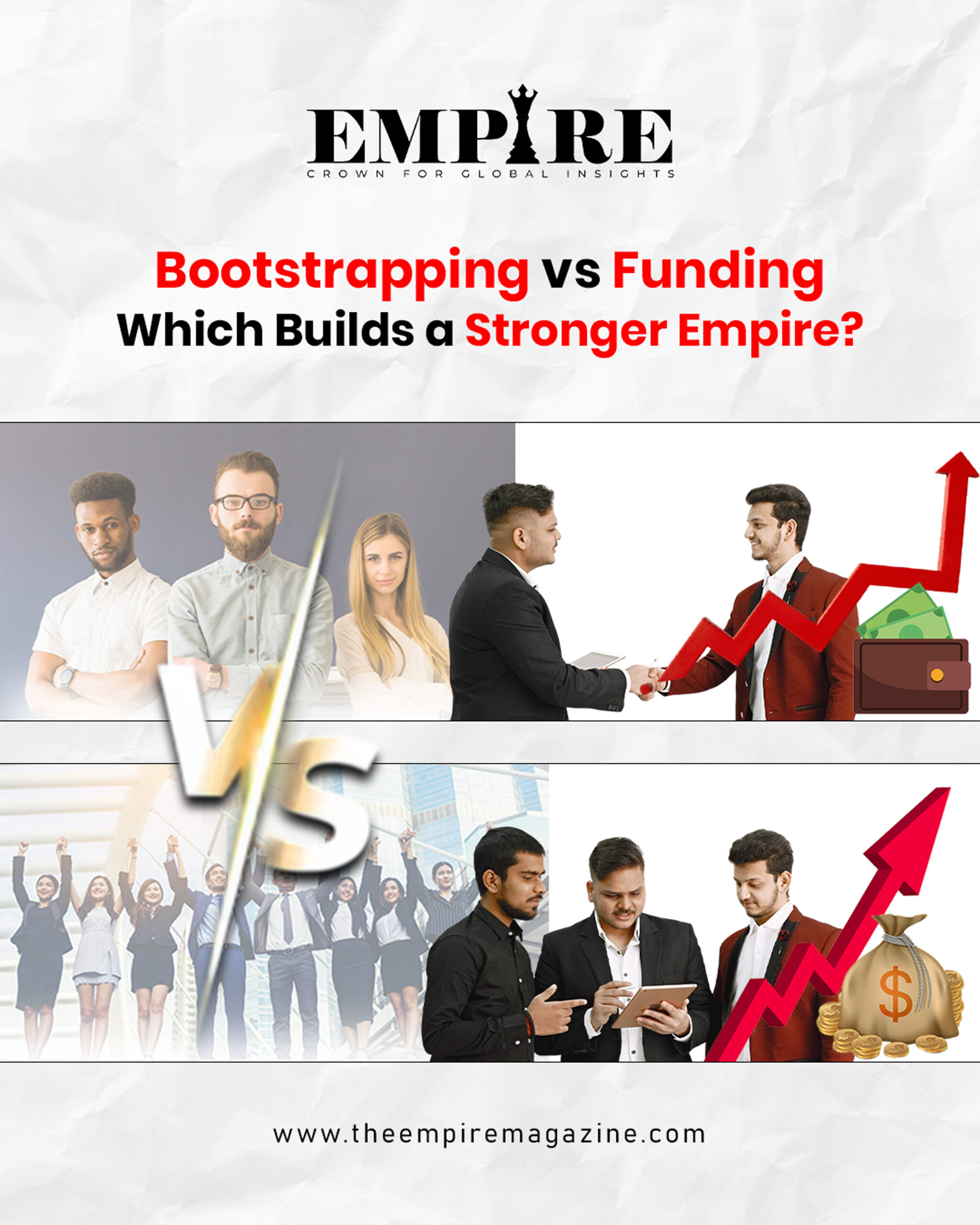
Bootstrapping vs Funding is one of the biggest decisions any entrepreneur will face. The path you choose can shape your company’s speed, structure, culture, and long-term success. Some founders want outside capital to move fast and capture market share quickly. Others prefer to build with limited resources, stay profitable, and maintain full control. Neither option is automatically right or wrong. The better choice depends on your business model, risk tolerance, and long-term vision.
For many founders, the real question is not simply how to raise money. It is how to build a business strong enough to survive challenges, grow sustainably, and stay true to its original mission. That is why the comparison between bootstrapping and funding matters so much. A company can grow quickly with investor support, but it can also become dependent on outside expectations. A bootstrapped company may grow slower, but it often builds discipline, resilience, and independence from the very beginning.
What Bootstrapping Means in Business
Bootstrapping means starting and growing a business using limited resources, usually personal savings, support from friends or family, and revenue generated by the business itself. Instead of depending on major investors or large loans, founders use what they already have and reinvest profits back into the company.
This approach often forces founders to become more thoughtful about spending, operations, hiring, and product development. Every decision matters because resources are limited. While this can feel restrictive, it often leads to a leaner and more focused business.
Bootstrapping is especially effective for service-based businesses, digital businesses, and startups that can begin without heavy infrastructure costs. If a business can operate remotely, use simple tools, and generate revenue early, bootstrapping becomes a realistic and often powerful path.
What Funding Means for a Growing Business
Funding usually refers to raising money through investors, loans, or other external sources. This can include angel investment, venture capital, bank financing, or structured debt. The main advantage of funding is speed. Businesses with outside capital can invest in product development, marketing, hiring, and expansion much earlier than bootstrapped companies.
For some industries, funding is almost unavoidable. If a business requires manufacturing, warehousing, specialized equipment, research, or a large team from day one, outside capital may be necessary just to get started. Funding can help a business scale faster and compete aggressively in crowded markets.
However, funding comes with trade-offs. Investors may expect rapid growth, aggressive expansion, and influence over key decisions. Loans must be repaid, often with interest, which adds pressure to the business. This means that while funding can accelerate growth, it can also reduce flexibility and increase risk.
The Core Difference: Control vs Speed
At its heart, Bootstrapping vs Funding is really a debate between control and speed.
Bootstrapping gives founders more control. They keep ownership, make decisions independently, and grow based on real demand and sustainable progress. Because there is no outside pressure to scale at any cost, founders can focus on building a business that is profitable and stable.
Funding, on the other hand, gives businesses speed. With more capital available, founders can move faster, hire sooner, and enter new markets more aggressively. This can be valuable in industries where timing matters and competition is intense. But speed is not always the same as strength. Fast growth without solid foundations can create problems later.
A stronger empire is not always the one that grows the fastest. Often, it is the one that grows with discipline, focus, and financial clarity.
Why Bootstrapping Creates Strong Business Discipline
One of the greatest strengths of bootstrapping is the discipline it creates. When founders have limited money, they must prioritize carefully. They cannot afford to waste time, resources, or attention on things that do not directly support growth or profitability.
This pressure often leads to better habits:
- keeping operations lean
- testing products before scaling
- making sales a priority
- hiring only when necessary
- reinvesting profits wisely
A bootstrapped founder learns quickly how to manage cash flow, reduce unnecessary expenses, and build based on customer demand rather than assumptions. These habits can make a company stronger in the long run.
Bootstrapped businesses also tend to stay closer to their customers. Since revenue is the main fuel for growth, founders must listen carefully, deliver value consistently, and improve based on feedback. This creates stronger products and healthier businesses.
A Real Example: Mailchimp
A strong real-world example of bootstrapping success is Mailchimp. The company grew for years without outside funding and became a global brand in email marketing. Its founders built the business gradually, stayed profitable, and maintained control over the company. Rather than chasing fast expansion at any cost, they focused on sustainable growth and long-term value.
Mailchimp shows that bootstrapping can build more than a business. It can build a disciplined company culture. Because the founders did not depend on outside investors, they had the freedom to make decisions based on what was best for the company and its customers. That independence became one of their greatest strengths.
This example proves that bootstrapping does not mean thinking small. It means building carefully, profitably, and strategically.
When Funding May Be the Better Choice
Even though bootstrapping has many benefits, funding can still be the right path in certain situations. Some businesses need capital early because the cost of entering the market is simply too high. If your business depends on inventory, manufacturing, advanced technology, or large-scale distribution, outside funding may help you get off the ground faster and more effectively.
Funding can also be useful when a business has a narrow window of opportunity. If the market is moving quickly and speed matters more than cautious growth, investor backing may allow the business to move before competitors take the lead.
Still, outside money should be used with care. Capital should solve specific business problems, not hide weak planning or poor discipline. A business that takes funding without a clear model for growth may grow faster in the beginning but become weaker over time.
Smart Bootstrapping Strategies for Founders
Founders who choose bootstrapping need a practical strategy. Success usually comes from combining careful spending with creative growth. Some of the most effective methods include starting small, keeping overhead low, validating ideas before large investment, using early sales to fund expansion, and outsourcing tasks when needed instead of building large in-house teams.
It also helps to build a strong network. Relationships with customers, vendors, local business groups, and collaborators can open doors without requiring heavy spending. Bartering services, using word-of-mouth marketing, and embracing remote work are all practical ways to keep costs under control.
Most importantly, bootstrapped founders should focus on shipping quickly. Perfection can be expensive. Getting a product or service to market, learning from real customers, and improving over time is usually better than waiting too long and spending too much before launch.
Which Path Builds a Stronger Empire?
If the goal is to build a stronger empire, bootstrapping often has the edge because it builds strength at the foundation. It encourages profitability, ownership, patience, and smart decision-making. It creates businesses that know how to survive because they were forced to survive early.
Funding can help build a bigger company faster, but bigger does not always mean stronger. A company supported by outside capital may have more resources, but it may also face greater pressure and less freedom. That pressure can push founders away from the original vision and into decisions shaped by investor demands rather than business health.
In many cases, the strongest empire is built by founders who understand how to do more with less. They learn to build carefully, listen to customers, protect cash flow, and grow from real momentum.
Final Thoughts
Bootstrapping vs Funding is not just a financial choice. It is a strategic decision that affects how your business operates, grows, and endures. Funding may help you scale fast, but bootstrapping often helps you build strong. If your business can start lean, generate revenue early, and grow steadily, bootstrapping may be the smarter path.
The real power of bootstrapping lies in what it teaches: discipline, creativity, resilience, and ownership. Those qualities do not just help launch a business. They help build an empire that lasts.
Read more here:
Internal Link: https://theempiremagazine.com/?p=5627
Follow us on social media:
Instagram: https://www.instagram.com/the_empire_magazine/
Facebook: https://www.facebook.com/profile.php?id=61573749076160
– The Empire Magazine
Crown For Global Insights