The Empire Magazine | Crown for Global In
November 26, 2026
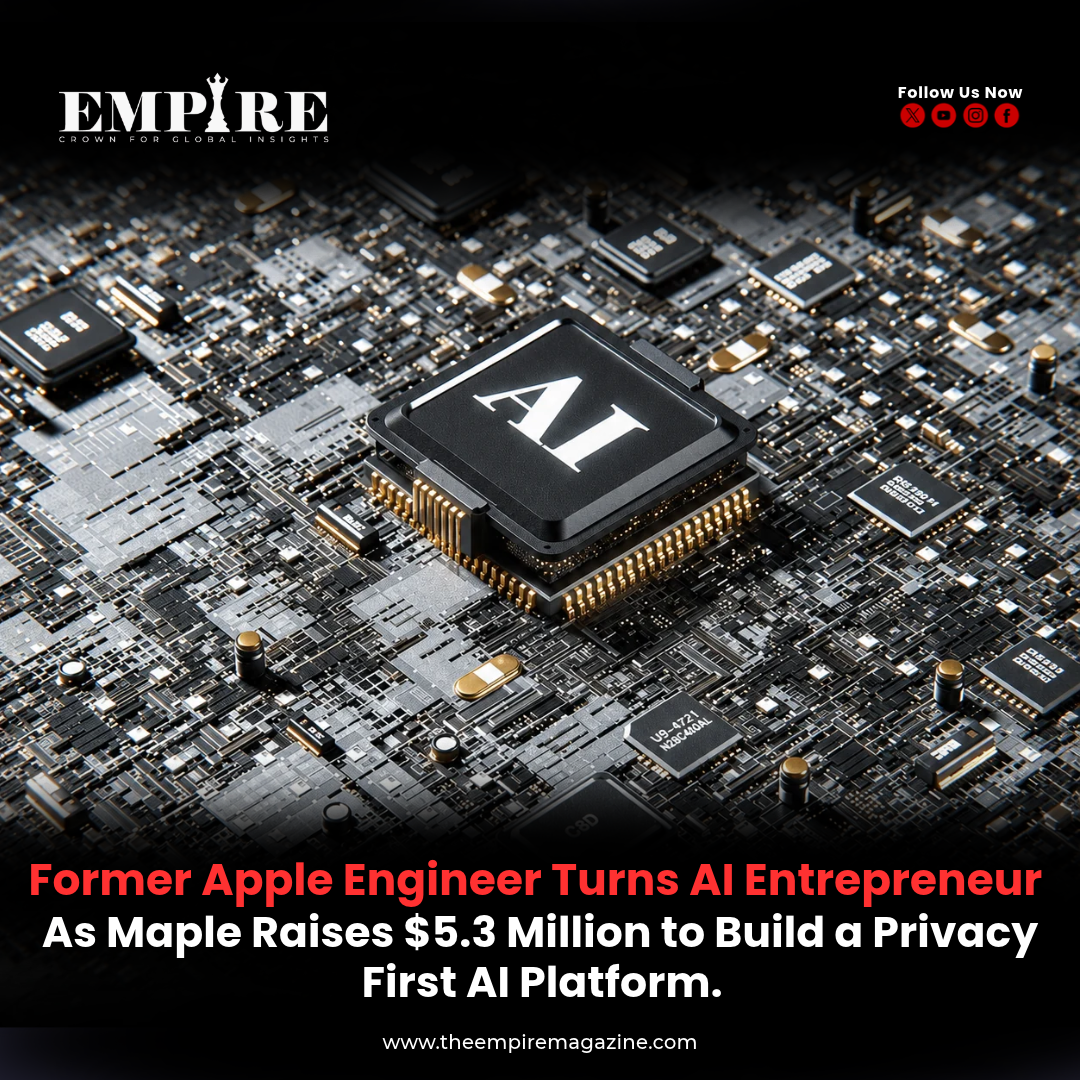
Maple AI, the Austin startup co-founded by former Apple engineer Mark Suman and infrastructure engineer Anthony Ronning, has raised $5.3 million in seed funding. Its pitch is simple enough for anyone who has hesitated before pasting a sensitive document into a chatbot. Maple says its AI can work with that document while keeping the contents out of reach of its own employees.
EPIC Ventures led the round, which Maple announced on November 24. Draper Associates, Planetary VC and Epoch VC also invested. The funding will help Maple expand its computing capacity, hire staff and develop its desktop assistant for businesses. The company launched its first product in January 2025 and now offers encrypted chat on the web, desktop and mobile.
The experience that led Mark Suman to build Maple AI
Before joining Apple, Suman worked for an online backup company. One day, a customer whose computer had crashed asked him to check whether the recovery had worked. To do that, he opened the customer’s family photos. The customer had given permission, but the experience stayed with him. Restoring someone’s files had also given a stranger a window into their life.
Years later, Suman encountered the same issue from the customer’s side. He recalls that when ChatGPT arrived, Apple employees were told to keep work off the service. A company could draw that line. An employee who wanted help with an unreleased product or a confidential document still had a problem to solve.
Suman, now Maple’s chief executive, teamed up with Ronning, its chief technology officer. Ronning designed the system that allows Maple to run AI models in the cloud while restricting who can see what users send them.
How Maple keeps a conversation private
Consider what happens when someone asks Maple Chat to summarise a draft contract. The app encrypts the request on the user’s device. Once it reaches the server, the model processes it inside a protected area of hardware called a secure enclave. The response travels back encrypted. According to Maple, the design keeps its staff from reading either the contract or the resulting summary.
Maple also gives technically skilled customers a way to examine that claim. It publishes its software code, and the hardware produces a signed record identifying the software it is running. A company evaluating Maple can compare that record with a published release. That gives its security team something concrete to inspect before employees start submitting confidential work.
Maple Work takes private AI beyond the chat window
The startup’s desktop agent, Maple Work, can carry out tasks using folders and applications that a user selects. A small-business owner, for example, could give it access to a folder of receipts and ask it to prepare an expense report. The owner chooses how independently the agent can act and when it should ask for approval.
Those permissions matter once an assignment involves an outside service. Preparing a summary inside Maple and posting that summary to a connected workspace are two distinct actions. In the second case, the workspace receives the information sent to it. Maple identifies web searches, connected apps and tasks handed to external AI agents as activities that extend beyond its private processing environment.
Where the $5.3 million will go
Maple plans to use the funding to hire across engineering, growth and operations. It also intends to add computing capacity so it can introduce newer open-weight models sooner and keep response times short as demand grows. Subscriptions and paid developer access provide its revenue. The company says it does not sell customer data or use private conversations to train models.
Maple reported that daily encrypted AI usage reached 60 times its level of three months earlier. It did not disclose how many people were using the service, so the figure gives a clearer picture of how quickly activity grew than of how large the business is today.
For Maple, the commercial test is whether customers will pay for privacy when the work itself is sensitive. A business owner considering an AI assistant for a contract or a folder of accounts needs two answers before putting it to work. One is whether it can do the job well. The other is who gets to see the material along the way. Maple is building its business around giving customers a way to check the second answer for themselves.
Explore more global business, technology and innovation coverage in The Empire Magazine’s article archive.
Read our related coverage: spacex-data-centres-one-million-satellites/
Follow The Empire Magazine:
Facebook | Instagram
The Empire Magazine | Crown For Global Insights