United States | Artificial Intelligence, Startups & Business
Information checked on 5 October 2026.
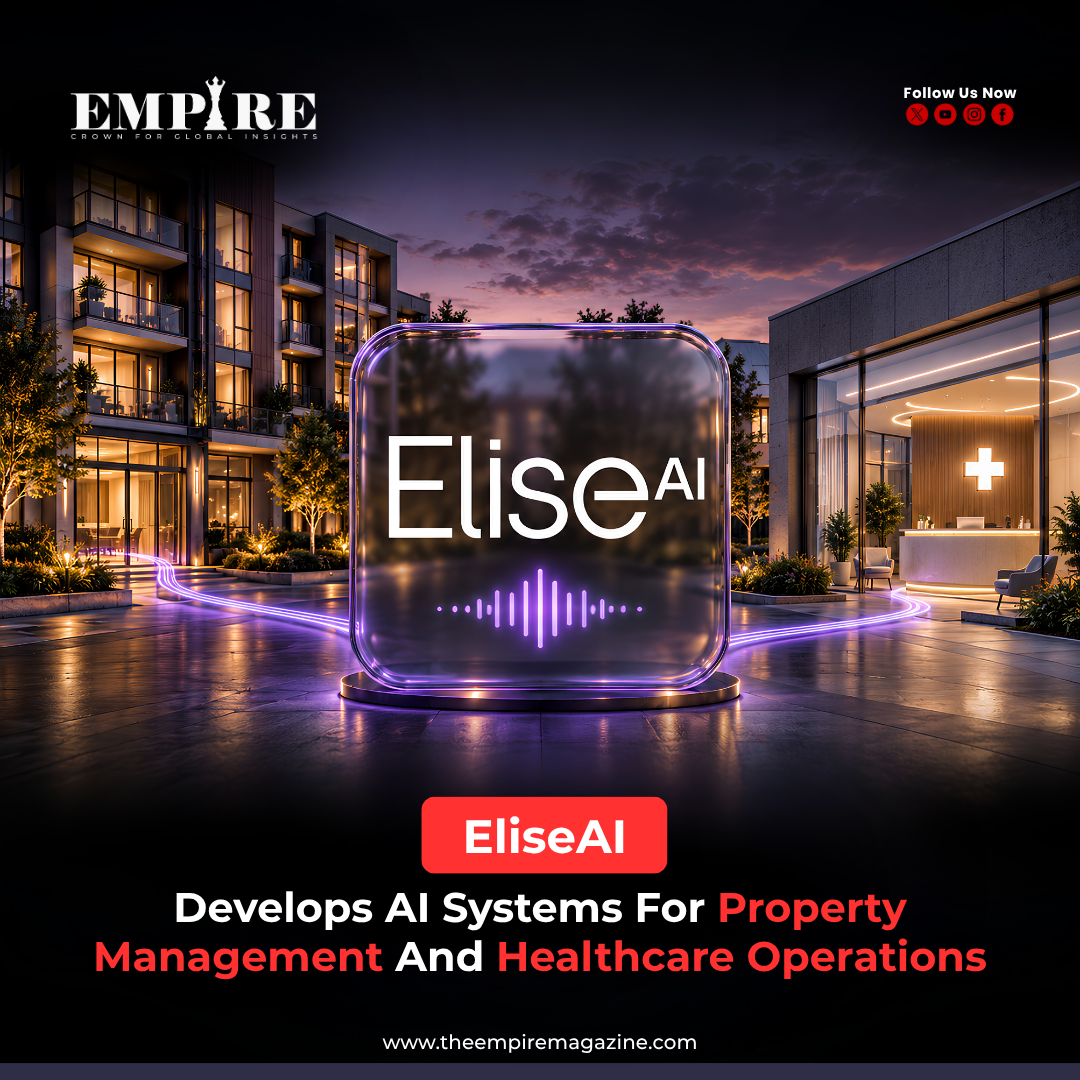
EliseAI is applying artificial intelligence to the everyday conversations and administrative tasks behind renting a home and accessing healthcare. Its software helps organisations respond to enquiries, arrange appointments, manage follow-ups and connect those interactions with the systems employees use to complete their work.
For a property manager, that can mean handling a rental enquiry after the leasing office has closed. For a medical practice, it can mean helping a patient book a visit while reception staff assist someone in person.
The New York-headquartered company is expanding its work across both sectors. Recent developments include the introduction of Apollo, an AI assistant for property teams, and a new funding round announced in September 2026.
What Is EliseAI?
EliseAI was founded in 2017 by Minna Song and Tony Stoyanov. It initially focused on housing and expanded into healthcare in 2023, according to the company’s account of its development.
Its approach is to build AI around the specific processes of an industry. Property management involves availability, tours, applications, resident messages and repairs. Healthcare administration involves appointments, patient information, reminders and coordination between different teams.
These activities require a conversation to produce a useful next step: a confirmed booking, a recorded request or a task assigned to an employee.
That connection between communication and action is central to EliseAI’s business.
How EliseAI Automates Property Management
EliseAI’s housing products support communication through phone calls, text messages, email and web chat. Its LeasingAI offering handles enquiries, arranges property tours and follows up with prospective renters.
Consider a renter who asks about an apartment in the evening. An automated service can answer supported questions and help organise a visit without requiring an employee to monitor every channel outside office hours.
After move-in, the work changes. Residents may need information about their lease, assistance with a payment question or an update on a repair.
EliseAI’s maintenance product collects details from incoming requests, creates and categorises work orders, and follows configured routing procedures. The company says urgent issues can be escalated through predefined emergency call routes.
The operational goal is to give staff a clearer record of what needs attention. Its usefulness depends on accurate information, appropriate routing and employees being able to take over when necessary.
EliseCRM Connects Conversations With Staff Work
EliseCRM brings prospect and resident communication, scheduling, tasks and reporting into a shared system.
According to its product documentation, the software can import information from property management systems, maintain communication histories and help teams coordinate activity across multiple communities.
It also supports a handover when the AI cannot resolve an enquiry. EliseAI says the system creates a task with relevant context and transcripts so an employee can follow up.
That handover matters in practice. A resident should not have to repeat an entire conversation because their request moves from an automated assistant to a staff member.
For managers, a shared record can also make it easier to identify unfinished work and understand where enquiries stall.
Healthcare Automation Focuses on Patient Administration
EliseAI applies a similar approach to healthcare, where its products handle patient communication and administrative coordination.
Its healthcare platform describes capabilities including appointment scheduling, reminders, intake and follow-up messages. VoiceAI can answer routine calls and route patients to the appropriate department or employee.
The company also offers integrations with electronic health record systems to synchronise appointments and information. These connections are important because a successful conversation needs to produce an accurate update in the practice’s existing systems.
For example, a patient requesting a different appointment time needs the change reflected in the actual schedule. Sending a reassuring message without completing that update would leave the underlying problem unresolved.
EliseAI markets workflows tailored to specialties including women’s health, dermatology and ophthalmology. Different appointment types and practice requirements make that specialisation relevant.
The capabilities discussed here concern access and administration. They should not be interpreted as evidence that the software independently diagnoses conditions or replaces clinical decision-making.
Apollo Adds an AI Assistant for Property Teams
EliseAI introduced Apollo on 3 September 2026, describing it as an AI assistant embedded in its property operations platform.
Apollo is designed to let employees request information and actions using ordinary language. Examples in the launch announcement include rearranging tours when a colleague is absent and identifying units with recurring maintenance issues.
The company says Apollo inherits each user’s existing permissions, limiting what it can access and do to the authority already assigned to that person.
This brings AI into the employee’s side of the operation as well as the resident’s conversation.
The practical test is whether an instruction produces the intended result across the relevant records, schedules and tasks. Clear confirmation and reviewable changes will matter as employees delegate more work through this interface.
What One Customer Case Study Shows
A company-published case study involving Universal Development & Construction offers an example of how these products are used together.
The study covered 30 active communities during a reporting period in 2026. It reported that 83% of prospect communications were automated and that half of signed leases originated from enquiries received outside office hours.
The operator used several EliseAI products, including leasing, voice, maintenance and CRM tools.
These figures describe one customer’s implementation. They do not establish an average result for all properties, and the share of leases associated with after-hours enquiries does not by itself prove how many additional leases the software generated.
The useful business insight is that enquiry timing and follow-up deserve measurement. A property team may otherwise underestimate how much activity takes place when its office is closed.
New Funding Supports Further Expansion
On 29 September 2026, EliseAI announced $350 million in funding at a $4 billion valuation.
Andreessen Horowitz and Bessemer Venture Partners led the financing, with participation from Ontario Teachers’ Pension Plan, Sapphire Ventures and Navitas Capital.
The company said it would use the capital to develop more operational automation and expand its engineering, deployment and sales teams. It also plans to establish San Francisco as a second engineering hub alongside New York.
In the same announcement, EliseAI said its platform served one in six US apartment units.
That is a company-reported measure of its footprint. The valuation reflects the financing terms; customer retention, service quality and the cost of delivering the software will provide different measures of business performance.
Why Housing and Healthcare Need Different Implementations
Housing and healthcare share a practical challenge: frequent communication creates administrative work that has to be completed accurately.
The details, however, differ considerably. A rental enquiry may depend on unit availability and tour schedules. A medical appointment may depend on the provider, visit type and information needed before the visit.
This makes configuration and integration central to the product’s value.
From an operational perspective, organisations need clear ownership of the information the AI uses, the actions it can perform and the requests employees must review. An incorrect calendar or outdated property detail can undermine an otherwise fluent conversation.
EliseAI’s opportunity is to make those connections dependable enough for the software to become part of routine work.
What Will Matter as Adoption Grows
The most useful measures of progress will concern completed tasks and the experience of the people using the service.
For property teams, these could include how reliably enquiries become confirmed tours, how quickly repair requests reach the correct employee and whether residents receive understandable updates.
For healthcare practices, relevant measures could include successful appointment changes, fewer repeated calls and accurate routing when a patient needs staff assistance.
Organisations also need to account for time spent correcting errors and maintaining their systems when assessing productivity gains.
EliseAI’s growth illustrates the business potential of AI built around specific industry processes. Its next stage will depend on whether broader automation consistently makes those processes easier for employees, residents and patients to navigate.
Explore more global business, technology and innovation coverage in The Empire Magazine’s article archive.
Read our related coverage: amd-world-labs-spatial-ai-deal/
Follow The Empire Magazine:
Facebook | Instagram
The Empire Magazine | Crown For Global Insights