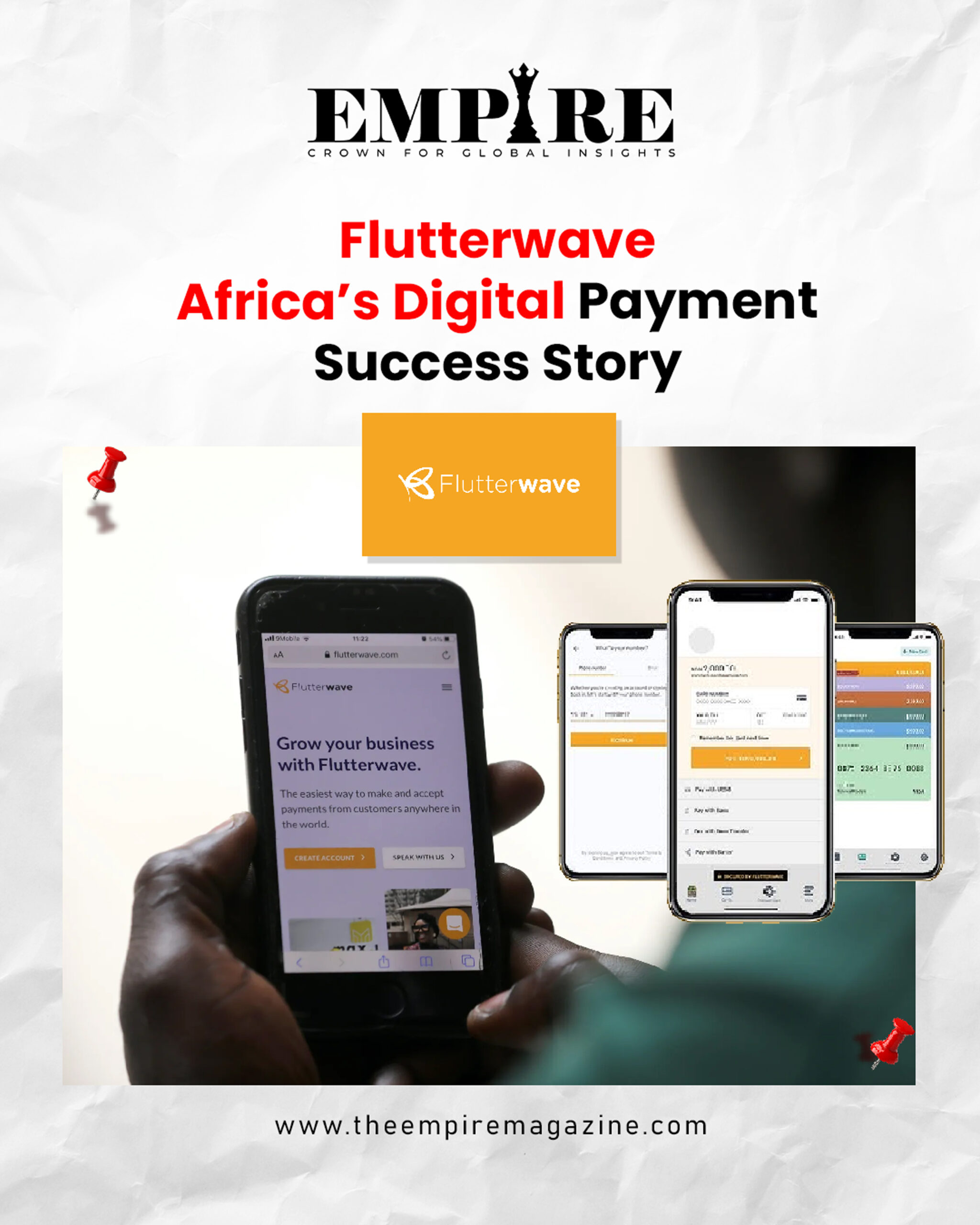
Flutterwave Is Powering Africa’s Digital Payment Growth
Flutterwave is one of Africa’s most successful fintech companies and a major example of how digital payments are transforming business across the continent. Founded in 2016, the company was built to solve one of Africa’s biggest commercial challenges: making payments easier, faster, and more reliable for businesses operating across different countries and currencies.
Africa’s payment landscape has long been fragmented. Businesses often face different banking systems, local payment methods, currency issues, cross-border settlement delays, and limited digital payment infrastructure. Flutterwave entered this market by creating technology that helps businesses accept payments, send money, manage transactions, and connect with customers locally and globally.
The company’s growth reflects a wider shift in Africa’s digital economy. More consumers are using mobile phones, more merchants are selling online, and more businesses need reliable payment infrastructure to operate across borders.
The Origin of Flutterwave
Flutterwave was founded by Iyinoluwa Aboyeji, Olugbenga Agboola, and their early team to build modern payment infrastructure for Africa. The company began with a clear business problem: African businesses needed better tools to collect and process payments from customers across different markets.
Olugbenga “GB” Agboola, Flutterwave’s co-founder and chief executive officer, brought experience from banking, payments, and financial technology. Under his leadership, Flutterwave expanded from a startup into one of Africa’s most recognized fintech brands.
Solving a Real Business Problem
Many African businesses sell across borders, but payment systems have not always kept pace with digital commerce. A merchant in Nigeria may want to sell to customers in Ghana, Kenya, South Africa, the United Kingdom, or the United States. Without strong payment infrastructure, this can become expensive and complicated.
Flutterwave created tools that allow businesses to accept cards, bank transfers, mobile money, and local payment methods. This made it easier for African merchants to serve customers at home and abroad.
What Flutterwave Offers
Flutterwave provides payment technology for businesses, startups, enterprises, creators, and individuals. Its products include online checkout, payment links, invoices, virtual accounts, transfers, business payments, remittances, and tools for merchants selling through digital channels.
The company’s platform supports businesses that want to accept payments from customers, pay suppliers, manage transaction flows, and expand into new markets.
Payments for Businesses
Flutterwave for Business allows companies to accept payments through multiple channels. This is important in Africa because customers often use different payment methods depending on country, banking access, mobile money adoption, and local financial habits.
For merchants, payment flexibility can increase sales. If customers can pay using their preferred method, businesses are more likely to complete transactions.
Cross-Border Payments
Cross-border payments are one of Flutterwave’s strongest business areas. Africa has many fast-growing markets, but moving money between them can be difficult. Flutterwave helps businesses manage payments across borders by connecting different payment systems through one platform.
This is especially useful for e-commerce companies, travel businesses, logistics firms, software platforms, freelancers, and enterprises that operate internationally.
Flutterwave’s Funding and Valuation
Flutterwave became one of Africa’s most valuable startups after raising major funding from global investors. In 2021, the company raised a Series C round that helped it reach unicorn status. In 2022, it raised $250 million in Series D funding and reached a valuation of more than $3 billion.
This valuation made Flutterwave one of the highest-valued startups in Africa and showed global investor confidence in African fintech. Investors were attracted by the continent’s large population, growing digital commerce, mobile-first users, and underdeveloped payment infrastructure.
Why Investors Backed Flutterwave
Investors backed Flutterwave because digital payments are central to Africa’s economic growth. Businesses need payment systems to sell online, receive international payments, manage cash flow, and serve customers across borders.
Africa’s digital payments economy is expected to grow strongly as more people use mobile phones, e-commerce expands, and financial inclusion improves. This market opportunity helped Flutterwave become a major fintech success story.
Licensing and Regulatory Growth
Financial technology companies need regulatory approval to operate safely and legally. Flutterwave has worked to secure licenses and partnerships in multiple markets. The company has expanded into countries across Africa and has also strengthened its money transfer and remittance capabilities internationally.
In 2026, Flutterwave announced that it secured a Nigerian banking license. This license enables the company to hold funds and deposits directly, strengthening its financial infrastructure in Nigeria, which is one of its largest markets.
Why Licensing Matters
Licensing matters because payments depend on trust, compliance, and regulation. Businesses need to know that payment providers can handle funds securely and follow local laws. Regulators also require fintech companies to manage fraud, anti-money laundering controls, customer protection, and data privacy.
For Flutterwave, licenses support deeper market access and stronger business operations. They also help the company offer more reliable services to merchants, consumers, and enterprise customers.
Africa’s Digital Payment Opportunity
Africa’s digital payment opportunity is large because many markets are still moving from cash-based transactions to digital finance. Mobile money, bank transfers, cards, QR payments, and online wallets are becoming more common.
Mastercard has projected that Africa’s digital payments economy could reach $1.5 trillion by 2030. This shows the scale of the opportunity for companies building payment infrastructure across the continent.
Mobile-First Consumers
Africa has a young, mobile-first population. Many people access the internet primarily through smartphones. This creates strong demand for mobile payments, online shopping, digital banking, and app-based financial services.
Flutterwave’s platform fits this trend because it helps businesses serve customers through digital channels. As more consumers become comfortable with online payments, demand for reliable payment gateways increases.
Helping Small Businesses and Enterprises
Flutterwave serves both small businesses and larger enterprises. Small businesses use payment links, online checkout, and digital tools to sell products and services. Larger companies use Flutterwave to manage more complex payment flows, cross-border transactions, and local payment methods.
Supporting Online Sellers
Online sellers need simple tools to accept payments. Flutterwave helps merchants create payment links, send invoices, and collect money without needing to build complex technical systems.
This is important for small businesses, creators, and entrepreneurs who want to sell through social media, websites, or marketplaces. Digital payments allow these sellers to reach more customers and reduce dependence on cash.
Enterprise Payment Infrastructure
For enterprises, Flutterwave supports scale. Larger businesses need stable payment processing, reporting, settlement, compliance, and integration with internal systems. Flutterwave’s infrastructure helps companies manage these payment operations across multiple countries.
Competition in African Fintech
Flutterwave operates in a competitive fintech market. Other important African payment companies include Paystack, Interswitch, Moniepoint, OPay, Chipper Cash, and several mobile money operators. Traditional banks and telecom companies are also active in digital payments.
Competition is strong because payments are the foundation of digital commerce. Companies that control payment infrastructure can support e-commerce, lending, remittances, business banking, and embedded finance.
Why Flutterwave Stands Out
Flutterwave stands out because of its pan-African focus, cross-border capabilities, business payment tools, and global investor backing. The company built its brand around connecting Africa to the global economy through payments.
Its ability to serve businesses across markets gives it an advantage in a continent where payment systems are often country-specific.
Challenges Facing Flutterwave
Flutterwave’s growth has also brought challenges. Like many large fintech companies, it must manage regulation, compliance, fraud prevention, cybersecurity, customer protection, and operational risk across many countries.
African fintech companies also face currency volatility, inflation, banking infrastructure gaps, and changing regulatory requirements. These issues can affect settlement, pricing, expansion, and customer trust.
Trust and Compliance Are Essential
For any payment company, trust is central. Businesses depend on payment platforms to collect money, settle funds, and protect customer information. Flutterwave’s long-term success depends on strong compliance systems, reliable infrastructure, transparent operations, and continued regulatory cooperation.
Why Flutterwave Matters for Africa’s Digital Economy
Flutterwave matters because it helps businesses participate in the digital economy. Payment infrastructure is not always visible to customers, but it is essential for online commerce, exports, financial inclusion, and entrepreneurship.
When businesses can accept payments easily, they can sell more products, reach new markets, and grow faster. For Africa, this supports job creation, digital trade, small business growth, and regional economic integration.
For more fintech and business insights, read this feature on The Empire Magazine.
Follow The Empire Magazine on Instagram and Facebook.
– The Empire Magazine
Crown For Global Insights