
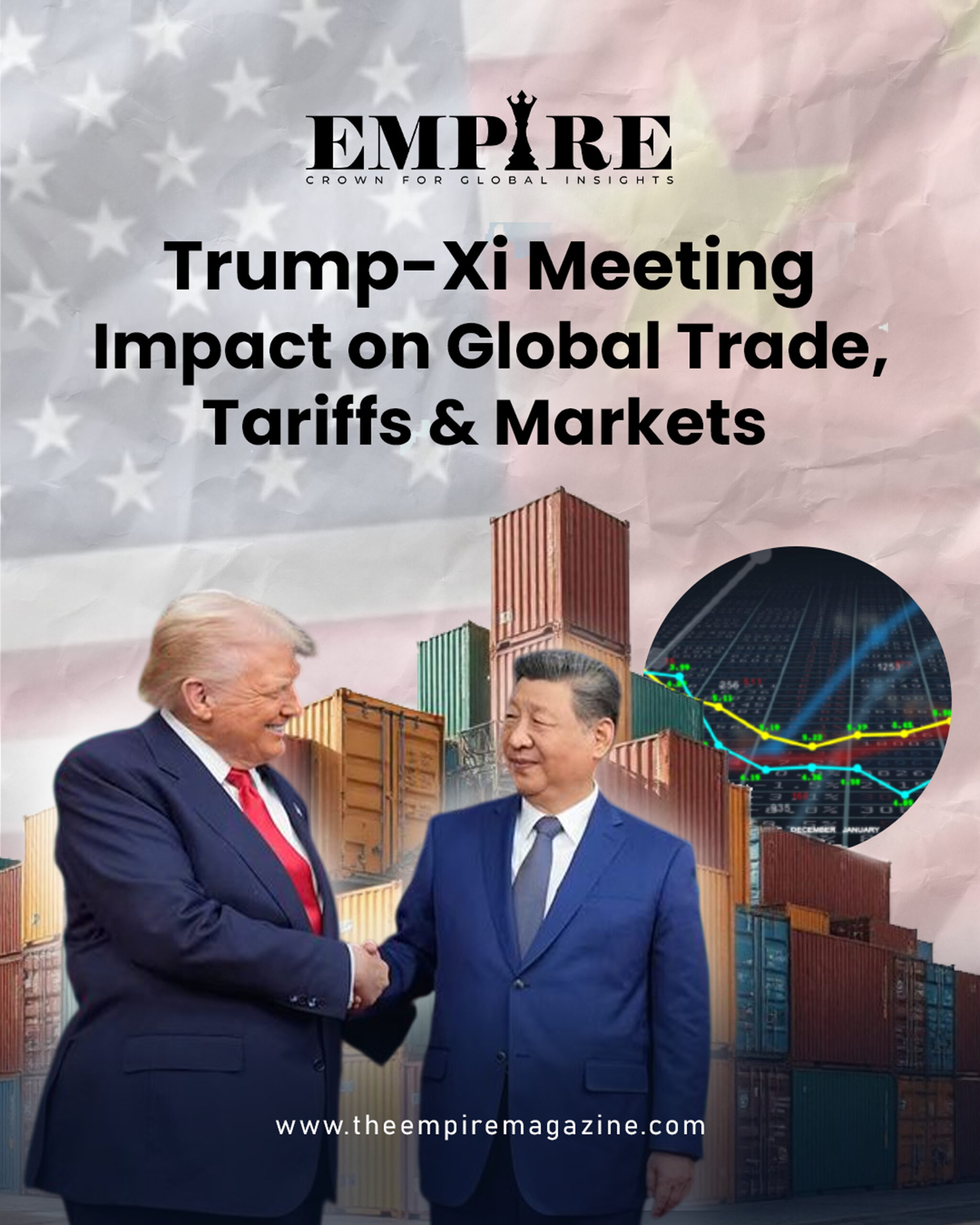
The Trump-Xi meeting in Beijing has emerged as one of the most significant diplomatic engagements of 2026, with far-reaching implications for global trade, tariff policies, and financial markets. As the leaders of the world’s two largest economies sit down, expectations center on stabilizing relations, extending trade truces, and delivering modest but meaningful economic deliverables.
Background of the Trump-Xi Summit
The high-stakes summit comes at a critical time. Following a fragile trade truce reached in October 2025, both nations have maintained elevated tariffs while seeking to prevent full-scale escalation. Average U.S. tariffs on Chinese goods remain high, and China continues to manage its responses carefully amid its own economic challenges.
President Trump, accompanied by top U.S. business leaders, aims to secure concrete wins for American industries. Discussions focus heavily on trade rebalancing, while also touching on broader issues such as critical minerals, technology, and geopolitical matters. The meeting signals a pragmatic approach — moving away from aggressive tariff hikes toward managed trade mechanisms.
Key Outcomes Expected on Tariffs and Trade
One of the central focuses of the Trump-Xi meeting is the potential reduction of tariffs on select non-sensitive goods. Reports suggest both sides are considering a $30 billion-for-$30 billion framework, where tariffs could be lowered on specific categories of imports without compromising national security interests.
This managed trade approach represents a shift from blanket tariffs to more targeted arrangements. Additional expectations include:
- Extension of the existing trade truce
- Establishment of a formal “Board of Trade” to facilitate ongoing dialogue and resolve disputes
- Increased Chinese purchases of American agricultural products (soybeans, beef), energy, and Boeing aircraft
- Continued access to rare earth minerals and critical materials vital for U.S. industries
These steps could provide much-needed relief to businesses on both sides while helping stabilize supply chains that were disrupted by previous tariff wars.
Impact on Global Markets
Financial markets have responded with cautious optimism to the Trump-Xi meeting. The possibility of even modest de-escalation has helped reduce uncertainty, supporting stock indices, commodity prices, and currency stability.
Positive Market Effects:
- Agriculture and Aerospace Sectors: U.S. farmers and Boeing stand to benefit significantly from renewed Chinese demand.
- Technology and Manufacturing: Clarity on critical minerals could ease supply constraints for electronics, EVs, and defense industries.
- Global Investors: Reduced risk of sudden tariff spikes improves sentiment across emerging markets and multinational corporations with exposure to U.S.-China trade.
However, analysts caution that expectations remain modest. Deep structural issues — including technology competition, subsidies, and market access — are unlikely to be resolved in a single summit. Markets are pricing in incremental progress rather than a comprehensive breakthrough.
Broader Economic and Geopolitical Implications
The Trump-Xi meeting extends beyond pure trade. Discussions on rare earths, artificial intelligence, and supply chain resilience highlight how economic policy is increasingly intertwined with national security.
For global trade, a successful outcome could encourage other nations to engage more confidently with both economies. A failure to deliver stability, on the other hand, might accelerate “de-risking” strategies, with companies diversifying supply chains away from China toward Vietnam, India, Mexico, and other alternatives.
Emerging economies stand to gain or lose depending on the direction of U.S.-China relations. Stronger bilateral ties could boost global growth, while renewed tensions might increase volatility in commodity and currency markets.
Challenges That Remain
Despite positive signals, several hurdles persist:
- High baseline tariff levels continue to affect consumer prices and business costs.
- Geopolitical flashpoints, including Taiwan and other regional issues, add complexity.
- Domestic political pressures in both countries limit how far leaders can compromise.
- Long-term concerns around intellectual property, industrial subsidies, and technology transfer remain unresolved.
The summit is therefore viewed as a platform for managed competition rather than full resolution of differences.
What This Means for Businesses and Investors
Companies with global operations should prepare for a period of cautious optimism. Those in agriculture, aerospace, energy, and critical minerals sectors may see new opportunities. Multinationals are advised to continue diversifying supply chains while monitoring outcomes from the proposed Board of Trade.
Investors should watch for follow-through on announced purchase commitments and any extensions of the trade truce, as these will influence market movements in the coming months.
For more insights on this high-stakes diplomatic engagement, read our detailed coverage here: The Impact of Trump-Xi Meeting
Follow The Empire Magazine for more updates on global business, trade, and economic trends:
– The Empire Magazine
Crown For Global Insights