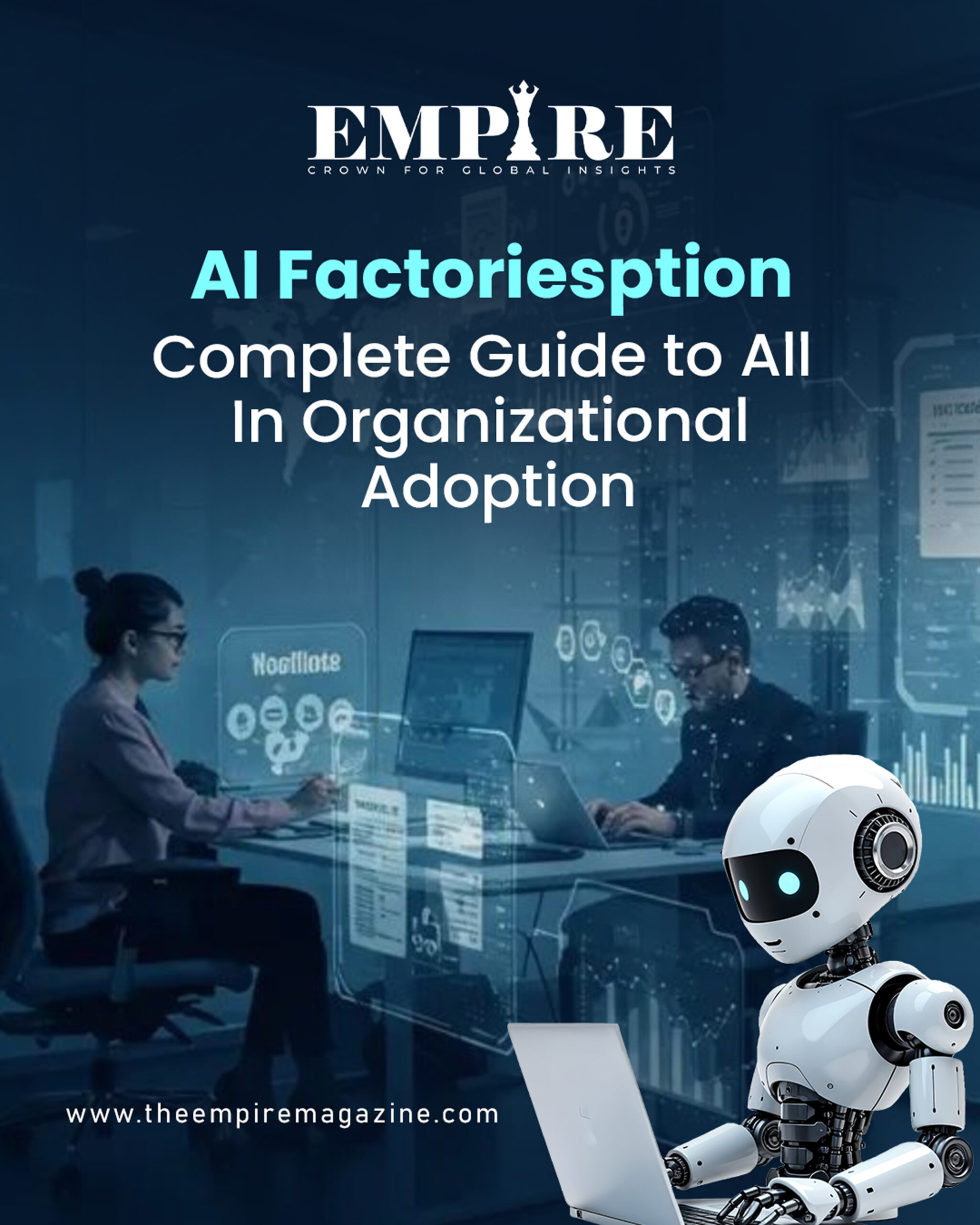
AI Factories are redefining how modern organizations operate, innovate, and compete. This complete guide explores what AI Factories are and why all-in organizational adoption has become essential for businesses seeking sustainable growth in the intelligence-driven economy.
Organizations that fully commit to AI Factories treat artificial intelligence not as an experimental tool but as a core production system. This strategic shift enables them to generate insights, automate processes, and create value at unprecedented scale and speed.
What Are AI Factories?
AI Factories are specialized, large-scale computing environments designed specifically for the continuous production of artificial intelligence. They function like traditional manufacturing plants but produce intelligence instead of physical goods.
In an AI Factory, massive volumes of data serve as raw materials. Advanced computing infrastructure processes this data through sophisticated models, resulting in outputs such as predictive analytics, generative content, autonomous decisions, and personalized experiences. These digital factories operate 24/7, constantly learning, improving, and delivering business value.
Unlike conventional IT setups or basic machine learning projects, AI Factories integrate high-performance hardware, intelligent software layers, robust data pipelines, and human expertise into a unified system optimized for industrial-scale AI production.
Why All-In Organizational Adoption Matters
All-in organizational adoption means embedding AI deeply across every department and process rather than limiting it to isolated pilot projects. This comprehensive approach delivers exponential returns compared to cautious, fragmented implementations.
Companies going all-in report significant improvements in operational efficiency, faster innovation cycles, superior customer experiences, and stronger competitive positioning. Partial adoption often leads to siloed results and limited ROI, while full commitment creates compounding advantages as data, models, and organizational capabilities reinforce each other.
Leadership alignment is crucial. When executives treat AI Factories as a board-level priority, resources flow more effectively, cultural barriers decrease, and transformation accelerates.
Core Components of a Successful AI Factory
Building an effective AI Factory requires several interconnected pillars:
1. Advanced Computing Infrastructure High-density clusters of GPUs, TPUs, and specialized AI accelerators form the heart of the system. These setups feature high-speed networking, efficient cooling solutions, and intelligent power management to maximize performance while controlling costs.
2. Data Engine A strong data foundation collects, cleans, stores, and governs vast amounts of structured and unstructured data. Real-time data streaming, vector databases, and advanced labeling systems ensure high-quality inputs for training and inference.
3. Model Development & Deployment Systems MLOps platforms automate the full lifecycle of AI models — training, testing, versioning, monitoring, and updating. This enables rapid iteration and reliable production deployment.
4. Integration Architecture Seamless connections between the AI Factory and existing business applications, ERP systems, CRM platforms, and workflows ensure AI insights translate directly into action.
5. Talent & Culture Layer All-in adoption requires building AI fluency throughout the organization. This involves upskilling existing employees, hiring specialized talent, and fostering a culture of experimentation and continuous learning.
Step-by-Step Roadmap for All-In Adoption
Successful implementation typically follows these phases:
- Assessment Phase: Evaluate current data maturity, infrastructure capabilities, talent gaps, and high-potential use cases.
- Strategy Development: Align AI Factory vision with overall business objectives and secure executive sponsorship.
- Foundation Building: Invest in core infrastructure, establish governance frameworks, and launch initial high-impact projects.
- Scaling Stage: Expand successful use cases organization-wide while continuously upgrading computing capacity and model sophistication.
- Optimization & Innovation: Establish feedback loops, ethical oversight, and mechanisms for ongoing advancement.
Organizations should balance bold ambition with pragmatic execution, celebrating quick wins to maintain momentum while building long-term capabilities.
Key Benefits of Full AI Factory Commitment
Organizations that embrace all-in adoption commonly achieve:
- Dramatic productivity gains through intelligent automation
- Accelerated product development and time-to-market
- Hyper-personalized customer experiences at scale
- Superior decision-making supported by real-time insights
- New revenue streams from AI-powered products and services
- Stronger resilience against market disruptions
These benefits compound over time as the AI Factory learns from every interaction and continuously improves.
Common Challenges and How to Overcome Them
Going all-in presents notable challenges. High initial infrastructure costs, talent shortages, integration complexities, data quality issues, and cultural resistance are frequent obstacles.
Successful organizations address these by:
- Adopting hybrid cloud strategies to manage costs
- Investing heavily in internal training programs
- Implementing strong change management initiatives
- Establishing clear ethical guidelines and governance structures
- Partnering strategically to accelerate capability building
Measuring progress with well-defined KPIs helps maintain focus and demonstrate value throughout the journey.
Internal Link: Explore more transformative business strategies and success stories in our featured article on creative business journeys.
Real-World Impact Across Industries
Manufacturing companies use AI Factories for predictive maintenance, quality control, and smart supply chain optimization. Financial services leverage them for fraud detection, personalized offerings, and risk management. Healthcare organizations apply them to drug discovery, diagnostic support, and patient care personalization. Retail and creative sectors harness AI Factories for demand forecasting, content creation, and individualized marketing at scale.
The common thread among leaders is treating AI as a fundamental business capability rather than a technology project.
Future Trends in AI Factories
The evolution of AI Factories points toward more efficient, accessible, and powerful systems. Advances in specialized hardware, energy-efficient architectures, multimodal models, and edge computing will expand possibilities. As barriers lower, mid-sized organizations will also gain the ability to build competitive AI capabilities.
Sustainability will become increasingly important, driving innovations in green computing and efficient model design.
Getting Started with Your AI Factory Journey
Organizations ready to begin should start with a maturity assessment and identification of priority use cases. Focus first on areas where data is abundant and potential impact is highest. A phased approach combined with clear strategic vision delivers the best results.
The transition to an AI-powered organization requires commitment, but the competitive advantage gained makes it one of the most important investments a business can make today.
AI Factories represent more than technological infrastructure — they embody a new operating model for the future of work and value creation. Organizations that adopt them fully will lead their industries in the years ahead.
Connect with The Empire Magazine
For more insights on emerging technologies, business transformation, and growth strategies, visit our website at www.theemmpiremagazine.com.
Follow us for daily inspiration: Instagram Facebook
– The Empire Magazine
Crown For Global Insights