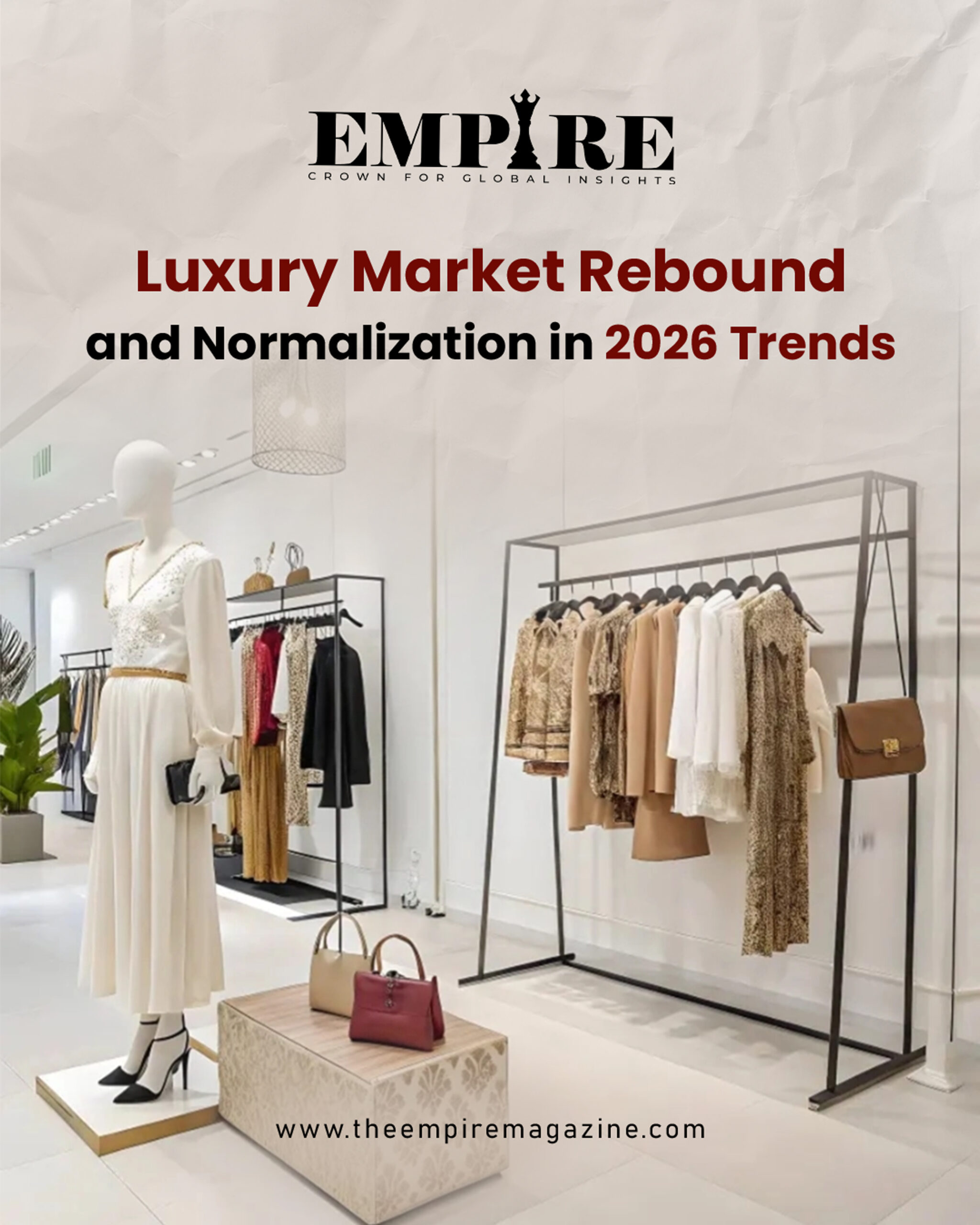
Luxury Market Rebound and Normalization in 2026 is reshaping the global luxury industry after years of volatility, post-pandemic disruption, and shifting consumer expectations. Following a period of stagnation and slower spending growth, the luxury sector is now entering a more stable and sustainable phase driven by value-focused consumers, authentic brand experiences, and strategic long-term positioning.
While the explosive luxury spending boom seen after the pandemic has cooled, industry leaders are optimistic about moderate but healthier growth in 2026. The global luxury market is expected to experience low- to mid-single-digit growth as brands move away from aggressive expansion strategies and focus instead on customer loyalty, emotional connection, and premium experiences.
This transition signals a major transformation in how luxury brands operate, market products, and engage with affluent consumers worldwide.
Luxury Market Rebound and Normalization in 2026 Signals Stability
The luxury sector is no longer operating in the hyper-growth environment that followed the pandemic recovery years. Instead, Luxury Market Rebound and Normalization in 2026 reflects a return to a more balanced growth cycle.
After facing slowing sales and cautious consumer spending throughout 2025, luxury brands are now focusing on sustainable profitability rather than rapid expansion. The market is stabilizing as consumers become more selective about where and how they spend money.
Industry forecasts suggest that personal luxury goods could grow between 3% and 5% during 2026. While this is lower than previous boom years, it represents a healthier and more predictable growth environment.
Overall luxury spending across fashion, hospitality, automobiles, wellness, and exclusive experiences is expected to continue expanding steadily over the next decade.
The United States Leads Luxury Growth
One of the strongest drivers behind Luxury Market Rebound and Normalization in 2026 is the continued strength of the United States luxury market.
High-net-worth individuals in the U.S. continue to spend aggressively on premium products, luxury travel, fine dining, wellness experiences, and exclusive services.
Several factors are supporting American luxury spending:
- Strong financial markets
- Growing wealth among affluent consumers
- Stable domestic demand
- Increased spending on premium experiences
The U.S. luxury consumer remains highly active despite broader economic uncertainty. Many luxury brands are therefore prioritizing investments in American retail expansion, flagship stores, and personalized customer experiences.
Luxury companies increasingly view the United States as their most reliable growth engine heading into the future.
China Returns as a Key Luxury Market
China also plays a central role in Luxury Market Rebound and Normalization in 2026.
After periods of economic slowdown and reduced luxury spending in 2024 and 2025, China is gradually returning to growth. Rising middle-class demand, improving consumer confidence, and policy support for domestic consumption are helping stabilize the market.
Although recovery remains uneven, Chinese consumers continue to represent one of the largest luxury customer bases globally.
Younger consumers in China are especially influencing luxury trends through digital engagement, social commerce, and demand for premium experiences rather than traditional status-driven purchases.
Luxury brands are carefully rebuilding momentum in the region while adapting strategies to match evolving consumer expectations.
Luxury Consumers Demand More Value
One of the biggest changes shaping Luxury Market Rebound and Normalization in 2026 is the growing focus on value.
Luxury consumers are no longer impressed solely by logos, exclusivity, or brand recognition. Instead, they expect meaningful quality, craftsmanship, durability, and emotional connection.
Years of aggressive luxury price increases have created “price fatigue” among many buyers. Consumers now want stronger justification for premium pricing.
Modern luxury buyers are asking:
- Is the product truly exceptional?
- Does it offer long-term value?
- Is the craftsmanship authentic?
- Does the brand reflect meaningful values?
As a result, brands are focusing more heavily on heritage, product quality, artisanal production, and storytelling.
This shift from quantity to quality is becoming one of the defining themes of the luxury industry in 2026.
Authenticity Becomes Essential
Luxury Market Rebound and Normalization in 2026 is also being driven by consumer demand for authenticity and transparency.
Millennials and Generation Z consumers are reshaping the industry by prioritizing ethical production, sustainability, and genuine brand identity.
Modern luxury buyers increasingly prefer brands that demonstrate:
- Ethical sourcing
- Transparent manufacturing
- Environmental responsibility
- Cultural authenticity
- Real craftsmanship
Independent luxury labels and heritage-focused companies are benefiting from this shift.
Consumers want products that feel personal and meaningful rather than mass-produced status symbols.
Brands that successfully communicate authenticity are building stronger emotional loyalty and long-term customer trust.
Experiences Become More Important Than Products
One of the most important aspects of Luxury Market Rebound and Normalization in 2026 is the rising importance of experiences.
Luxury consumers are increasingly spending money on:
- Exclusive travel
- Wellness retreats
- Personalized events
- Fine dining experiences
- Immersive retail environments
- Private memberships
The focus is moving away from simply owning luxury products toward creating memorable emotional experiences.
Luxury hospitality and experiential services are therefore becoming major growth areas within the broader luxury ecosystem.
Brands are investing heavily in immersive flagship stores, VIP events, and highly personalized customer interactions.
Consumers now value emotional connection just as much as physical products.
Technology and AI Transform Luxury Retail
Luxury brands are also adapting to the digital era as part of Luxury Market Rebound and Normalization in 2026.
Artificial intelligence, customer analytics, and digital personalization tools are becoming increasingly important in luxury retail.
Brands are using technology to:
- Personalize recommendations
- Improve customer service
- Enhance loyalty programs
- Create immersive online experiences
- Understand customer preferences
However, luxury companies are balancing technology carefully to preserve exclusivity and human connection.
The luxury experience still depends heavily on emotional interaction, personal attention, and trust. Therefore, AI is being used primarily to enhance — not replace — premium human service.
Strategic Reset Across Luxury Brands
The normalization phase is forcing many luxury companies to rethink their long-term strategies.
Several important shifts are taking place across the industry:
Pricing Discipline
Brands are becoming more selective with price increases to avoid alienating consumers.
Inventory Optimization
Companies are reducing excessive discounting and focusing on full-price sales.
Store Experience Investments
Flagship locations are evolving into immersive lifestyle destinations rather than traditional retail spaces.
Sustainability Integration
Environmental responsibility is becoming central to brand strategy and consumer engagement.
Leadership Changes
Creative and operational leadership resets are helping brands adapt to evolving market expectations.
The brands that successfully balance exclusivity, innovation, and authenticity are likely to emerge as the strongest players during this new luxury era.
Challenges Still Remain
Despite positive momentum, Luxury Market Rebound and Normalization in 2026 still faces important challenges.
These include:
- Global economic uncertainty
- Currency fluctuations
- Geopolitical instability
- Uneven recovery across regions
- Reduced aspirational consumer spending
Luxury brands must therefore focus not only on attracting new buyers but also on strengthening relationships with loyal affluent customers.
The companies that prioritize long-term brand trust, emotional value, and meaningful customer experiences are expected to remain resilient.
The Future of Luxury in 2026 and Beyond
Luxury Market Rebound and Normalization in 2026 represents more than a simple recovery. It marks the beginning of a healthier and more sustainable luxury ecosystem.
Consumers are becoming more intentional, emotionally driven, and experience-focused in their purchasing decisions.
Rather than chasing endless expansion, luxury brands are now emphasizing:
- Authenticity
- Emotional connection
- Quality craftsmanship
- Personalized experiences
- Sustainable growth
This evolution could ultimately strengthen the luxury industry for years to come.
The future of luxury will likely belong to brands that genuinely enrich lives instead of simply selling status.
Read More Insights
Internal Link:
https://theempiremagazine.com/?p=6290
Website:
www.theempiremagazine.com
Instagram:
https://www.instagram.com/the_empire_magazine/
Facebook:
https://www.facebook.com/profile.php?id=61573749076160
– The Empire Magazine
Crown For Global Insights