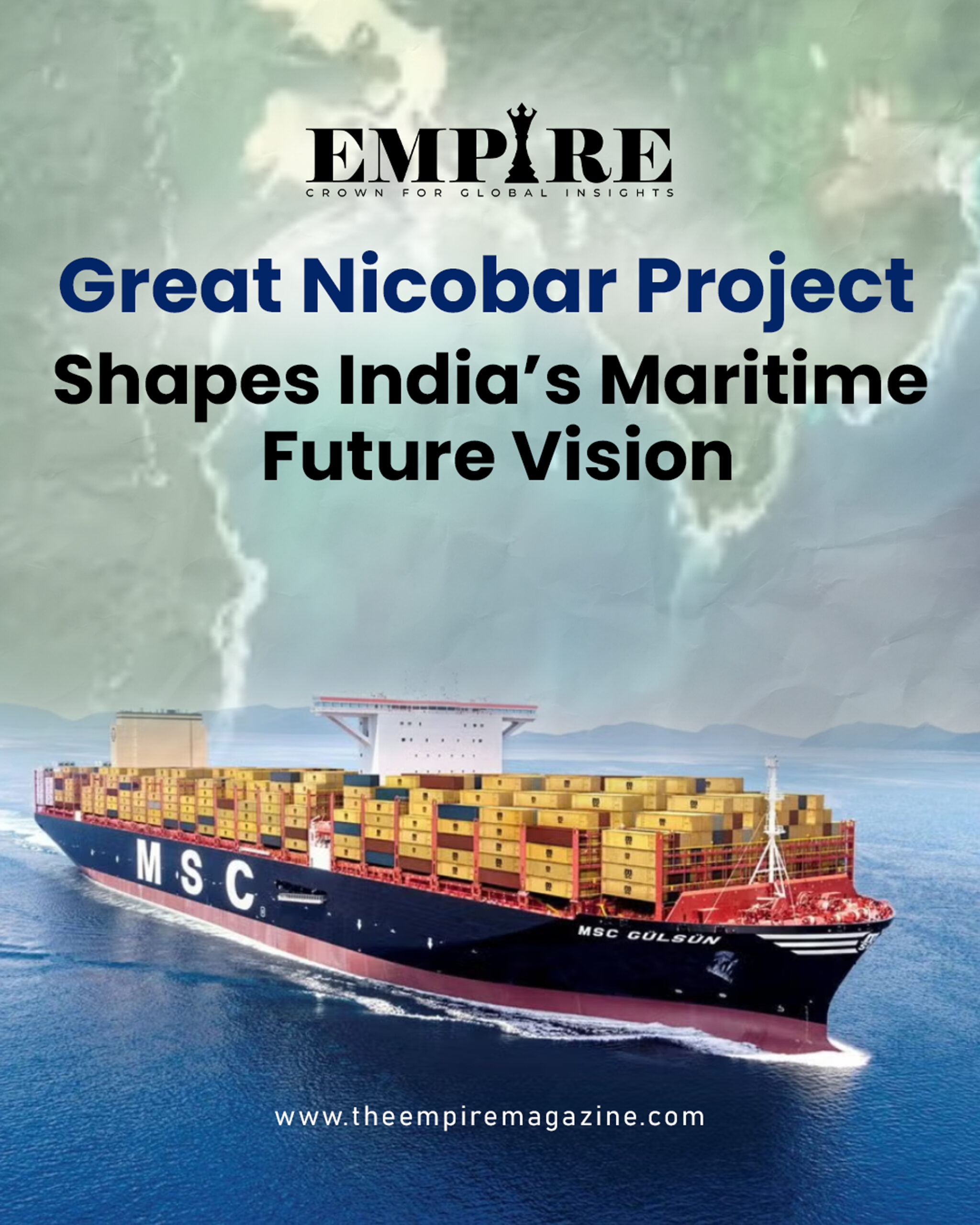
The Great Nicobar Project is emerging as one of India’s most ambitious infrastructure and strategic development initiatives. Located in the southernmost part of the Andaman and Nicobar Islands, the project aims to transform Great Nicobar into a globally important maritime, economic, tourism, and defense hub while balancing environmental sustainability and tribal welfare.
Positioned close to the East–West international shipping route, the island offers India a powerful opportunity to strengthen its presence in the Indo-Pacific region. The project combines port-led development, modern infrastructure, renewable energy, ecological safeguards, and national security priorities into a single long-term vision.
As India seeks to reduce dependence on foreign transshipment ports and improve maritime connectivity, the Great Nicobar Project could redefine the country’s strategic and economic future.
Great Nicobar Project and India’s Strategic Importance
One of the biggest strengths of the Great Nicobar Project is its strategic location. The island lies close to major global shipping lanes through which a significant percentage of world trade passes every year.
Currently, a large portion of India’s cargo is routed through foreign ports such as Colombo, Singapore, and Klang because Indian ports lack sufficient deep-water transshipment capabilities. This dependency leads to financial losses and reduced strategic control.
The proposed International Container Transshipment Terminal at Galathea Bay is designed to change that situation. With natural water depths exceeding 20 meters and proximity to international shipping routes, the port can handle large cargo vessels efficiently.
The project is expected to:
- Strengthen India’s maritime trade position
- Reduce reliance on foreign ports
- Improve logistics and cargo handling
- Enhance naval and defense presence
- Increase economic activity in the Indo-Pacific region
This infrastructure development is not only economic in nature but also highly important from a national security perspective.
Great Nicobar Project Infrastructure Development Plans
The Great Nicobar Project includes several major infrastructure components designed to support long-term regional growth.
International Container Transshipment Terminal
The transshipment terminal is planned with a capacity of 14.2 million TEU (Twenty-Foot Equivalent Units). It is expected to become one of the largest maritime logistics hubs in the region.
Greenfield International Airport
A new international airport is another key component of the project. The airport is designed to handle approximately 4,000 peak-hour passengers initially, with future expansion expected to support millions of travelers annually.
The airport will significantly improve connectivity between Great Nicobar and international tourist destinations across Southeast Asia.
Township and Urban Development
A modern township spanning over 16,000 hectares is planned to support commercial activities, residential needs, and institutional infrastructure connected to the project.
The township will provide housing, services, healthcare, education, and business opportunities linked to economic growth.
Hybrid Power Plant
Reliable energy infrastructure is critical for the success of the project. A hybrid gas and solar-based power plant with a capacity of 450 MVA is planned to ensure uninterrupted power supply while supporting renewable energy integration.
Great Nicobar Project and Environmental Sustainability
Environmental concerns remain one of the most discussed aspects of the Great Nicobar Project. However, authorities have emphasized that development will follow regulated environmental safeguards and long-term sustainability measures.
The project received environmental clearance after detailed impact assessments and public consultations under environmental regulations.
Several expert institutions conducted biodiversity and ecological studies before approvals were granted. Multiple monitoring committees have also been established to oversee:
- Pollution management
- Biodiversity protection
- Tribal welfare and community concerns
The Environmental Management Plan includes measures related to:
- Waste management
- Marine ecology protection
- Air and water quality control
- Disaster preparedness
- Noise pollution management
Importantly, large green zones will remain protected to preserve ecological balance on the island.
Great Nicobar Project and Tribal Welfare
Another important dimension of the Great Nicobar Project is the protection of indigenous communities, including the Shompen and Nicobarese tribes.
Authorities have stated that no displacement of tribal communities is proposed under the project. Policies focusing on tribal welfare and protection remain central to the development framework.
Independent monitoring committees have been formed to ensure that the rights, safety, and cultural identity of tribal groups are preserved during all phases of development.
Additionally, compensatory measures involving tribal reserve adjustments are expected to result in a net increase in protected tribal reserve land.
This approach reflects an attempt to balance infrastructure growth with social inclusion and indigenous rights.
Great Nicobar Project and Tourism Opportunities
Tourism is expected to become another major growth driver under the Great Nicobar Project.
The island possesses world-class ecological beauty, marine biodiversity, and tourism potential. Improved air connectivity and infrastructure could attract both domestic and international visitors.
The project could help position Great Nicobar as a premium tourism destination focused on:
- Eco-tourism
- Adventure tourism
- Marine tourism
- Luxury island experiences
- Sustainable travel
Its location near Southeast Asian tourist hubs also gives it a strong competitive advantage.
Great Nicobar Project and Disaster Preparedness
Since the island lies in a seismically active and cyclone-prone zone, disaster management planning forms an important part of the project.
Comprehensive risk assessments have been conducted to prepare for:
- Earthquakes
- Tsunamis
- Cyclones
- Industrial hazards
The project includes disaster preparedness systems, resilient infrastructure planning, and emergency management frameworks to reduce future risks.
The Future of the Great Nicobar Project
The Great Nicobar Project represents more than a regional infrastructure initiative. It symbolizes India’s broader ambition to strengthen economic growth, maritime dominance, environmental responsibility, and strategic influence in the Indo-Pacific region.
If implemented successfully, the project could become a model for sustainable infrastructure development in ecologically sensitive regions.
Balancing economic progress with environmental conservation and tribal welfare will remain essential for the long-term success of this transformational initiative.
🔗 Read more insights:
The Empire Magazine Article
🌐 Website:
The Empire Magazine
📸 Instagram:
The Empire Magazine Instagram
📘 Facebook:
The Empire Magazine Facebook
– The Empire Magazine
Crown For Global Insights