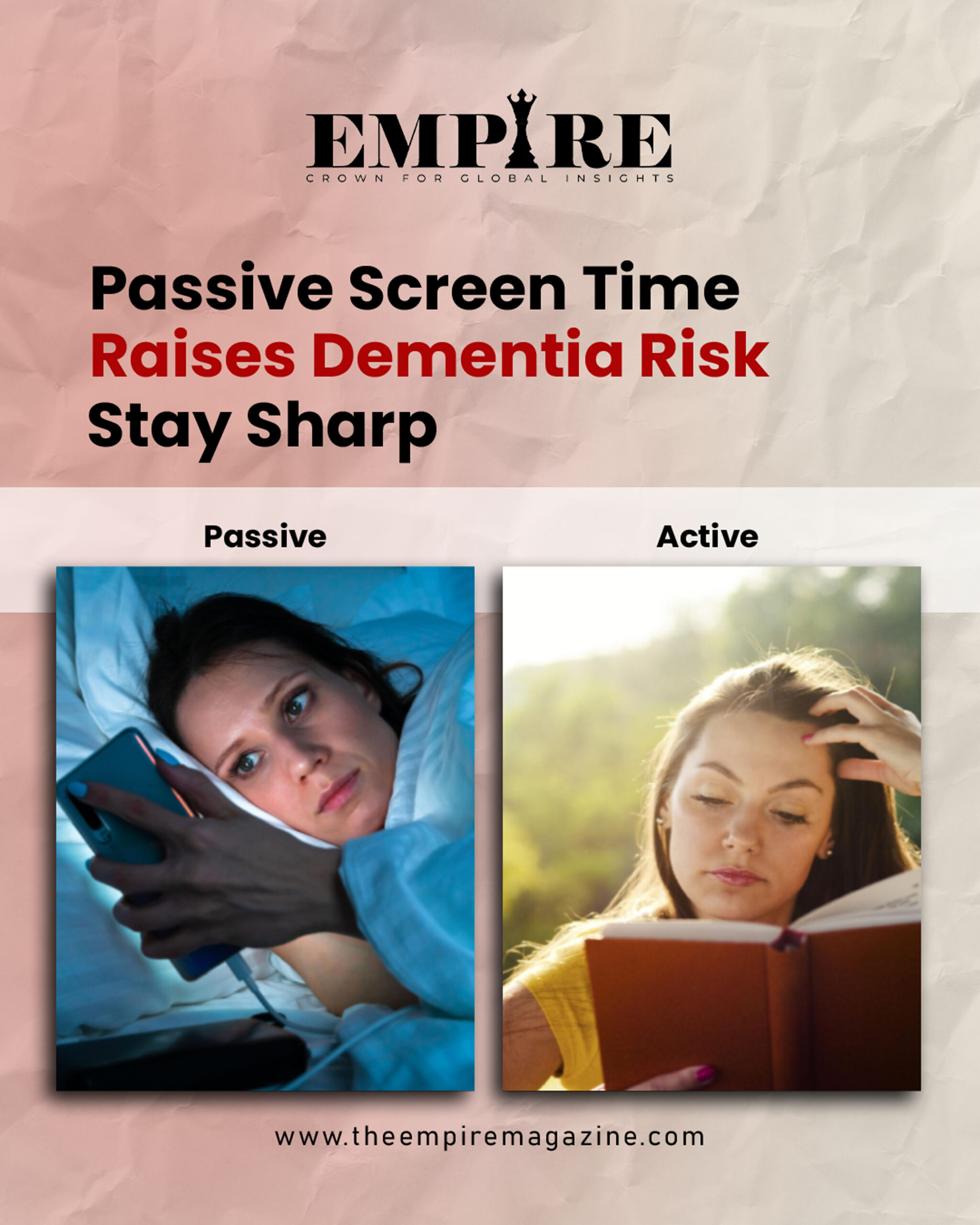
Introduction: The Hidden Impact of Passive Screen Time
The growing concern around passive screen time and dementia risk is reshaping how experts view daily habits. While sitting for long periods has long been associated with health issues, recent research suggests that what you do while sitting may be just as important as how long you sit.
Mentally passive activities like watching television or scrolling endlessly on devices could increase the risk of cognitive decline. In contrast, mentally engaging tasks such as reading, puzzles, or creative hobbies may help protect brain health and reduce the chances of developing dementia.
For more health insights, read here:
👉 https://theempiremagazine.com/?p=6228
What the Research Reveals
A long-term study involving more than 20,000 adults over nearly two decades provides valuable insights into how sedentary behavior affects brain health.
Participants, aged between 35 and 64 at the start, reported how much time they spent sitting and what activities they engaged in. Over time, researchers observed the development of dementia in a portion of the group.
The key finding was clear:
- Mentally passive activities were linked to a higher risk of dementia
- Mentally active activities were associated with a lower risk
Even small changes showed measurable benefits. Replacing just one hour of passive activity with an engaging one was linked to about a 7% reduction in dementia risk. Combining mental engagement with physical activity increased this benefit even further.
Passive vs Active Sedentary Behavior
Understanding the difference between passive and active sedentary activities is essential.
Mentally Passive Activities
These require little to no cognitive effort:
- Watching television for long periods
- Listening to music without interaction
- Mindless scrolling on social media
These activities do not challenge the brain, leading to reduced mental stimulation over time.
Mentally Active Activities
These involve thinking, problem-solving, or creativity:
- Reading books or articles
- Solving puzzles or crosswords
- Writing, drawing, or crafting
- Learning new skills or languages
- Engaging in meaningful conversations
Even though both types of activities involve sitting, their impact on the brain is vastly different.
Why Passive Screen Time May Harm the Brain
There are several reasons why passive screen time may increase dementia risk:
1. Lack of Cognitive Stimulation
The brain thrives on challenges. When it is not actively engaged, neural pathways may weaken over time, leading to reduced memory and thinking ability.
2. Reduced Cognitive Reserve
Cognitive reserve refers to the brain’s ability to adapt and compensate for changes. Engaging activities help build this reserve, while passive habits may limit it.
3. Poor Blood Circulation
Long, uninterrupted sitting can reduce blood flow to the brain, affecting overall brain health.
4. Impact on Sleep and Lifestyle
Passive screen habits often disrupt sleep patterns and reduce physical activity, both of which are crucial for maintaining cognitive function.
5. Lower Social Interaction
Many passive activities are done alone, reducing opportunities for social engagement, which is known to support brain health.
Is All Screen Time Bad?
Not all screen time is harmful. The key lies in how it is used.
Healthy Screen Use Includes:
- Learning new skills online
- Participating in virtual discussions
- Playing strategy-based games
- Engaging in problem-solving tasks
Unhealthy Screen Use Includes:
- Continuous binge-watching
- Endless scrolling without purpose
- Consuming content passively for long periods
The goal is not to eliminate screen time but to make it more meaningful and engaging.
How to Keep Your Brain Active
Maintaining brain health does not require drastic changes. Simple daily habits can make a big difference.
1. Choose Engaging Activities
Replace passive habits with activities that challenge your mind:
- Read books regularly
- Solve puzzles or play brain games
- Try creative hobbies like painting or writing
2. Stay Socially Connected
Interaction with others stimulates the brain:
- Talk to friends and family
- Join group activities or clubs
- Participate in discussions or debates
3. Learn Something New
Continuous learning keeps the brain active:
- Pick up a new language
- Learn a musical instrument
- Explore new skills or courses
4. Combine Mental and Physical Activity
The best results come from combining both:
- Walk while listening to educational content
- Play sports that require strategy
- Engage in activities like dancing or yoga
5. Break Long Sitting Periods
Avoid sitting for extended periods:
- Take short breaks
- Stretch or move around
- Alternate between tasks
The Role of Physical Activity
While mental engagement is important, physical activity remains essential for brain health.
Benefits include:
- Improved blood flow to the brain
- Reduced risk of chronic diseases
- Enhanced mood and mental clarity
When combined with cognitive activities, physical exercise can significantly lower dementia risk.
Small Changes, Big Impact
One of the most encouraging findings from the research is that small lifestyle changes can have a meaningful impact over time.
Switching even one hour of passive screen time to a mentally engaging activity can:
- Improve memory
- Enhance focus
- Reduce long-term cognitive decline
Consistency is key. Daily habits shape long-term brain health.
Stay connected with us:
📸 Instagram: https://www.instagram.com/the_empire_magazine/
📘 Facebook: https://www.facebook.com/profile.php?id=61573749076160
– The Empire Magazine
Crown For Global Insights