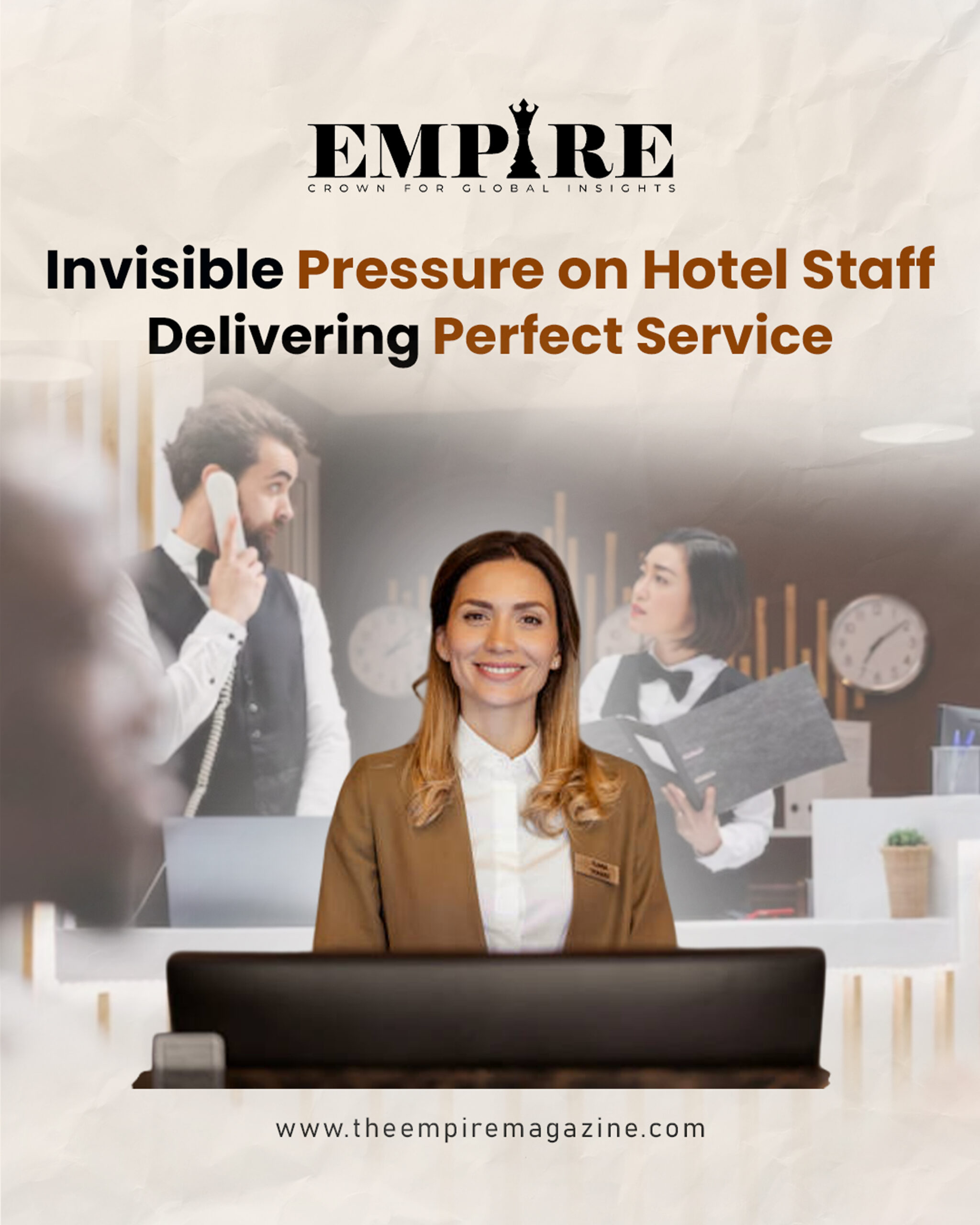
Invisible pressure on hotel staff delivering perfect service is a reality that most guests rarely notice but always experience. From luxury resorts to modest boutique stays, the essence of hospitality lies not just in infrastructure or amenities, but in the people who quietly ensure every moment feels seamless. Yet behind the polished smiles and graceful interactions lies a world of constant expectations, emotional effort, and operational intensity that defines modern hospitality.
Hospitality Lives in the Smallest, Invisible Acts
True hospitality is not always loud or dramatic—it exists in subtle gestures. A warm greeting after a long journey, a thoughtfully prepared meal, or a staff member remembering your preferences can transform an ordinary stay into an unforgettable experience.
These seemingly small acts require attentiveness, intuition, and dedication. They are often unspoken, unnoticed, and unacknowledged, yet they define the emotional memory of a guest’s stay. The invisible nature of these efforts is what makes them powerful—and also what makes them demanding for the staff who deliver them consistently.
When Service Feels Mechanical vs. Meaningful
There is a stark difference between service that is technically correct and service that feels genuine. Guests can sense when interactions are routine versus when they are rooted in care.
In some cases, even luxurious environments fail to create memorable experiences because staff appear disengaged or indifferent. In contrast, a single attentive individual—someone who goes beyond duty to show empathy—can redefine the entire experience.
This contrast highlights an important truth: hospitality is not about luxury alone; it is about human connection.
Emotional Labor: The Core of Hospitality Work
One of the most significant sources of invisible pressure is emotional labor. Hotel staff are expected to regulate their emotions constantly, regardless of their personal circumstances or workplace stress.
They must:
- Remain calm under pressure
- Show empathy to every guest
- Maintain positivity throughout long shifts
Research into hotel work environments shows that this emotional demand is intense, often leading to stress, nervousness, and mental fatigue among employees.
Unlike many professions, hospitality requires employees to deliver emotional consistency even when faced with unpredictable situations, demanding guests, or operational challenges.
High Expectations in a High-Stakes Environment
The hospitality industry operates on a simple principle: every guest interaction matters. In the age of online reviews and instant feedback, even minor lapses can have significant consequences.
This creates a high-pressure environment where:
- Perfection is expected at all times
- Mistakes are amplified publicly
- Service must be both fast and personalized
Employees are not just delivering service—they are protecting the reputation of the brand with every interaction.
The Operational Reality Behind the Scenes
While guests primarily interact with front-of-house staff, the reality of hotel operations involves multiple departments working in perfect coordination:
- Housekeeping teams racing against time
- Kitchen staff managing peak-hour demands
- Maintenance teams ensuring flawless functionality
- Backend teams handling bookings, payments, and logistics
Each department faces its own pressures, and a delay in one area can ripple across the entire guest experience. This interconnected system increases the mental and physical demands on staff.
Leadership and Workplace Challenges
Workplace conditions also play a critical role in shaping employee stress. Studies indicate that poor leadership and job insecurity are among the most significant stressors affecting hotel staff mental health.
When employees lack clear direction or feel unsupported, their ability to deliver exceptional service diminishes. Conversely, supportive leadership and strong teamwork can improve both employee well-being and service quality.
Interestingly, teamwork has been found to positively impact mental health, showing that collaboration can act as a buffer against stress in high-pressure environments.
Technology: A Double-Edged Sword
Modern hospitality is increasingly shaped by technology. From contactless check-ins to automated workflows, digital systems are transforming operations.
Automation helps by:
- Reducing repetitive manual tasks
- Improving accuracy and efficiency
- Freeing staff time for guest interaction
However, it also raises expectations. Guests now demand instant responses, seamless experiences, and real-time solutions. Staff must balance human interaction with technological systems, adding another layer of complexity to their roles.
The Shift From Servitude to Pride in Service
One of the most important shifts in modern hospitality is redefining service itself. Service should not feel like servitude—it should be rooted in dignity, pride, and professionalism.
When staff take pride in their work, it reflects in:
- Their attention to detail
- Their willingness to go beyond expectations
- Their ability to create meaningful guest experiences
Guests remember how they were made to feel, not just what they were provided. This emotional connection is what distinguishes exceptional hospitality from ordinary service.
Burnout and the Need for Support
The cumulative effect of emotional labor, high expectations, and operational stress often leads to burnout. Employees may experience:
- Mental exhaustion
- Reduced job satisfaction
- Declining performance
Addressing this requires proactive measures, including:
- Mental health support programs
- Flexible work schedules
- Recognition and appreciation of staff efforts
- Training for leadership to foster supportive environments
A healthier workforce leads to better guest experiences and long-term organizational success.
The Future of Hospitality: Balancing Humans and Systems
As the industry evolves, the challenge lies in balancing efficiency with empathy. Technology will continue to streamline operations, but it cannot replace the human element that defines hospitality.
The future will likely focus on:
- Enhancing employee well-being
- Leveraging automation to reduce workload
- Strengthening human connections with guests
Hotels that succeed will be those that recognize their staff not just as workers, but as the heart of the guest experience.
For more insights, visit:
https://theempiremagazine.com/?p=6045
Stay connected:
Instagram: https://www.instagram.com/the_empire_magazine/
Facebook: https://www.facebook.com/profile.php?id=61573749076160
– The Empire Magazine
Crown For Global Insights