EdTech trends 2026 are reshaping the future of education in ways that were once unimaginable. The traditional image of classrooms filled with textbooks, rigid schedules, and one-size-fits-all teaching methods is rapidly being replaced by dynamic, technology-driven learning environments. Today, education is no longer confined to physical spaces or limited by time. Instead, it is becoming flexible, personalized, and deeply connected to real-world skills and opportunities.
The rise of EdTech represents a powerful shift toward democratizing knowledge. Learners from different backgrounds now have access to high-quality education, whether through micro-courses, online degrees, or interactive learning platforms. This transformation is not just about convenience—it is about creating a smarter, more inclusive, and future-ready education system.
The Rise of EdTech and Its Global Impact
The rapid growth of EdTech trends 2026 highlights how technology is becoming the backbone of modern education. With increasing digital adoption and evolving workplace demands, learners are embracing new ways to acquire knowledge and skills. The global EdTech market is expected to grow significantly, reflecting the increasing reliance on technology-driven education solutions.
One of the main reasons behind this growth is the shift toward lifelong learning. In a fast-changing world, skills quickly become outdated. Professionals must continuously learn, adapt, and upgrade their knowledge to stay relevant. EdTech platforms make this possible by offering flexible and accessible learning opportunities that fit into busy lifestyles.
Flexible and Personalized Learning Experiences
A key feature of EdTech trends 2026 is the move toward flexible learning models. Traditional education often required students to follow fixed schedules and standardized curricula. Today, learners can choose when, where, and how they study.
Online and hybrid learning models allow individuals to balance education with work and personal commitments. This flexibility is especially valuable for working professionals who want to upskill without interrupting their careers.
Personalization is another major advancement. Artificial intelligence plays a crucial role in tailoring learning experiences to individual needs. AI-powered platforms analyze a learner’s strengths, weaknesses, and pace to create customized learning paths. This ensures that students receive content that matches their abilities and goals, making learning more effective and engaging.
Smarter Classrooms and Data-Driven Education
Modern classrooms are becoming smarter through the integration of technology. EdTech trends 2026 emphasize the use of data analytics, adaptive assessments, and intelligent tutoring systems to enhance learning outcomes.
Data-driven insights help educators understand student performance in real time. This allows them to identify learning gaps and provide targeted support. Instead of waiting for final exams, teachers can continuously monitor progress and adjust their teaching strategies accordingly.
Adaptive learning systems also play a significant role. These systems adjust the difficulty level of content based on a student’s performance, ensuring that learning remains challenging yet achievable. This approach improves engagement and helps students build confidence.
Gamification and Immersive Learning
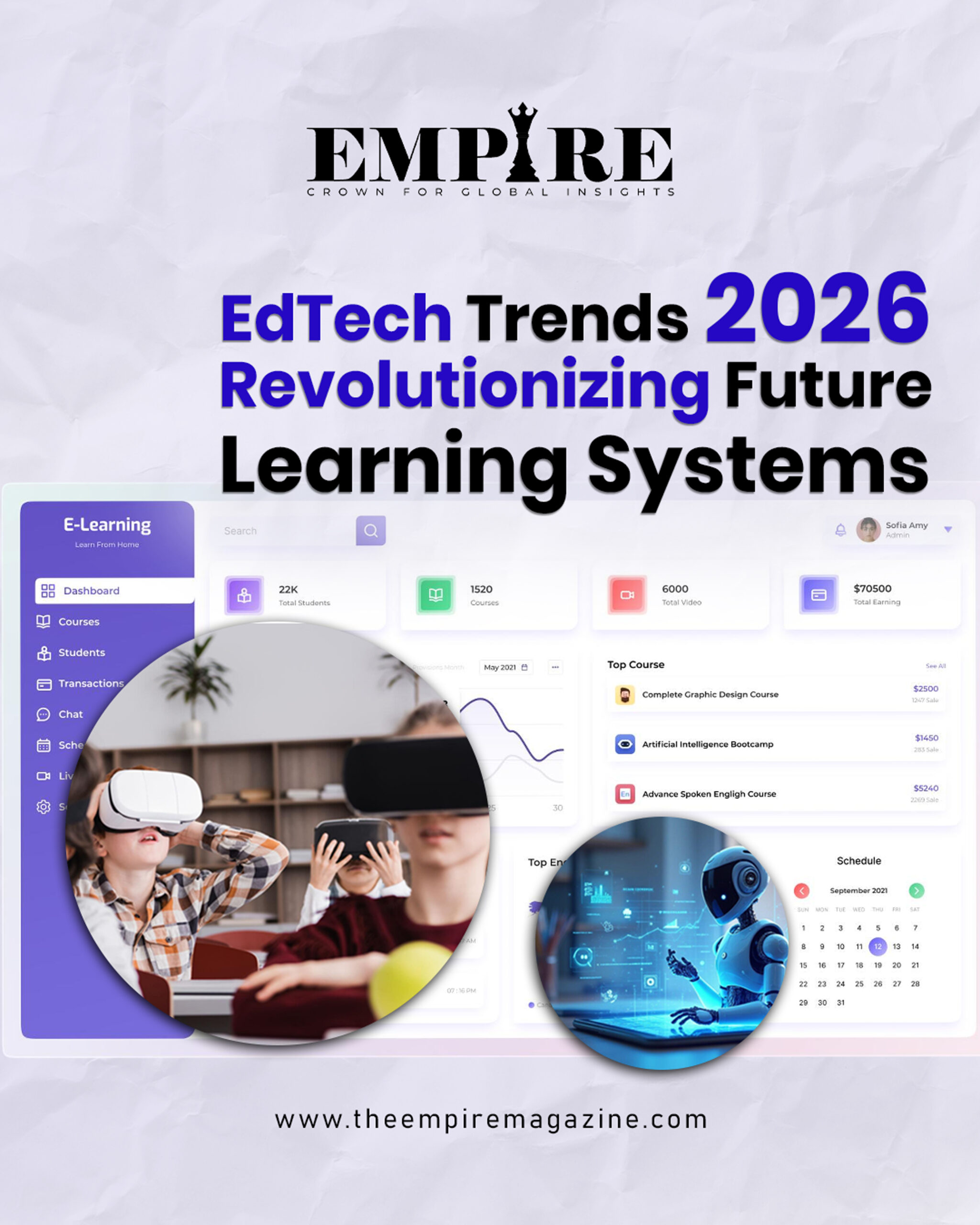
One of the most exciting aspects of EdTech trends 2026 is the use of gamification and immersive technologies. Learning is no longer limited to reading and memorizing information. Instead, it has become interactive and engaging.
Gamification uses elements such as rewards, challenges, and competition to motivate learners. This approach makes learning enjoyable and improves retention. Students are more likely to stay engaged when education feels like an interactive experience rather than a passive activity.
Immersive technologies such as augmented reality (AR), virtual reality (VR), and mixed reality (MR) take learning to the next level. These technologies allow students to explore virtual labs, conduct simulations, and experience real-world scenarios in a controlled environment. This hands-on approach enhances understanding and prepares learners for practical applications.
The Role of AI in EdTech
Artificial intelligence is at the heart of EdTech trends 2026. It is transforming how education is delivered, assessed, and experienced. AI enables automated content creation, personalized recommendations, and real-time feedback.
AI-powered tools can generate study materials, design assessments, and even simulate learning environments. This reduces the workload for educators and allows them to focus on mentoring and guiding students.
AI also improves accessibility. Features such as real-time translation, voice assistance, and adaptive interfaces make education more inclusive for learners with different needs. This ensures that education is accessible to a wider audience, regardless of language or physical limitations.
Emerging Career Opportunities in EdTech
The growth of EdTech trends 2026 is creating new career opportunities that combine education, technology, and data. Professionals can now pursue roles such as EdTech data analysts, instructional designers, and education technologists.
These roles require a blend of technical and creative skills. For example, data analysts use machine learning to identify learning patterns, while instructional designers create engaging and interactive content. Education technologists help institutions integrate digital tools into their teaching processes.
As the EdTech industry continues to expand, these careers will become increasingly important. They represent the future of work, where education and technology intersect to create innovative solutions.
Industry-Academic Collaboration and Skill Development
Another important trend in EdTech trends 2026 is the collaboration between industries and educational institutions. Companies and universities are working together to design programs that align with real-world requirements.
This collaboration ensures that students gain practical skills that are directly relevant to the job market. It also promotes entrepreneurship by encouraging innovation and problem-solving.
Skill development is becoming a central focus of education. Instead of emphasizing theoretical knowledge alone, EdTech platforms prioritize skills such as critical thinking, communication, and adaptability. These skills are essential for success in a rapidly changing world.
EdTech and Student Well-Being
Education is not just about academic performance. EdTech trends 2026 also focus on student well-being. Digital tools are being used to support mental health and work-life balance.
AI-powered chatbots, virtual counseling, and wellness tracking tools help students manage stress and stay motivated. These tools provide personalized support and ensure that learners receive the help they need.
This holistic approach to education recognizes that emotional well-being is essential for effective learning. By addressing both academic and personal needs, EdTech creates a more balanced and supportive learning environment.
The Future of Education
The future of education lies in the integration of empathy and innovation. EdTech trends 2026 highlight the importance of combining technology with human-centered approaches. While digital tools enhance efficiency, the role of educators remains crucial in guiding and inspiring learners.
Hybrid learning models will continue to evolve, offering a blend of online and offline experiences. Digital literacy and data literacy will become essential skills for students and professionals alike.
As technology continues to advance, education will become more accessible, inclusive, and impactful. Learners who embrace these changes will be better prepared to succeed in the future.
For more insights, visit:
https://theempiremagazine.com/?p=6011
Stay connected with us:
Instagram: https://www.instagram.com/the_empire_magazine/
Facebook: https://www.facebook.com/profile.php?id=61573749076160
– The Empire Magazine
Crown For Global Insights