The NEOM project future city represents one of the most ambitious and transformative urban development initiatives in modern history. Conceived as a cornerstone of Saudi Arabia’s Vision 2030, NEOM is designed to redefine how cities are built, lived in, and sustained. With a staggering investment exceeding $500 billion, the project aims to create a futuristic, sustainable region powered entirely by renewable energy while integrating cutting-edge technology into everyday life.
What is the NEOM Project?
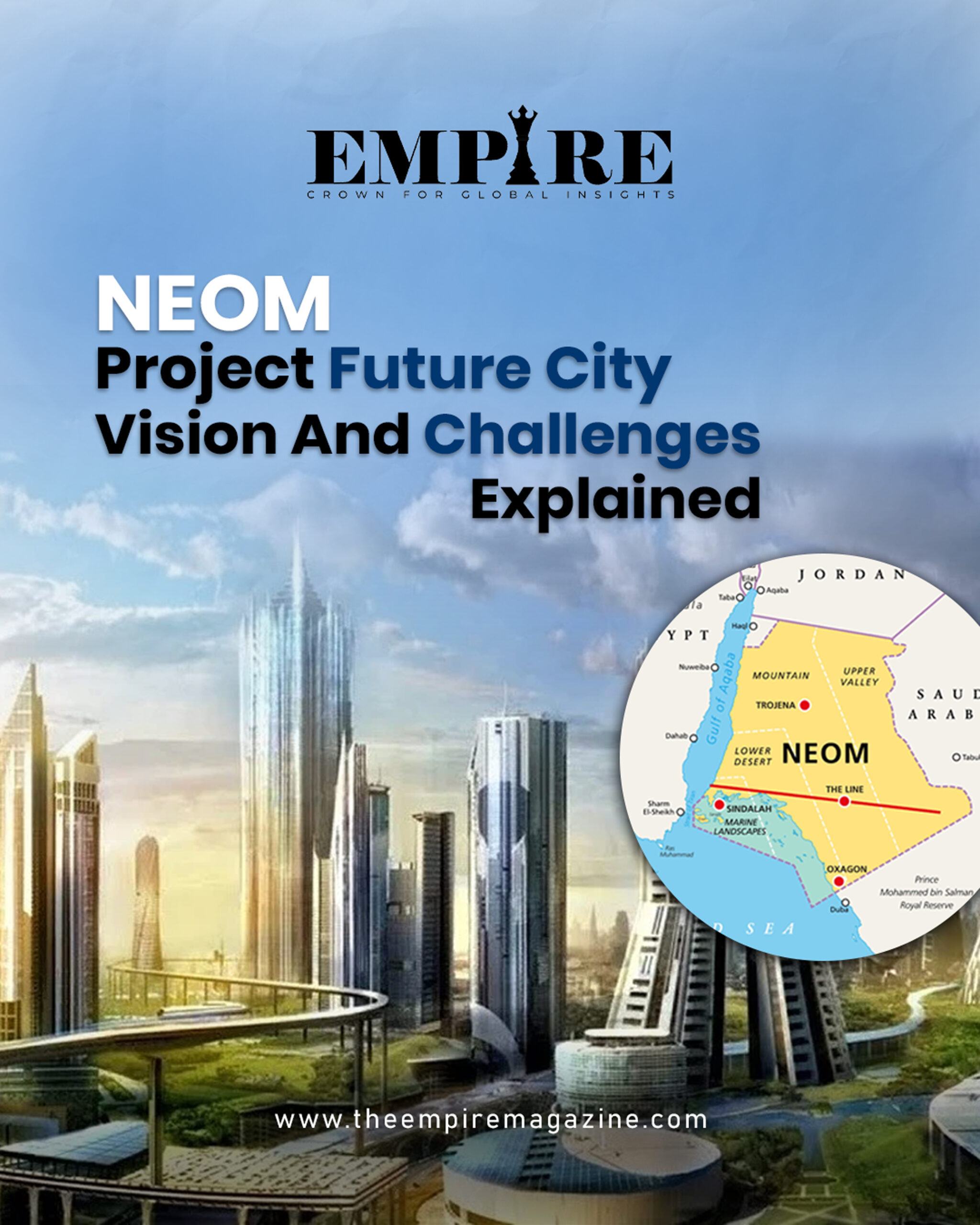
The NEOM project future city is a vast development located in the northwest of Saudi Arabia, spanning a diverse landscape along the Red Sea. Its vision is to build a “new future” — a region that combines advanced technology, sustainability, and economic innovation.
The project is not just a single city but a collection of interconnected developments, each designed to serve a unique purpose. These include residential zones, industrial hubs, tourism destinations, and luxury lifestyle spaces. NEOM is intended to act as a global model for sustainable urbanization and economic diversification, reducing dependence on oil and opening new opportunities for growth .
The Line: A Revolutionary Urban Concept
At the heart of the NEOM project future city lies The Line, a 170-kilometer-long linear city that challenges traditional urban design. Unlike conventional cities, The Line eliminates cars and roads entirely, relying instead on high-speed transport systems and walkable communities.
The city is designed as two mirrored skyscrapers stretching across the desert, reaching heights of approximately 500 meters. It aims to house up to 9 million residents in a compact, vertically integrated environment. Everything residents need — from schools to workplaces — is accessible within minutes.
The concept emphasizes:
- Zero carbon emissions
- 100% renewable energy usage
- Minimal environmental footprint
- High-density, efficient living
Although the original scale was highly ambitious, authorities have scaled back initial targets, focusing on a smaller pilot section known as the “hidden marina,” which spans approximately 2.4 kilometers.
Key Components of NEOM
The NEOM project future city is composed of several major developments, each contributing to its overall vision:
1. Oxagon
Oxagon is a futuristic industrial city and port designed to become a global hub for advanced manufacturing and logistics. It aims to leverage automation, artificial intelligence, and smart infrastructure to create efficient industrial operations.
2. Trojena
Trojena is a year-round mountain destination focused on tourism and recreation. It combines natural landscapes with modern facilities, offering activities such as skiing, hiking, and eco-tourism.
3. Sindalah
Sindalah is a luxury island destination located in the Red Sea. It represents one of the first completed milestones of NEOM, showcasing the project’s tourism ambitions and commitment to high-end experiences .
Together, these components demonstrate how NEOM is designed as a multi-dimensional ecosystem rather than a single urban space.
Sustainability and Innovation at the Core
A defining feature of the NEOM project future city is its commitment to sustainability. The project aims to operate entirely on renewable energy sources, including solar, wind, and green hydrogen technologies.
NEOM is also being developed as a testing ground for innovative solutions such as:
- Smart infrastructure powered by artificial intelligence
- Autonomous transportation systems
- Solar-powered desalination for water supply
- Green hydrogen production facilities
These technologies are intended to create a net-zero carbon environment while addressing global challenges such as climate change and resource scarcity .
Economic Significance and Vision 2030
The NEOM project future city plays a central role in Saudi Arabia’s Vision 2030, which aims to diversify the country’s economy and reduce its reliance on oil revenues.
By attracting global investment, fostering innovation, and creating new industries, NEOM is expected to:
- Generate thousands of jobs
- Boost tourism and international business
- Position Saudi Arabia as a global technology hub
- Encourage foreign direct investment
The project also serves as a branding initiative, showcasing the Kingdom as a forward-thinking nation committed to sustainability and modernization.
Current Progress and Adjustments
While the vision of NEOM remains bold, the reality of executing such a massive project has led to adjustments. The NEOM project future city has experienced:
- Scaled-back timelines and initial targets
- Budget constraints and financial reassessments
- Leadership changes impacting project direction
The initial goal of housing millions of residents by 2030 has been revised, with current efforts focused on completing smaller sections first. This phased approach allows for testing concepts and managing costs more effectively.
Challenges Facing NEOM
Despite its promise, the NEOM project future city faces several significant challenges:
1. Financial Constraints
The enormous cost of the project requires sustained investment and careful financial management. Securing funding remains a critical concern.
2. Environmental Impact
While designed to be sustainable, the construction of such a large-scale development can disrupt ecosystems and wildlife.
3. Technological Feasibility
Many of the technologies planned for NEOM are still evolving. Implementing them on such a scale presents technical risks.
4. Geopolitical and Regional Stability
Regional conflicts and geopolitical tensions can affect investor confidence and project timelines .
5. Social and Cultural Factors
Balancing modernization with traditional values and addressing concerns related to community displacement are also key challenges.
The Future of NEOM
The NEOM project future city represents a bold experiment in reimagining urban life. While challenges remain, the project continues to move forward, with ongoing construction and development.
If successful, NEOM could set a global benchmark for sustainable cities, influencing how future urban environments are designed and managed. Even if it evolves differently from its original vision, the lessons learned from NEOM will shape the future of urban development worldwide.
For more insights on global innovation and future trends, visit:
https://theempiremagazine.com/?p=5981
Stay connected with us:
Instagram: https://www.instagram.com/the_empire_magazine/
Facebook: https://www.facebook.com/profile.php?id=61573749076160
– The Empire Magazine
Crown For Global Insights