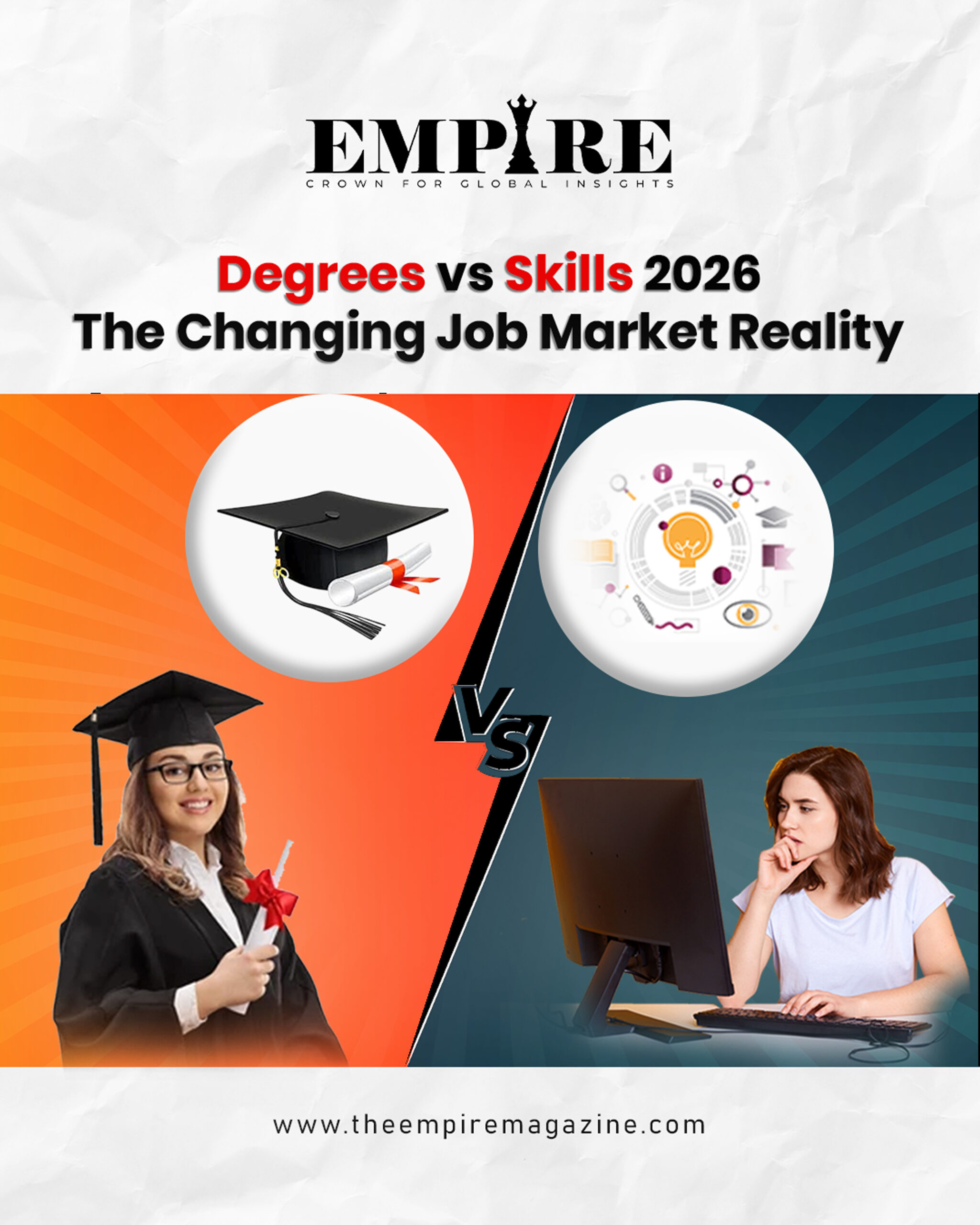
The debate around Degrees vs Skills 2026 has become one of the most important discussions in today’s evolving job market. For decades, a college degree was considered the primary gateway to employment and career success. It symbolized knowledge, credibility, and expertise.
However, in 2026, this traditional belief is being challenged. Rapid technological advancements, changing industry needs, and the rise of alternative learning platforms have reshaped how employers evaluate talent. Today, companies are increasingly focusing on what candidates can do rather than what qualifications they hold.
This shift is transforming how individuals prepare for their careers and how organizations build their workforce.
Why Degrees Were Once Essential
Historically, degrees played a crucial role in career development. They provided structured education, theoretical knowledge, and a standardized way for employers to assess candidates.
Degrees were important because they:
- Demonstrated commitment and discipline
- Provided foundational knowledge in a specific field
- Acted as a screening tool for employers
- Created credibility in professional environments
In many industries, such as medicine, law, and engineering, degrees still remain essential due to regulatory and technical requirements.
However, the limitations of traditional education are becoming more visible in today’s fast-paced world.
The Rise of Skill-Based Hiring
One of the most significant trends in Degrees vs Skills 2026 is the rise of skill-based hiring. Employers are now prioritizing practical abilities, hands-on experience, and problem-solving skills over academic credentials.
This shift is driven by several factors:
1. Rapid Technological Change
Technology evolves faster than traditional education systems can adapt. Skills such as coding, data analysis, digital marketing, and AI tools require continuous learning that goes beyond formal degrees.
2. Need for Immediate Productivity
Companies prefer candidates who can contribute from day one. Practical skills reduce training time and improve efficiency.
3. Availability of Alternative Learning Platforms
Online courses, certifications, bootcamps, and self-learning resources have made it easier for individuals to acquire skills without formal education.
4. Focus on Problem-Solving
Employers value candidates who can think critically, adapt to challenges, and deliver solutions—skills that are often developed through experience rather than theory.
How Employers Evaluate Candidates Today
In 2026, hiring practices are evolving. Employers are using new methods to assess candidates, including:
- Skill assessments and practical tests
- Portfolio reviews and project-based evaluations
- Real-world problem-solving scenarios
- Internship and work experience analysis
This approach allows companies to identify talent more accurately, focusing on performance rather than qualifications alone.
The Role of Skills in Career Growth
Skills are becoming the foundation of career success. Unlike degrees, which are static, skills are dynamic and continuously evolving.
Key advantages of skill-based learning include:
- Flexibility to adapt to changing industries
- Faster learning cycles
- Immediate application in real-world scenarios
- Greater employability across multiple sectors
For example, a professional with strong technical skills can transition between industries more easily than someone relying solely on a degree.
Do Degrees Still Matter?
While skills are gaining importance, degrees are not becoming irrelevant. Instead, their role is changing.
Degrees still provide:
- Strong theoretical foundations
- Structured learning environments
- Networking opportunities
- Credibility in certain professions
In fields like healthcare, law, and engineering, degrees remain mandatory due to strict regulations.
However, in many other industries, degrees are no longer the sole determinant of employability.
The Ideal Approach: Combining Degrees and Skills
The most effective strategy in Degrees vs Skills 2026 is not choosing one over the other, but combining both.
A balanced approach includes:
- Gaining a degree for foundational knowledge
- Developing practical skills through experience
- Continuously learning and updating skills
- Building a portfolio to showcase abilities
This combination ensures both credibility and capability, making candidates more competitive in the job market.
Impact on Education Systems
The shift toward skills is also influencing how education systems operate. Institutions are adapting by:
- Introducing skill-based courses
- Emphasizing internships and practical training
- Collaborating with industries
- Offering flexible learning programs
This transformation aims to bridge the gap between education and employment.
What Job Seekers Should Do in 2026
To succeed in today’s job market, individuals must adapt to changing expectations. Key strategies include:
- Focus on developing in-demand skills
- Gain real-world experience through internships or projects
- Build a strong portfolio showcasing your work
- Stay updated with industry trends
- Combine formal education with continuous learning
Being proactive and adaptable is essential for long-term career success.
The Future of Work and Hiring
The future of work will continue to prioritize skills, adaptability, and innovation. As industries evolve, the demand for specialized skills will increase.
Employers will increasingly look for:
- Critical thinking and problem-solving abilities
- Technical and digital skills
- Creativity and innovation
- Ability to learn and adapt quickly
This trend indicaates a shift toward a more dynamic and inclusive job market, where talent is measured by ability rather than background.
For more insights, read here:
👉 https://theempiremagazine.com/?p=5785
Stay connected with us:
📸 Instagram: https://www.instagram.com/the_empire_magazine/
📘 Facebook: https://www.facebook.com/profile.php?id=61573749076160
– The Empire Magazien
Crown For Global Insights