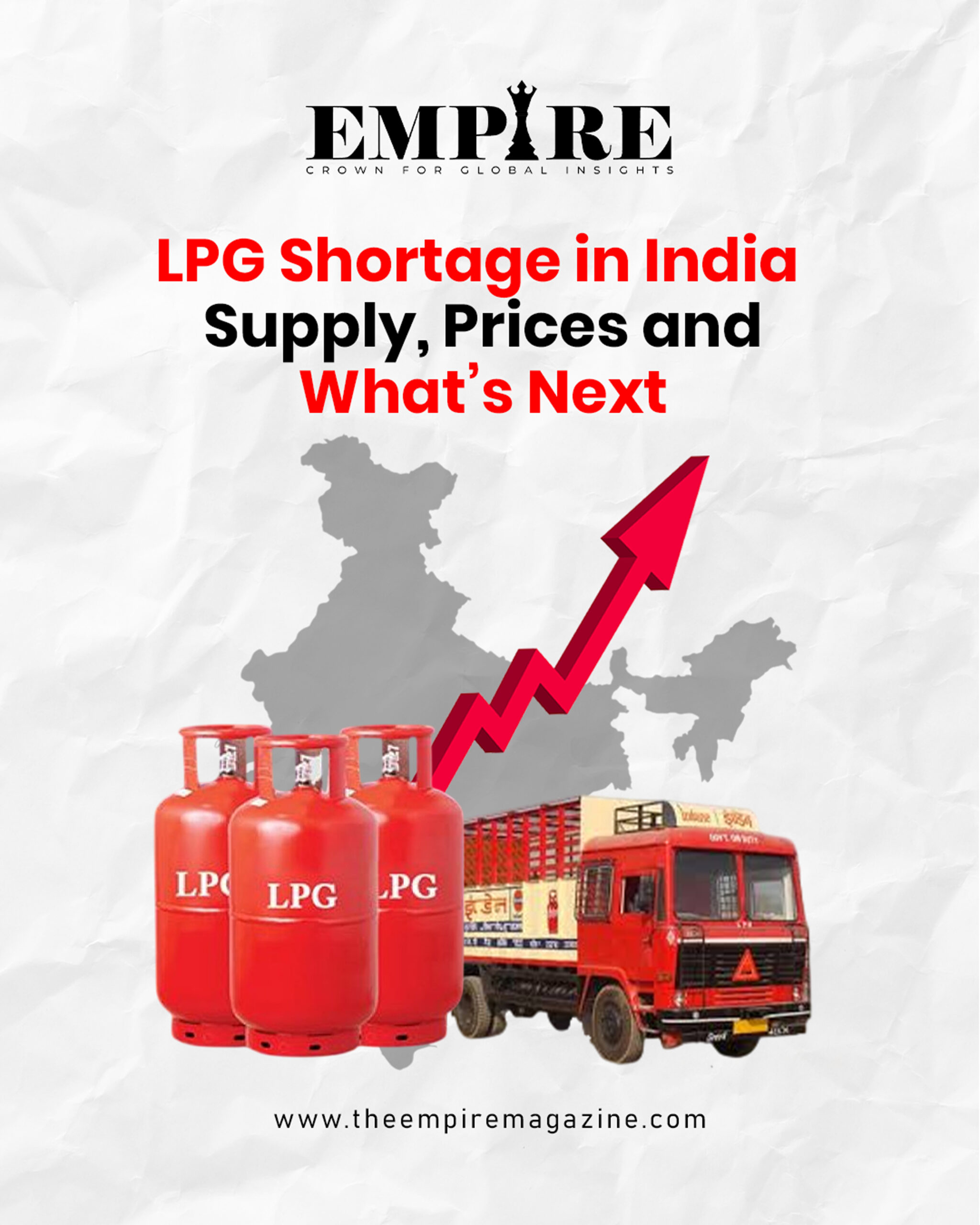
LPG Shortage in India has emerged as a serious concern affecting millions of households, businesses, and industries across the country. What started as a global disruption linked to geopolitical tensions has now evolved into a domestic challenge impacting daily life, pricing, and energy accessibility. From urban kitchens to small-scale industries, the ripple effects of this crisis are being felt everywhere.
Liquefied Petroleum Gas (LPG) plays a crucial role in India’s energy ecosystem. It is widely used for cooking, commercial operations, transport, and industrial processes. When supply becomes unstable, the consequences are immediate and widespread. The current situation highlights how closely India’s domestic energy security is tied to global supply chains and international transit routes.
The Root Cause of the LPG Crisis
The ongoing LPG Shortage in India is largely influenced by disruptions in global energy supply routes, especially in West Asia. The Strait of Hormuz, one of the most critical energy corridors in the world, has become a point of concern. Since a significant portion of India’s LPG imports passes through this route, any disruption creates uncertainty in supply timelines and availability.
Even though shipments continue to reach Indian ports, the unpredictability of tanker movement and route safety has made planning and distribution more complex. The crisis is not necessarily about a complete halt in supply but about instability and inconsistency, which can be equally damaging.
India’s heavy reliance on imported LPG further amplifies the issue. When global conditions become uncertain, domestic supply chains face pressure, making it difficult to maintain steady distribution across regions.
Impact on Daily Life and Businesses
The LPG Shortage in India is not just a supply issue—it is a social and economic challenge. The impact is most visible in small businesses, restaurants, and local food vendors. Many establishments have been forced to reduce their menu offerings, increase prices, or switch to alternative cooking methods such as electricity, coal, or firewood.
For households, the concern revolves around refill delays, rising costs, and uncertainty about future availability. Families that depend entirely on LPG for cooking are particularly vulnerable, especially in urban and semi-urban areas.
Small industries are also under pressure. Textile units, bakeries, and food processing businesses that rely on LPG are struggling to maintain production levels. In some regions, operations are slowing down, and in extreme cases, businesses are at risk of temporary shutdowns.
Shift Toward Alternative Energy Sources
One of the most noticeable outcomes of the LPG Shortage in India is the rapid shift toward alternative energy sources. Piped Natural Gas (PNG) has seen a surge in demand in urban areas. Cities like Pune have experienced a sharp increase in new connections as consumers and businesses look for more reliable fuel options.
In rural and semi-urban areas, innovative solutions are emerging. Bio-CNG projects, which convert agricultural waste and organic material into fuel, are gaining attention as a sustainable and cost-effective alternative. These solutions not only reduce dependence on imported LPG but also promote cleaner energy practices.
Electric cooking is also becoming more popular, especially among restaurants and households with access to stable electricity. While not a complete replacement, it offers a temporary solution during supply disruptions.
Government Response and Measures
The government has taken several steps to manage the LPG Shortage in India and ensure that essential supply remains available. Authorities have emphasized that there is no complete shortage at distribution points and have urged citizens to avoid panic booking.
Efforts are being made to stabilize supply chains, monitor distribution systems, and prevent illegal activities such as hoarding and black marketing. In addition, there is a strong push to expand PNG infrastructure and reduce reliance on LPG over the long term.
There have also been discussions about optimizing distribution by managing cylinder supply more efficiently. While some proposals have raised concerns, the primary goal remains to ensure that LPG reaches as many households as possible during the crisis.
State governments are also playing a role by increasing commercial gas allocations and coordinating with suppliers to address sector-specific challenges. These steps aim to balance demand across domestic and commercial users.
Challenges in Distribution and Supply Management
Managing LPG distribution during a crisis is a complex task. The challenge lies not only in importing fuel but also in ensuring it reaches end users efficiently. Increased demand, booking delays, and logistical constraints add pressure to an already strained system.
Dealers and distributors face operational challenges, especially if supply patterns change. Handling fluctuating demand while maintaining transparency and fairness in distribution is critical to avoiding public dissatisfaction.
In addition, misinformation can worsen the situation. Rumors about reduced cylinder sizes or supply cuts can trigger panic buying, which further disrupts the system. Clear communication from authorities is essential to maintain stability.
Long-Term Lessons and Energy Strategy
The LPG Shortage in India serves as a reminder of the importance of energy diversification. Relying heavily on a single source or route makes the system vulnerable to external shocks. The current crisis highlights the need for a more resilient and flexible energy strategy.
Investing in alternative fuels, expanding domestic production, and strengthening infrastructure are key steps toward long-term stability. Renewable energy sources, biofuels, and advanced gas distribution systems can reduce dependence on imports and improve energy security.
The crisis also encourages innovation. From bio-CNG projects to electric cooking solutions, new approaches are emerging that could reshape India’s energy landscape in the future.
What Consumers Can Expect
For consumers, the situation may remain uncertain in the short term. While supply is expected to continue, there may be occasional delays or fluctuations. Adopting alternative cooking methods where possible and using LPG efficiently can help manage the situation.
Businesses may need to adapt by diversifying their energy sources and optimizing operations. Flexibility and quick decision-making will be essential for navigating this period.
At the same time, the ongoing efforts by the government and industry stakeholders provide hope that the situation will gradually stabilize.
Final Thoughts
LPG Shortage in India is a complex issue shaped by global tensions, supply chain vulnerabilities, and rising domestic demand. While the immediate focus is on managing supply and minimizing disruption, the crisis also offers valuable lessons for the future.
It highlights the importance of resilience, innovation, and diversification in energy planning. As India moves forward, building a stronger and more adaptable energy system will be essential to prevent similar challenges in the future.
The current crisis may be temporary, but its impact will likely influence how India approaches energy security for years to come.
Read more here:
https://theempiremagazine.com/?p=5633
Follow us on social media:
Instagram: https://www.instagram.com/the_empire_magazine/
Facebook: https://www.facebook.com/profile.php?id=61573749076160
– The Empire Magazine
Crown For Global Insights