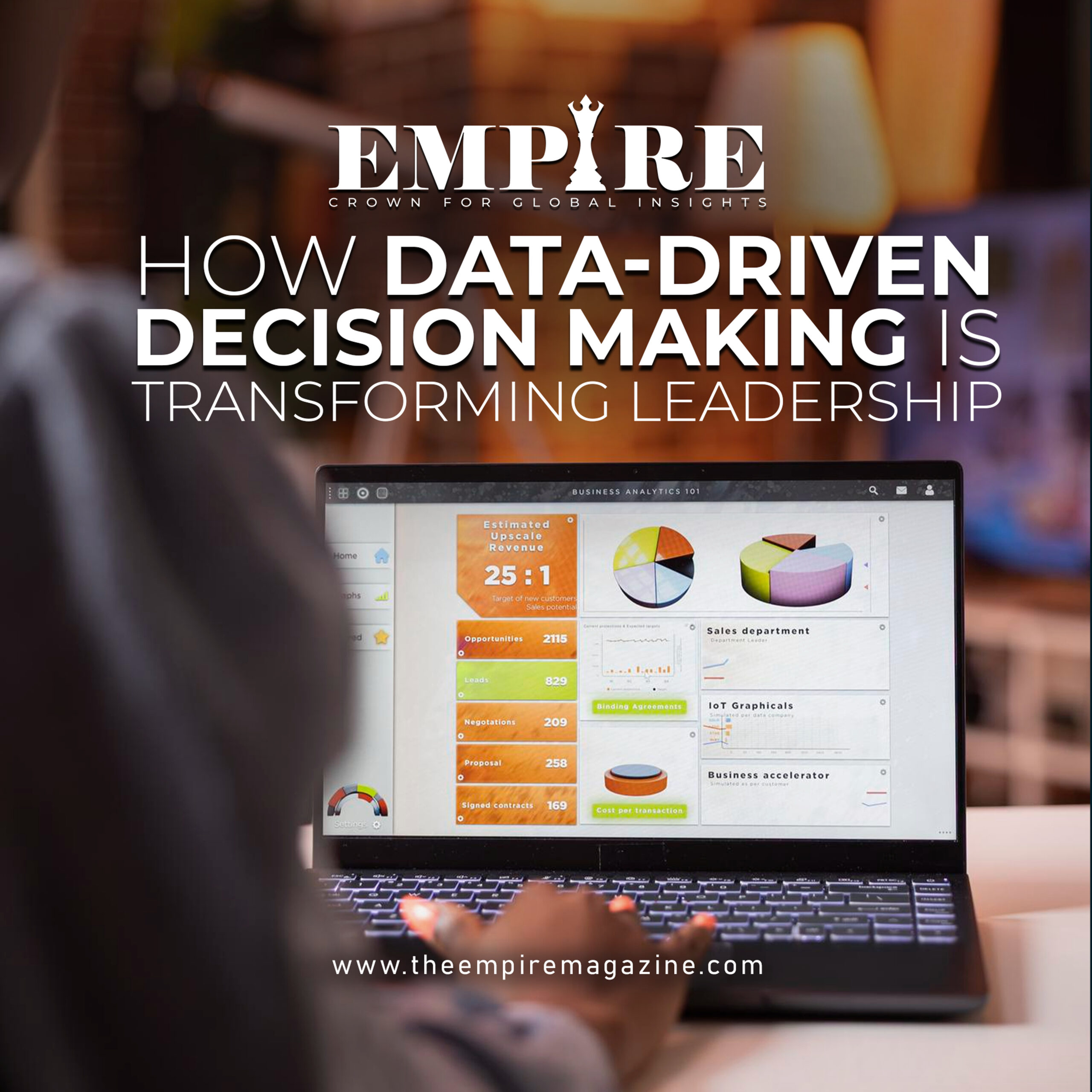
In the modern business environment, leadership is evolving rapidly as technology and information systems become more advanced. Today, organizations generate vast amounts of data every day—from customer interactions and financial performance to market trends and operational processes. As a result, Data-Driven Decision Making in Leadership has become one of the most important strategies for guiding businesses toward sustainable growth.
Leaders who rely on data analytics can make more informed decisions, reduce uncertainty, and identify opportunities that may not be visible through traditional management approaches. Instead of relying solely on intuition or past experience, modern executives use data insights to shape strategy, optimize performance, and improve customer experiences.
The growing importance of Data-Driven Decision Making in Leadership is transforming how companies operate and how leaders approach complex challenges.
Understanding Data-Driven Decision Making in Leadership
Data-Driven Decision Making in Leadership refers to the practice of using data analysis, metrics, and insights to guide business decisions. This approach allows leaders to evaluate evidence before making strategic choices.
Data-driven leaders rely on several tools and methods, including:
- Data analytics platforms
- Business intelligence dashboards
- Predictive modeling
- Customer behavior analytics
- Performance metrics and KPIs
By analyzing these data sources, leaders gain a clearer understanding of market trends, operational efficiency, and customer preferences.
Organizations that embrace Data-Driven Decision Making in Leadership are better equipped to identify risks early and capitalize on emerging opportunities.
Why Data-Driven Leadership Is Becoming Essential
Business environments today are more competitive and complex than ever before. Leaders must respond quickly to changes in consumer behavior, technological innovation, and global market conditions.
In such an environment, Data-Driven Decision Making in Leadership provides a powerful advantage.
Rather than making assumptions about what customers want, leaders can analyze real data to understand patterns and predict future behavior. This enables companies to develop products, services, and marketing strategies that align closely with customer needs.
Data-driven leadership also reduces the risk of costly mistakes. Decisions supported by reliable data are more likely to deliver positive outcomes.
Companies that prioritize Data-Driven Decision Making in Leadership often outperform competitors who rely on outdated management methods.
Data Analytics and Strategic Planning
Strategic planning is one of the areas where Data-Driven Decision Making in Leadership has the greatest impact.
Traditional leadership models often relied on historical trends and executive intuition to guide long-term strategies. While experience remains valuable, data analytics now allows leaders to make more precise forecasts.
With advanced analytics tools, leaders can examine:
- Market demand patterns
- Customer purchasing behavior
- Supply chain efficiency
- Financial performance indicators
These insights allow organizations to develop strategies that are aligned with real-world data rather than assumptions.
When Data-Driven Decision Making in Leadership guides strategic planning, companies can allocate resources more effectively and pursue growth opportunities with greater confidence.
Real-World Example of Data-Driven Leadership
A powerful example of Data-Driven Decision Making in Leadership can be seen in the operations of Amazon.
The company uses advanced data analytics across nearly every aspect of its business. From optimizing logistics and warehouse operations to adjusting pricing strategies and personalizing customer recommendations, data plays a central role in decision-making.
By analyzing large datasets, the company can predict customer demand, manage inventory efficiently, and deliver faster services.
This data-driven approach has allowed the organization to scale rapidly while maintaining operational efficiency and strong customer satisfaction.
Improving Customer Experience Through Data
Another major benefit of Data-Driven Decision Making in Leadership is the ability to enhance customer experiences.
Customer data provides valuable insights into purchasing behavior, preferences, and expectations. Leaders who understand these insights can design services that better meet customer needs.
For example, businesses can analyze customer feedback, website interactions, and purchase histories to identify trends.
This information allows companies to personalize marketing messages, recommend relevant products, and improve service delivery.
When Data-Driven Decision Making in Leadership is applied to customer experience strategies, organizations build stronger relationships with their audiences.
Building a Data-Driven Organizational Culture
While technology is essential for data-driven leadership, organizational culture also plays a critical role.
Companies must encourage employees to use data as part of everyday decision-making. This involves training teams to interpret analytics and empowering them to act on insights.
An organization where Data-Driven Decision Making in Leadership thrives often promotes:
- Transparency in performance metrics
- Collaboration between departments
- Continuous learning and skill development
- Investment in digital infrastructure
Effective leadership culture also depends on strong interpersonal skills and emotional awareness. Leaders who combine data insights with emotional understanding are better equipped to guide teams and build trust.
You can explore this concept further in this related article on leadership skills:
https://theempiremagazine.com/emotional-intelligence-in-modern-leadership/
The Future of Data-Driven Leadership
As technology continues to advance, the role of data in leadership will only become more significant.
Artificial intelligence, machine learning, and predictive analytics are enabling leaders to analyze information faster and more accurately than ever before.
Organizations that invest in Data-Driven Decision Making in Leadership will be better prepared to adapt to future market changes and technological disruptions.
These leaders will be able to anticipate trends, optimize operations, and create more responsive business strategies.
Final Thoughts
The business world is entering a new era where information and analytics guide nearly every major decision.
Data-Driven Decision Making in Leadership empowers organizations to operate with greater clarity, efficiency, and strategic insight.
Leaders who embrace data analytics can make more confident decisions, strengthen customer relationships, and drive long-term growth.
As businesses continue to evolve in the digital age, data-driven leadership will remain one of the most powerful tools for navigating complexity and achieving sustainable success.
The Empire Magazine – Crown For Global Insights
Follow The Empire Magazine for more insights:
Facebook | Instagram | LinkedIn