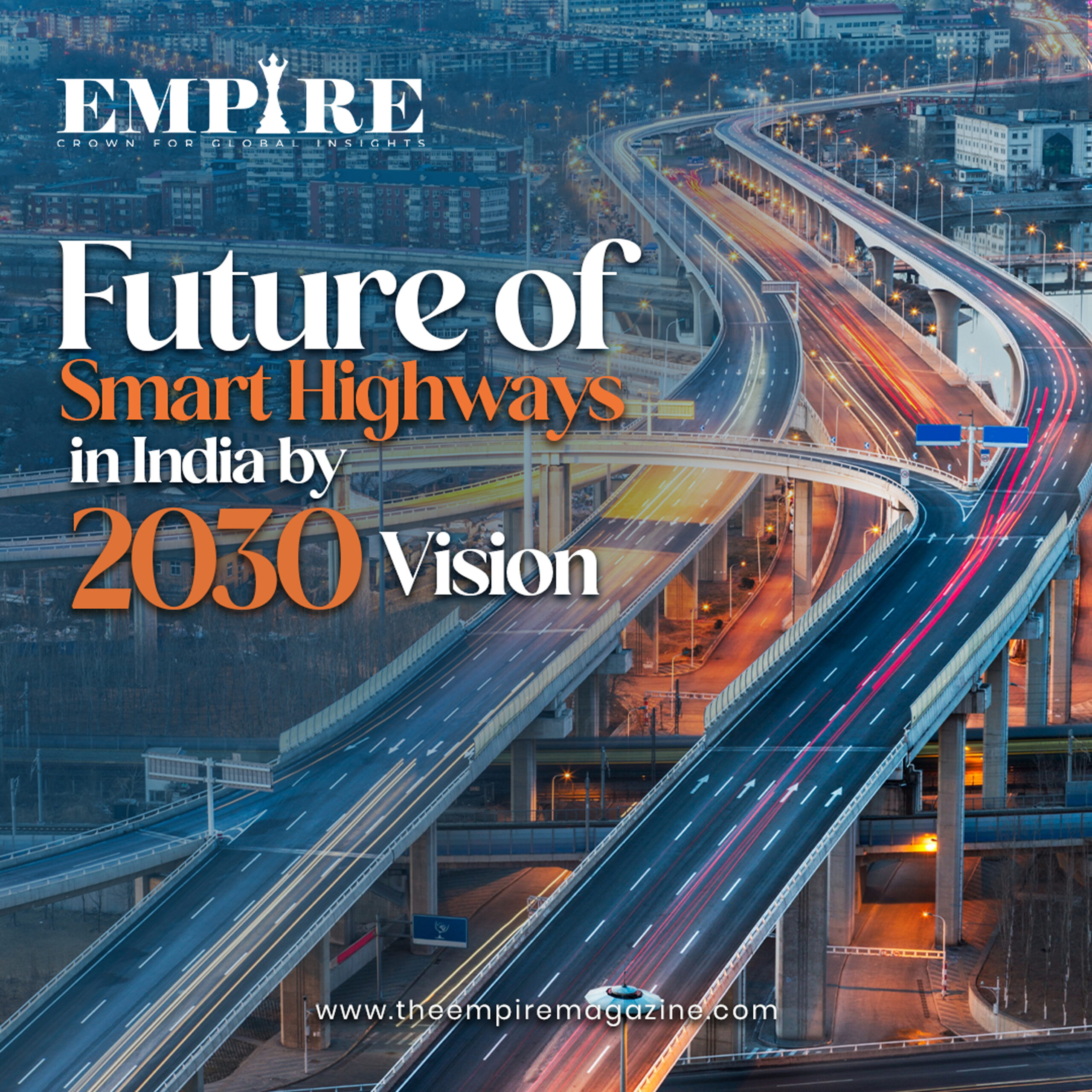
The Future of Smart Highways in India represents more than just faster roads and wider lanes. It signals a shift toward intelligent infrastructure that blends technology, safety, and sustainability into a unified national vision. With over 6.3 million kilometers of road network, India possesses one of the largest transportation systems in the world. Highways carry the majority of freight and passenger traffic, serving as the arteries of economic development. As India moves toward becoming a global economic powerhouse, its highways must evolve beyond expansion and into innovation.
The next generation of highways will not merely connect cities—they will communicate, analyze, and adapt. Smart highways will combine artificial intelligence, renewable energy, digital connectivity, and advanced engineering to create safer and more efficient corridors.
Technology: Creating Intelligent Corridors
Technology lies at the heart of the Future of Smart Highways in India. Intelligent Traffic Management Systems will use sensors, CCTV cameras, drones, and real-time analytics to monitor congestion and optimize vehicle flow. Centralized control rooms will receive data continuously, allowing authorities to divert traffic, reduce bottlenecks, and respond swiftly to disruptions.
Vehicle-to-Infrastructure (V2I) communication is another transformative advancement. Through connected systems, highways will share real-time information about speed limits, road conditions, weather alerts, and diversions. As India gradually integrates electric and semi-autonomous vehicles, this connectivity will improve safety and efficiency.
Smart tolling systems are already visible through FASTag adoption. The next stage will involve satellite-based tolling, eliminating the need for toll booths entirely. This reduces fuel consumption, travel time, and emissions.
To explore how intelligent infrastructure aligns with broader technological transformation, read our related feature:
https://theempiremagazine.com/?p=5310
Smart lighting powered by solar panels is also being piloted across select corridors. Energy-efficient LEDs combined with motion sensors reduce operational costs while improving night visibility.
Safety: Saving Lives Through Innovation
India faces a major road safety challenge, with over 150,000 fatalities annually. The Future of Smart Highways in India aims to significantly reduce this number using predictive technology and better design.
Embedded accident detection systems can instantly identify crashes and notify emergency response teams. Drones equipped with live-feed cameras can assess situations quickly, enabling medical teams to reach accident sites within the critical golden hour.
AI-based monitoring systems can detect overspeeding, lane violations, and drunk driving automatically. E-challans can be issued digitally, reducing dependency on manual enforcement and ensuring consistent compliance.
Advanced crash barriers, rumble strips, and glow-in-the-dark lane markings enhance driver awareness. Infrared sensors can detect animal crossings, particularly in forested zones, alerting drivers in real time.
Pedestrian bridges and underpasses, along with smart zebra crossings featuring motion-activated lighting, will protect vulnerable road users. Safety will no longer rely solely on human caution—it will be embedded into infrastructure itself.
Sustainability: Building Green Highways
Economic expansion must coexist with environmental responsibility. The Future of Smart Highways in India integrates sustainability at every stage of construction and operation.
India has already pioneered the use of plastic waste and fly ash in road construction. These recycled materials increase durability while reducing landfill pressure. Future projects are expected to scale these practices nationwide.
Solar-powered highways are a promising avenue. Panels installed along medians or over sound barriers can generate electricity for lighting, toll systems, and EV charging stations. Some global experiments even involve kinetic energy capture from vehicle movement—an idea India could pilot in the coming decade.
Water conservation is another crucial component. Smart drainage systems and rainwater harvesting mechanisms prevent flooding while replenishing groundwater. Green medians planted with native vegetation reduce soil erosion and enhance biodiversity.
Electric Vehicle corridors will become central to highway planning. Fast-charging stations powered by renewable energy will encourage EV adoption. As electric mobility expands, highways must support long-distance charging networks seamlessly.
Economic and Social Impact
The Future of Smart Highways in India will reshape logistics and trade. India’s logistics costs are among the highest globally, reducing export competitiveness. Efficient, digitally managed highways can lower transportation expenses, shorten delivery times, and strengthen supply chains.
Faster freight movement benefits agriculture, manufacturing, and retail sectors. Farmers can transport produce to markets quickly, reducing spoilage and increasing income.
Smart highways will also create employment opportunities in engineering, renewable energy, data analytics, and infrastructure management. Skill development in intelligent systems maintenance will become increasingly important.
Beyond economics, the social benefits are profound. Reduced accidents save lives and prevent financial hardship for families. Cleaner highways reduce air pollution and improve public health.
Challenges to Overcome
Despite the promise, implementation poses challenges. High initial investment costs require strong public-private partnerships. Attracting global capital and technological expertise will be crucial.
Digital literacy among drivers must improve to maximize the benefits of connected infrastructure. Awareness campaigns and training programs will ensure smoother adoption.
Maintenance is another key factor. Smart systems require regular updates and skilled technicians. Without consistent upkeep, advanced technologies may lose effectiveness.
Data security will be paramount. As highways become digitally connected, protecting user information from cyber threats is essential.
The Road to 2030
Government initiatives like Bharatmala, PM Gati Shakti, and the Green Highways Policy already indicate movement toward integrated and intelligent infrastructure. By 2030, India has the potential to establish itself as a leader in smart highway innovation.
The Future of Smart Highways in India is about building infrastructure that serves people, protects the planet, and accelerates prosperity. Intelligent corridors will reduce congestion, prevent accidents, conserve energy, and strengthen the economy.
Highways symbolize progress. When designed with foresight and responsibility, they become more than roads—they become pathways to opportunity.
India stands at a decisive moment. With strategic investment and technological integration, its highways can set global benchmarks for safety, sustainability, and smart mobility.
– The Empire Magazine
Crown For Global Insights