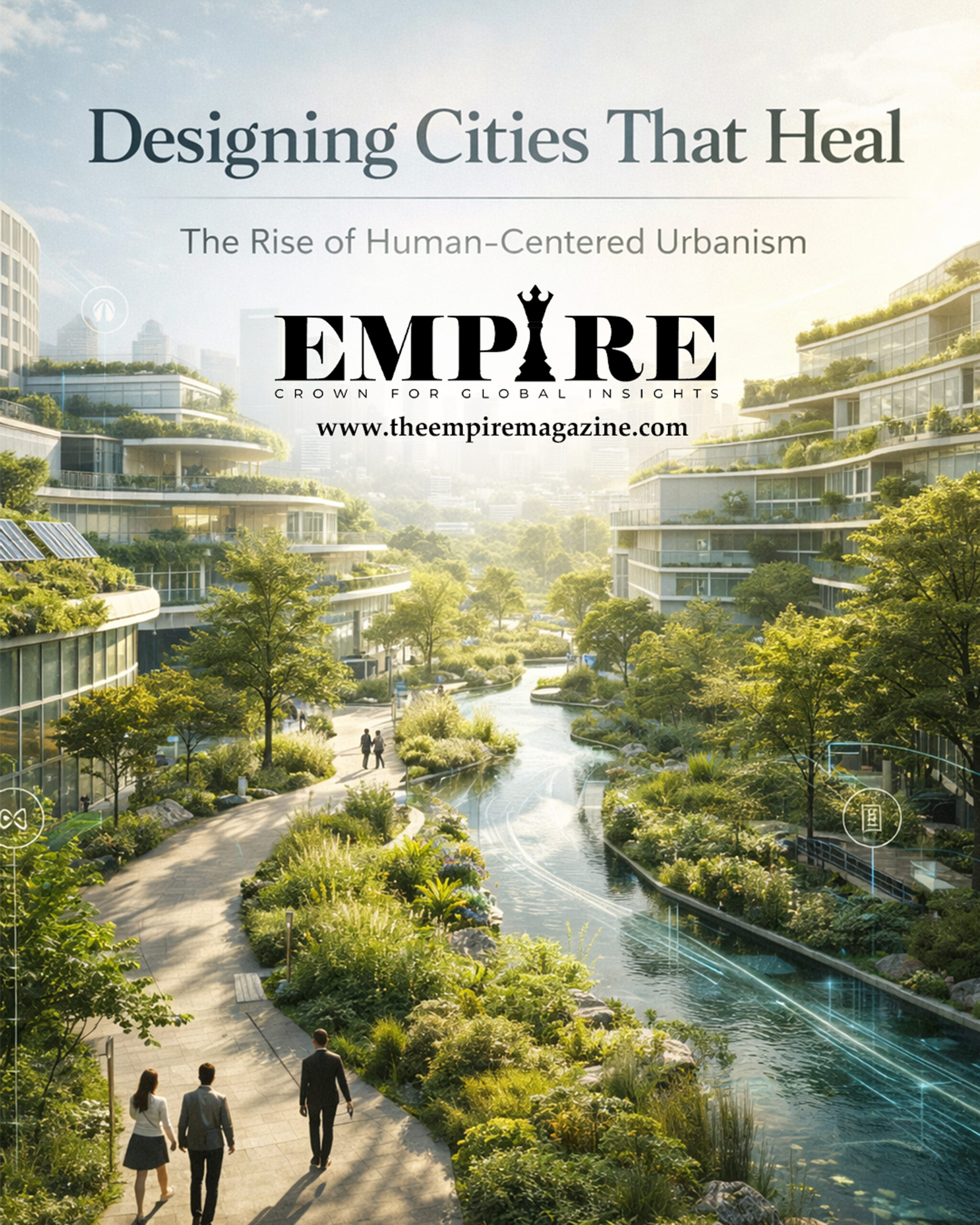
Designing Cities That Heal marks a transformative shift in how we envision urban life. For centuries, cities have been symbols of ambition, connection, and progress. They bring together people, culture, and opportunity. Yet in recent decades, rapid growth has often resulted in stress, disconnection, and environments built more for vehicles and bottom-line metrics than for human wellbeing. Long commutes, crowded public spaces, and eroded community ties reflect a design philosophy focused on efficiency over empathy.
In response, a new movement is emerging — one that places people at the heart of urban design. Rather than asking how a city can grow bigger or faster, human-centered urbanism asks how a city can support the health, happiness, and dignity of its residents. This philosophy foregrounds care, connection, and community in every street, park, and shared space.
Rethinking the Purpose of Cities
For much of the twentieth century, planners prioritized industry, cars, and economic growth. Wide highways replaced walking paths, and dense skyscrapers rose where parks once flourished. While these changes brought productivity and expansion, they also introduced profound challenges — social isolation, elevated stress levels, environmental degradation, and a loss of community.
Human-centered urbanism invites us to reverse these trends. It urges planners, architects, and civic leaders to imagine cities as ecosystems designed for people, not just machines. A healing city is one that nurtures social bonds, reduces stress, and supports daily life in meaningful ways. A safe walking path, a shaded plaza, or a vibrant greenway can do more for public wellbeing than an extra lane on a highway.
What It Means to Design for People
Central to the concept of human-centered urbanism is the belief that cities should serve the human experience. This means considering how public spaces impact physical health, mental wellbeing, and social cohesion. Does a neighborhood feel welcoming? Can children safely play outside? Are sidewalks accessible to the elderly and people with disabilities?
In a healing city, design is not an afterthought — it is the foundation of public life. Streets become places for exchange, parks become havens for play and reflection, and public amenities foster social connection. Residents are not merely inhabitants but participants in the life of the city. In this way, urban spaces become living environments that help people thrive, rather than simply function.
Why Many Modern Cities Fail
The rapid urbanization of the twentieth century brought undeniable advancements. Yet it also left behind unintended consequences. Cities that prioritized cars sacrificed pedestrian spaces. Public squares gave way to sprawling parking lots. Housing developments focused on capacity rather than community.
These choices came with invisible costs — rising stress, social fragmentation, and declining public health. Pollution and noise replaced fresh air and quiet moments. Cities became efficient, but empty of the social ties that make them meaningful places to live.
Human-centered urbanism challenges this legacy. It argues that cities should be measured not by square footage or GDP, but by how well they support human wellbeing and connection.
Examples of Cities That Heal
Around the world, cities are showing what human-centered design can achieve.
Copenhagen: A City Built for People
Copenhagen consistently ranks among the world’s most livable cities. Its success is not due to luxury, but to thoughtful design. Nearly half of its residents commute by bicycle, thanks to extensive, safe bike lanes. Public squares and parks are abundant, inviting people to gather and interact. Streets are calm because they are designed with people in mind, not just automobiles. Life in Copenhagen illustrates that cities can grow while remaining human in scale.
Medellín: From Violence to Urban Renewal
Medellín, Colombia, was once synonymous with crime. Over the past two decades, it has transformed through inclusive urban design. Cable cars and escalators now link hillside communities with city centers, increasing access to jobs, education, and healthcare. Public libraries, parks, and cultural spaces have been constructed in previously neglected areas, restoring dignity and pride. Medellín’s evolution demonstrates that design can heal not just spaces but communities.
Kigali: Clean, Connected, and Community-Focused
Kigali, Rwanda’s capital, offers another compelling example. The city prioritizes cleanliness, accessibility, and citizen wellbeing. Regular car-free days put pedestrians and cyclists first. Affordable housing projects integrate local design traditions with modern needs. Kigali illustrates that even rapidly developing cities can prioritize people and community.
The Link Between Cities and Health
Urban design affects health in direct and measurable ways. Green spaces reduce stress and improve air quality. Safe walking and cycling paths promote active lifestyles. Thoughtfully designed neighborhoods can reduce anxiety and strengthen community bonds.
In contrast, poorly planned areas can contribute to depression, chronic stress, and social isolation. A healing city, therefore, is not a luxury — it is essential for building healthy, resilient societies.
Building Cities with Care
To create human-centered cities, planners and leaders must embrace key principles. Green space should be considered essential, not decorative. Streets should welcome pedestrians, cyclists, and vehicles equitably. Public places like markets, plazas, and cultural centers should be protected and expanded. Schools, hospitals, and workplaces should be designed with comfort in mind — abundant natural light, quiet zones, and spaces for social interaction.
Inclusion is also fundamental. Designing Cities That Heal means ensuring that cities work for all — children, the elderly, individuals with disabilities, and people from all socioeconomic backgrounds. Accessibility and affordability must guide every decision so that no group is left behind.
The Role of Technology in Human-Centered Cities
Technology can enhance healing cities if deployed thoughtfully. Smart sensors can optimize energy use and reduce waste. Mobile apps can help residents navigate public transit and connect with services. Data analytics can reveal how people move and what spaces they need most.
However, technology should always support — not overshadow — human experience. A city may be smart, but if its residents feel stressed, unsafe, or disconnected, then it has failed its purpose.
The Challenges Ahead
Designing Cities That Heal is not easy. Public projects often require significant investment, and political priorities can favor short-term wins over long-term wellbeing. Inequities can leave disadvantaged communities behind. Meanwhile, climate change adds new pressures, requiring cities to adapt to floods, heat, and other risks.
Despite these challenges, progress is possible. Cities that prioritize people — like Copenhagen and Medellín — offer blueprints for transformation. Their success shows that when leaders listen to residents and design with care, cities can become healthier, more inclusive, and more joyful places to live.
The Future of Urban Life
The future of cities depends on the choices we make now. We can continue to build taller and faster, or we can ask deeper questions about how design influences daily life. Human-centered urbanism reminds us that progress is not measured merely in buildings or technology — it is measured in dignity, connection, and wellbeing.
Imagine walking down a tree-lined street where children play safely in parks, neighbors greet one another in shared spaces, and even bustling districts retain a sense of calm. This vision is not a distant dream — it is a direction we can choose.
The rise of Designing Cities That Heal is more than a trend. It is a reaffirmation that cities exist to serve people, not the other way around. If we want stronger, healthier, and more connected societies, we must design cities that care.
Previous Feature: Modern Automobile InnovationFor deeper insight into how creativity and technology are transforming mobility and vehicle design, check our previous article:
👉 https://theempiremagazine.com/designing-the-future-modern-automobile/
The Empire Magazine
Crown for Global Insights