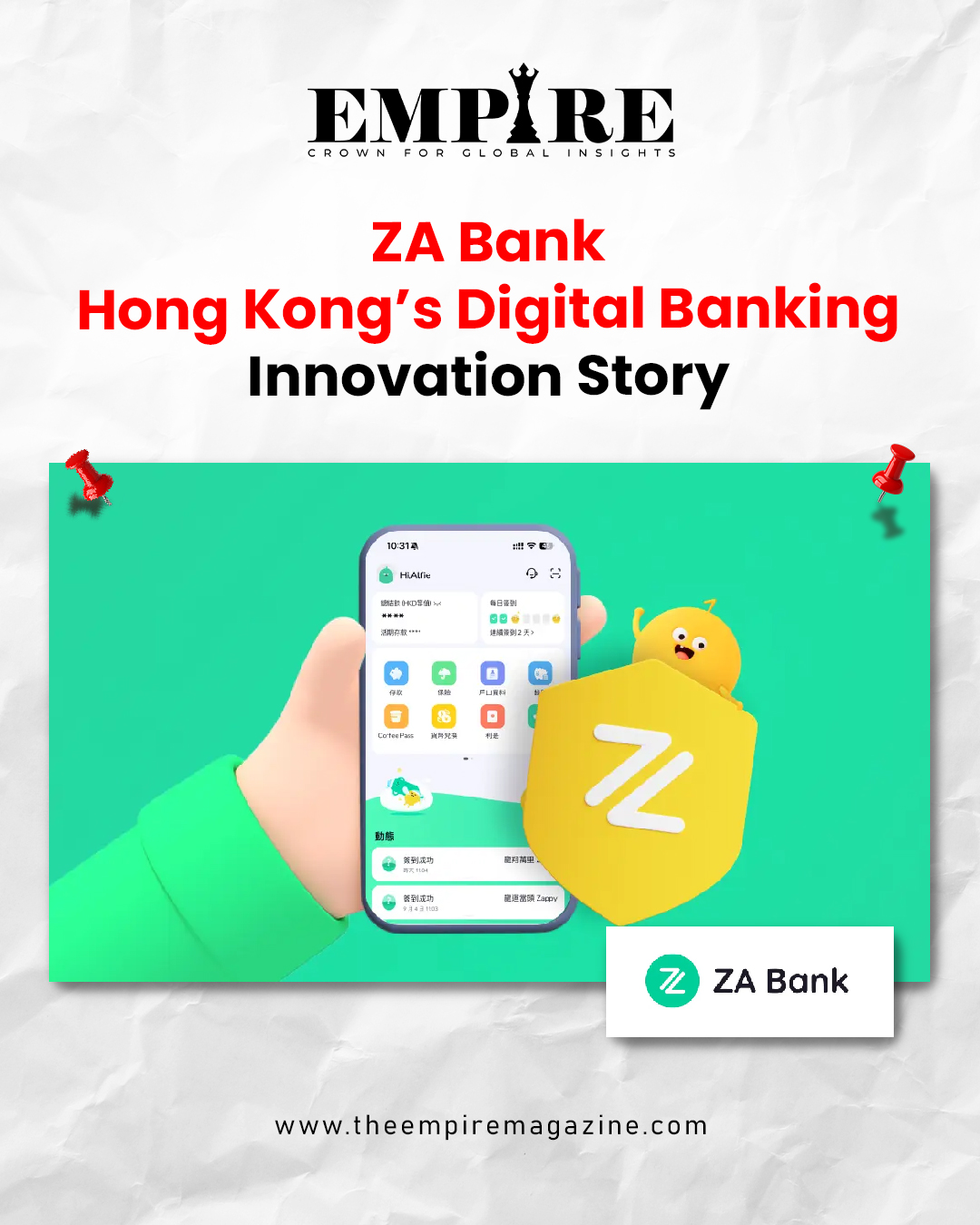
ZA Bank is one of the most important examples of digital banking innovation in Hong Kong. The bank became the first digital bank to launch in Hong Kong and has played a major role in the city’s move toward mobile-first financial services. Unlike traditional banks with large branch networks, ZA Bank operates as a digital-only bank, allowing customers to open accounts, save money, borrow, invest, and access financial services mainly through mobile channels.
Hong Kong has long been one of Asia’s most important financial centers, but digital banking changed the way customers interact with financial institutions. The Hong Kong Monetary Authority introduced virtual banks as part of the city’s Smart Banking Era, with the goal of promoting fintech, innovation, better customer experience, and financial inclusion.
ZA Bank became part of this shift by building a mobile-first banking model designed for users who expect fast onboarding, simple account access, and digital financial tools.
What ZA Bank Does
ZA Bank offers digital banking services in Hong Kong through a mobile platform. Its services include savings accounts, deposits, personal loans, insurance distribution, investment services, and other digital financial products. The bank is licensed in Hong Kong and is listed by the Hong Kong Monetary Authority as ZA Bank Limited, a licensed bank with its principal place of business at Cyberport.
Mobile-First Banking
ZA Bank’s business model is based on mobile-first banking. Customers can manage accounts through an app instead of visiting physical branches. This supports faster service and gives customers more control over daily banking.
Mobile-first banking is especially important in Hong Kong because customers are highly connected, digitally active, and used to financial services that operate quickly. Virtual banks are designed to compete through convenience, speed, user experience, and product innovation.
Hong Kong’s Virtual Banking Market
Hong Kong’s virtual banking framework was created to encourage competition and innovation in the banking industry. The HKMA believes digital banks can promote fintech development and financial inclusion, especially for retail customers and small and medium-sized enterprises.
Hong Kong has eight licensed virtual banks, including ZA Bank, Airstar Bank, WeLab Bank, Livi Bank, Mox Bank, Ant Bank, PAO Bank, and Fusion Bank. These banks received licenses under the city’s digital banking framework and operate without traditional branch networks.
Why Virtual Banks Matter
Virtual banks matter because they challenge traditional banking models. Instead of depending on branches and paperwork, they use digital onboarding, app-based services, cloud infrastructure, data analytics, and automated processes.
This can improve convenience for customers and reduce friction in financial services. It can also pressure traditional banks to improve their digital platforms and customer experience.
ZA Bank’s Early Lead
ZA Bank became Hong Kong’s first virtual bank to launch publicly in March 2020. This early start gave the bank visibility in the city’s new digital banking market. Reuters reported in 2021 that ZhongAn-backed ZA Bank and Standard Chartered-backed Mox took an early lead in Hong Kong’s digital banking race.
ZA Bank’s own website states that it had the highest number of users and customer deposits among Hong Kong’s eight digital banks as of June 30, 2024, based on interim reports of the eight digital banks.
One Million Users Milestone
In 2025, ZA Bank became the first digital-only lender in Hong Kong to surpass one million users. This milestone showed that digital banking had moved beyond early adoption and had become a meaningful part of Hong Kong’s financial services market.
The milestone also reflected growing customer trust in app-based banking. For a digital bank, user growth is important because scale supports deposits, lending, product expansion, and operating efficiency.
Digital Banking and Financial Inclusion
Digital banks are often positioned as tools for financial inclusion. They can serve customers who prefer simple mobile banking, lower-friction onboarding, and transparent digital products. They can also support small businesses that need faster account access and financial tools.
Serving Retail Customers and SMEs
Retail customers use digital banks for savings, deposits, payments, loans, and investment access. Small businesses may use digital banks for account management, payment flows, and financing needs.
In Hong Kong, SMEs play an important role in the economy. Digital banks can support this segment by reducing paperwork, speeding up applications, and offering more accessible financial products.
Product Innovation at ZA Bank
ZA Bank has expanded beyond basic digital banking. The bank has developed services around deposits, lending, insurance, investment, and virtual asset-related access. This shows how digital banks are trying to become broader financial platforms.
Investment Services
ZA Bank became Hong Kong’s first virtual bank to receive a Type 1 licence from the Securities and Futures Commission for dealing in securities. The bank said this allowed it to expand into investment business as the first local digital-only bank licensed for this activity.
This matters because digital banks are no longer limited to savings and loans. They are moving toward wealth, investment, insurance, and digital asset services, depending on regulation and customer demand.
Hong Kong’s Digital Asset and Fintech Strategy
Hong Kong has been working to strengthen its position as a fintech and digital asset hub. Reuters reported that Hong Kong eased virtual asset rules in 2025 to improve trading liquidity and strengthen its fintech profile. The report also noted comments from HKMA Chief Executive Eddie Yue that annual digital investment spending in Hong Kong’s banking sector was projected to exceed HK$100 billion over the next three years.
Why Digital Assets Matter for Banks
Digital assets remain risky and highly regulated, but they are becoming part of financial market innovation. Banks and fintech companies must manage compliance, investor protection, custody, volatility, cybersecurity, and anti-money laundering rules.
ZA Bank’s digital innovation story fits into this wider Hong Kong strategy, where regulators are trying to balance innovation with financial stability and customer protection.
Revenue, Profitability, and Business Sustainability
Digital banks face a common challenge: they must grow users while building sustainable revenue. Unlike traditional banks, virtual banks do not have decades of branch-based customer relationships. They must compete through technology, pricing, experience, and product innovation.
ZA Bank became Hong Kong’s first virtual bank to declare monthly net profitability in 2024, according to Finextra reporting. The report said its net revenue reached HKD 255 million in the first half of 2024, up 46% year on year, and its net interest margin increased to 2.21%.
Why Profitability Matters
Profitability matters because digital banks must prove that their model can work beyond user growth. High customer numbers are important, but banks also need deposits, lending revenue, fee income, risk control, and efficient operations.
For ZA Bank, moving toward profitability showed progress in building a sustainable digital banking business.
Competition With Traditional Banks
ZA Bank operates in one of the most competitive banking markets in Asia. Hong Kong is home to major banks such as HSBC, Bank of China Hong Kong, Standard Chartered, Hang Seng Bank, and many international financial institutions.
How Digital Banks Compete
Digital banks compete by offering faster onboarding, app-based service, lower friction, attractive deposit products, and simpler user experience. Traditional banks compete with stronger brand history, large balance sheets, corporate relationships, wealth management, branch networks, and international services.
The competition benefits customers because it pushes both digital and traditional banks to improve services.
Challenges Facing ZA Bank
ZA Bank’s innovation story also includes challenges. Digital banks must manage credit risk, cybersecurity, regulatory compliance, customer trust, data protection, fraud prevention, and sustainable growth.
Trust and Security
Trust is central in banking. Customers need confidence that their deposits, personal data, transactions, and investments are safe. Digital-only banks must prove reliability through strong systems, transparent communication, regulatory compliance, and secure technology.
Cybersecurity is especially important because digital banks operate mainly through apps and online infrastructure. Any service disruption or security weakness can damage customer confidence.
Why ZA Bank Matters for Hong Kong
ZA Bank matters because it represents Hong Kong’s shift from traditional branch-based banking toward digital-first financial services. The bank’s growth, licensing milestones, user adoption, and product expansion show how virtual banking is becoming part of the city’s financial future.
Hong Kong remains a major global financial center, and digital banking helps the city modernize its financial services ecosystem. ZA Bank’s role is important because it shows how a digital-only institution can compete, scale, and expand in a highly regulated banking market.
For more fintech and business insights, read this feature on The Empire Magazine.
Follow The Empire Magazine on Instagram and Facebook.
– The Empire Magazine
Crown For Global Insights