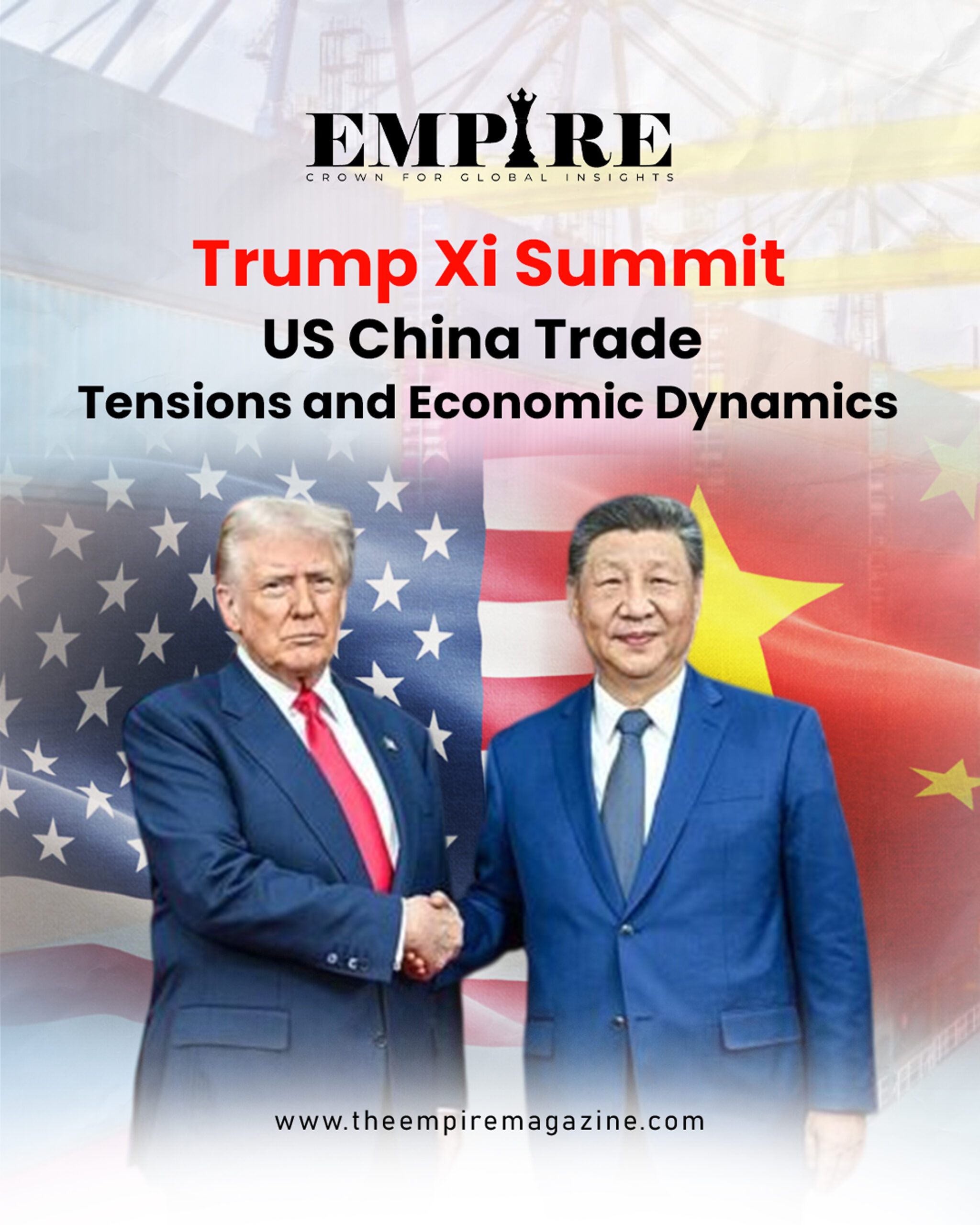
The upcoming Trump Xi Summit highlights the complex interplay of cooperation and competition defining US-China economic relations. As President Donald Trump prepares to meet Chinese President Xi Jinping in Beijing on May 14-15, 2026, both nations seek to stabilize their critical bilateral relationship amid persistent trade imbalances, tariff disputes, and strategic rivalries.
This high-stakes encounter represents a key moment in managing tensions between the world’s two largest economies. With a fragile trade truce in place since October 2025, the summit offers an opportunity to address economic pressures while navigating broader geopolitical concerns.
Background of Trump-Xi Engagements
Trump and Xi have a history of personal diplomacy mixed with tough negotiations. Their previous in-person meeting occurred at the 2025 APEC summit in Busan, South Korea, where they agreed to lower certain tariffs and secure access to critical materials. This followed intense periods of escalation in 2025, when tariffs on both sides reached triple digits, significantly disrupting bilateral trade flows.
The current summit marks the first visit by a US president to China in nearly a decade. It comes after a series of working-level talks aimed at preventing renewed escalation. Both leaders recognize the high costs of unchecked conflict, yet fundamental differences in economic models and national priorities remain.
Evolution of US-China Trade Tensions
US-China economic frictions trace back years but intensified during Trump’s administrations. Concerns over trade imbalances, intellectual property practices, forced technology transfers, and state subsidies for Chinese industries prompted aggressive tariff measures. In response, China implemented retaliatory tariffs on American agricultural products, automobiles, and other goods.
In 2025, the trade war reached new heights with tariffs climbing dramatically. US imports from China dropped substantially, shifting some supply chains to other countries in Asia and beyond. However, the overall US goods trade deficit remained resilient, reflecting deeper structural factors in global commerce. China, meanwhile, reported a record trade surplus, bolstered by diversified exports to markets in Southeast Asia, Africa, and Latin America.
The October 2025 truce reduced some tariff rates and included commitments on critical minerals access. This temporary agreement helped stabilize markets but left many issues unresolved, including technology export controls, investment restrictions, and market access barriers.
Key Economic Issues at the Trump Xi Summit
Trade and economic matters will dominate discussions. The United States aims to further rebalance bilateral flows, potentially through formalized mechanisms like a proposed “Board of Trade” to manage priority goods and address imbalances more systematically. Securing reliable supplies of rare earth elements, magnets, and other critical minerals remains a priority, given their importance to defense, electronics, and advanced manufacturing.
China seeks greater predictability in US policy, including eased technology restrictions on semiconductors and artificial intelligence. Beijing may offer increased purchases of American agricultural products, energy, and aircraft to support the relationship. Both sides appear focused on extending the current truce rather than pursuing sweeping new deals.
Supply chain vulnerabilities have become central. China’s dominance in processing critical minerals gives it significant leverage, while US export controls aim to protect technological edges. These dynamics illustrate how economic interdependence now intersects with national security considerations.
Broader Strategic Context
While economics drive much of the agenda, other factors influence the atmosphere. Regional stability, including issues around Taiwan, and global events such as tensions in the Middle East add layers of complexity. Both nations recognize that outright confrontation carries enormous risks for global growth.
The summit occurs against a backdrop of shifting global trade patterns. Companies have adapted by diversifying sourcing, accelerating nearshoring or friendshoring strategies, and investing in resilience. These adjustments reflect a broader trend of managed competition rather than full decoupling.
Impacts on Global Economy
US-China economic dynamics ripple worldwide. Disruptions in their trade affect commodity prices, manufacturing costs, and inflation across borders. Emerging markets benefit from redirected trade flows but also face challenges if great-power competition intensifies.
For businesses, uncertainty encourages caution in long-term investments spanning both economies. Clearer outcomes from the Trump Xi Summit could reduce volatility and support planning. Investors watch closely for signals on tariff trajectories, currency policies, and regulatory environments.
Lessons for International Relations
The ongoing US-China engagement demonstrates the challenges of great-power competition in an interconnected world. Pure confrontation harms both sides, while naive engagement risks unbalanced outcomes. Effective management requires pragmatic deal-making that protects core interests without destroying mutual benefits.
Entrepreneurs and policymakers alike can draw insights from these dynamics. Diversification, innovation, and strategic positioning help navigate geopolitical risks. The jewelry and creative sectors, for instance, benefit from understanding broader supply chain shifts affecting materials and consumer markets.
Internal Link: Explore more stories on global business resilience and low-capital successes in our related feature: Creative Business Journeys.
Outlook Following the Summit
Expectations for major breakthroughs remain modest. The summit likely focuses on stabilizing the existing truce, announcing incremental commitments, and establishing frameworks for future talks. Personal rapport between Trump and Xi may help bridge gaps where formal agreements fall short.
Long-term, structural issues—such as China’s industrial policies and US efforts to strengthen domestic capabilities—will persist. Success will be measured by avoiding escalation while creating space for selective cooperation on shared challenges like supply chain stability and climate-related technologies.
The world watches as these two leaders shape not only bilateral ties but also the contours of global economic governance for years ahead.
Connect with The Empire Magazine
For more in-depth analysis of global economic trends and business opportunities, visit our website at www.theemmpiremagazine.com.
Follow us for daily inspiration: Instagram Facebook
– The Empire Magazine
Crown For Global Insights