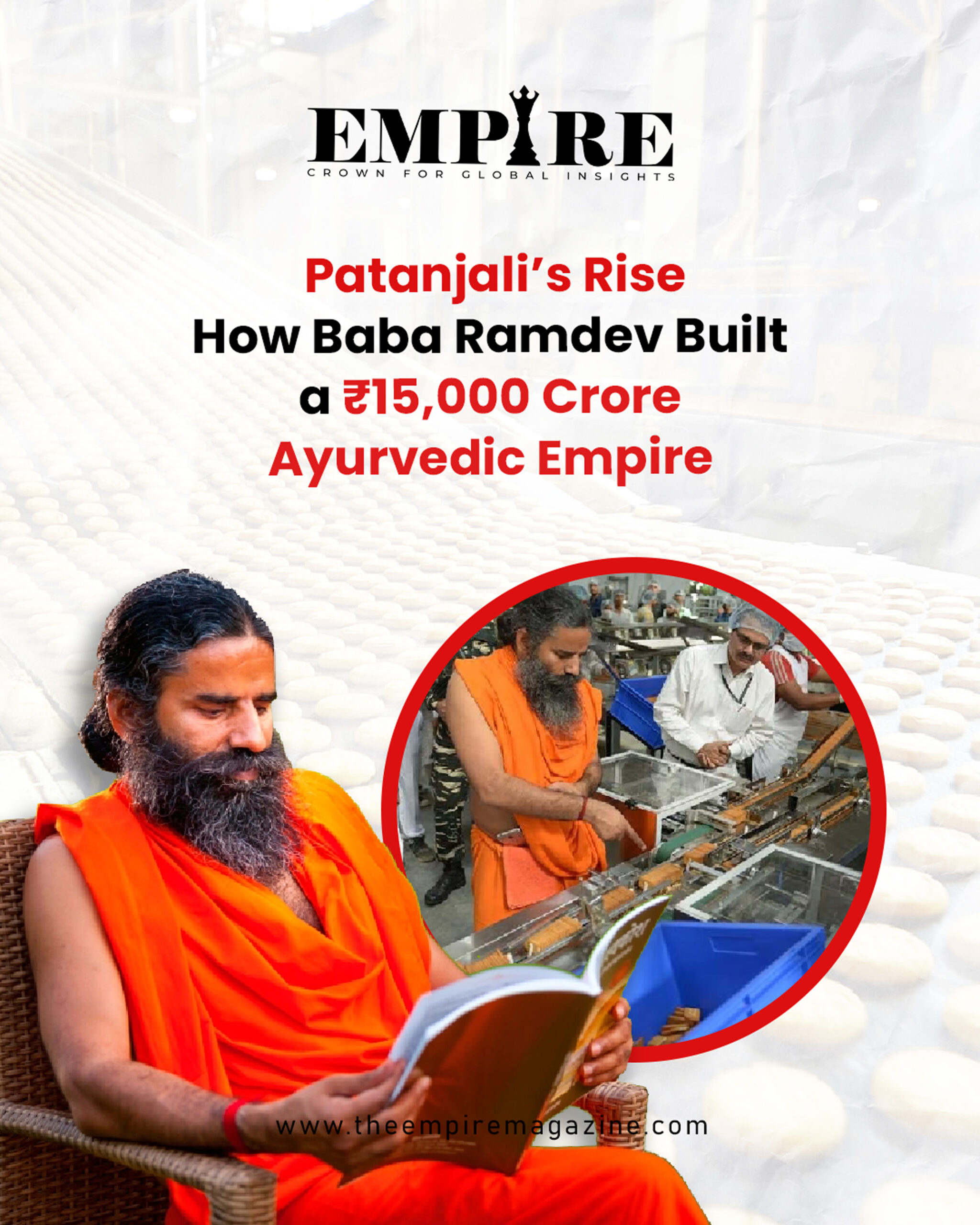
Patanjali’s rise Ayurved’s journey is one of the most remarkable and disruptive business stories in modern India. Founded by yoga guru Baba Ramdev and his trusted associate Acharya Balkrishna, the company has challenged multinational giants and reshaped the Indian FMCG industry with its strong emphasis on Ayurveda, affordability, and Swadeshi values.
Humble Beginnings Patanjali’s Rise
Born as Ram Kisan Yadav in 1965 in a small village in Haryana, Baba Ramdev spent his formative years studying yoga, Sanskrit, and Ayurveda in traditional Gurukuls. He shot to national fame in the early 2000s through his popular yoga camps and television programs on channels like Aastha. Millions of Indians woke up early to follow his teachings on Pranayama, Asanas, and holistic wellness.
In 2006, Baba Ramdev, along with Acharya Balkrishna, formally established Patanjali Ayurved Limited in Haridwar, Uttarakhand. What began as a modest initiative to manufacture authentic Ayurvedic medicines and herbal products soon evolved into a larger mission — promoting self-reliance (Swadeshi) and reducing India’s dependence on foreign multinational corporations in the consumer goods space.
The Explosive Growth Phase (2014–2026) Of Patanjali’s Rise
Patanjali’s true breakout moment came between 2014 and 2020. The company aggressively expanded from herbal medicines into a complete FMCG powerhouse, launching a wide range of daily-use products, including:
- Dant Kanti Toothpaste
- Herbal hair oils and shampoos
- Pure ghee, spices, and atta
- Biscuits, noodles, and snacks
- Detergents, soaps, and floor cleaners
- Juices, honey, and beverages
The brand’s strategy was straightforward yet highly effective: deliver high-quality Ayurvedic and herbal products at significantly lower prices, backed by strong emotional and nationalist appeal. Patanjali positioned itself as a symbol of Indian pride, purity, and self-reliance.
By 2025-26, Patanjali Ayurved had crossed an estimated annual revenue of ₹15,000 crore, making it one of the fastest-growing Indian consumer companies of the past decade.
Key Success Factors
- Powerful Personal Branding Baba Ramdev’s massive popularity as a yoga guru gave Patanjali instant credibility and visibility. His personal brand acted as the company’s most effective marketing tool.
- Swadeshi & Nationalist Appeal The brand successfully tapped into the growing sentiment of “Buy Indian” and positioned itself as a patriotic alternative to global giants like Colgate, Hindustan Unilever, Nestlé, and Procter & Gamble.
- Aggressive Pricing Strategy Patanjali products were priced 20–40% lower than competitors while maintaining healthy margins through efficient sourcing, minimal advertising spend, and strong word-of-mouth promotion.
- Robust Distribution Network The company built a vast distribution system covering general kirana stores, modern retail, and its own chain of Patanjali stores, with deep penetration even in Tier-2, Tier-3, and rural markets.
- Continuous Product Innovation Regular launches of new Ayurvedic variants across food, personal care, and wellness categories kept the brand fresh and relevant.
Challenges Faced
Despite its meteoric rise, Patanjali has faced several hurdles:
- Multiple legal cases and regulatory scrutiny regarding product claims and advertising
- Criticism over quality standards and laboratory testing
- Intense competition from established FMCG players who launched their own Ayurvedic and herbal product lines
- Operational challenges in maintaining quality and supply chain efficiency during hyper-growth
Yet, the company has displayed remarkable resilience, retaining a large and loyal customer base across India.
Current Standing in 2026
As of 2026, Patanjali has transformed into a diversified business empire with interests in:
- FMCG and consumer products
- Ayurvedic medicines and wellness
- Food processing units
- Education (Patanjali University)
- Yoga and holistic health initiatives
While Acharya Balkrishna continues to lead operations as Managing Director, Baba Ramdev remains the public face and spiritual inspiration behind the brand.
Lessons from Baba Ramdev’s Leadership
- The immense power of personal branding in building consumer trust
- Successfully blending ancient Indian wisdom with modern business practices
- Deep understanding of cultural, emotional, and nationalist sentiments of Indian consumers
- The strength of mission-driven entrepreneurship
- The ability to scale rapidly while staying true to core values
For more inspiring entrepreneurship and business success stories, read our detailed coverage here: Patanjali’s Rise
Follow The Empire Magazine for more leadership stories, startup journeys, and business insights:
– The Empire Magazine
Crown For Global Insights