
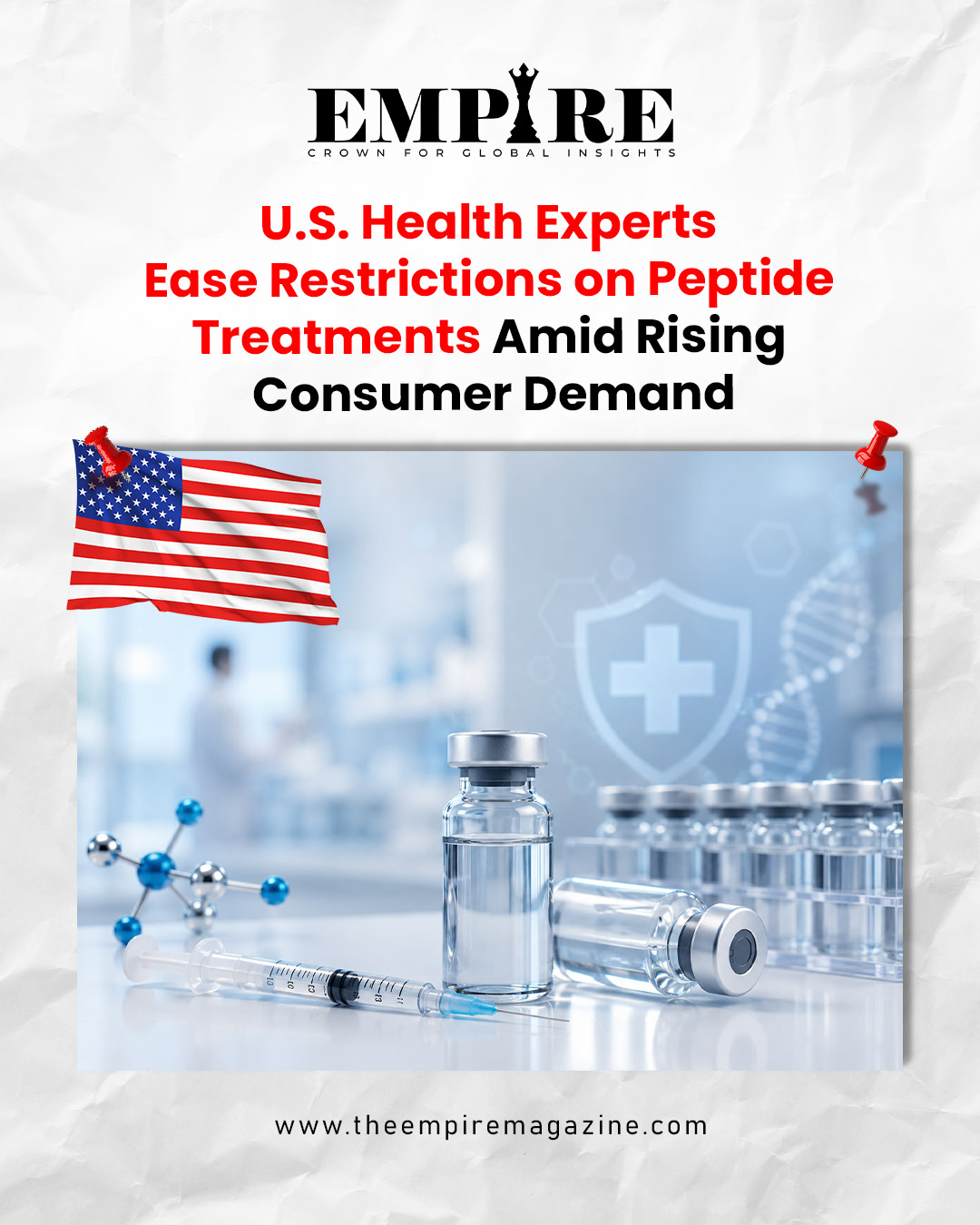
U.S. health experts are easing restrictions on peptide treatments as consumer demand surges. Explore the science, regulations, benefits, risks, and future of peptide therapy.
U.S. Health Experts Ease Restrictions on Peptide Treatments Amid Rising Consumer Demand
Peptide treatments have rapidly evolved from a niche medical intervention into one of the most discussed developments in modern healthcare. Across the United States, increasing consumer interest in wellness, longevity, weight management, sports recovery, and preventive medicine has pushed peptide therapy into mainstream conversations. Responding to growing scientific evidence and increasing public demand, U.S. health experts have begun easing certain restrictions surrounding specific peptide treatments, while continuing to emphasize patient safety, regulatory oversight, and evidence-based practice.
This shift reflects a broader transformation within healthcare where patients are seeking personalized therapies that address health concerns before they become chronic conditions. While peptide medicine continues to generate excitement among physicians, researchers, and wellness providers, experts also caution that not every peptide product currently available meets the same quality, safety, or efficacy standards. Understanding the opportunities and limitations of peptide treatments is therefore becoming increasingly important for both healthcare professionals and consumers alike.
Understanding U.S. Peptide Treatments
The growing attention surrounding U.S. Peptide Treatments begins with understanding what peptides actually are. Peptides are naturally occurring short chains of amino acids that function as biological messengers throughout the human body. Unlike traditional pharmaceutical drugs that often target a single condition, peptide therapies work by interacting with naturally existing cellular pathways, making them attractive candidates for regenerative medicine and personalized healthcare. Over the past decade, researchers have explored peptides for treating hormone deficiencies, metabolic disorders, wound healing, muscle recovery, immune system regulation, and obesity. The popularity of newer therapies, particularly GLP-1 receptor agonists used for diabetes and weight management, has significantly increased public awareness of peptide-based medicine. As scientific studies continue demonstrating promising clinical outcomes for selected peptide therapies, regulatory agencies and medical organizations have become more willing to reconsider earlier restrictions, provided treatments are administered under qualified medical supervision. This balanced approach seeks to encourage innovation while protecting patients from unsafe or unverified products that continue circulating through unregulated markets.
Why Consumer Demand for U.S. Peptide Treatments Is Rising
The remarkable surge in U.S. Peptide Treatments is being fueled by changing consumer attitudes toward preventive healthcare and longevity. Modern patients are no longer waiting until illnesses become severe before seeking medical support; instead, they are actively investing in therapies that improve energy, metabolism, recovery, healthy aging, and overall quality of life. Social media platforms, health podcasts, celebrity endorsements, and growing awareness of personalized medicine have further accelerated public curiosity about peptide therapy. Clinics specializing in hormone optimization, sports medicine, and wellness programs report increasing inquiries from individuals looking for evidence-based alternatives to traditional medications. Additionally, an aging population, rising obesity rates, and increased interest in muscle preservation have expanded the potential market for peptide-based treatments. Many healthcare professionals also recognize that patient demand reflects broader societal trends emphasizing proactive wellness rather than reactive disease management. While enthusiasm continues growing, responsible physicians stress that every treatment should begin with proper diagnosis, laboratory evaluation, and individualized care plans instead of following trends promoted by influencers or commercial advertisements.
How Health Experts Are Easing Peptide Treatment Restrictions
Recent discussions regarding U.S. Peptide Treatments demonstrate a cautious but noticeable regulatory evolution. Rather than broadly expanding access without oversight, health experts are refining policies that distinguish clinically validated peptide therapies from experimental or compounded alternatives lacking sufficient evidence. Regulatory agencies continue evaluating scientific data regarding safety, manufacturing quality, prescription standards, and long-term outcomes before adjusting guidance for healthcare providers. Medical associations increasingly support allowing qualified physicians greater flexibility when prescribing approved peptide medications for appropriate clinical indications while maintaining strict controls against misleading marketing claims and unauthorized products. This measured easing of restrictions reflects confidence in growing scientific research while recognizing the need for continued patient protections. Improved manufacturing standards, enhanced clinical monitoring, and clearer prescribing guidelines also contribute to greater confidence among healthcare professionals. Importantly, experts emphasize that easing restrictions does not mean unrestricted access. Instead, it represents a transition toward more evidence-driven healthcare policies that encourage innovation while ensuring treatments remain supported by rigorous scientific evaluation and ethical medical practice.
Medical Benefits Driving Peptide Therapy Growth
The expanding acceptance of U.S. Peptide Treatments is closely linked to the wide range of potential medical benefits currently under investigation and, in some cases, already demonstrated through clinical practice. Certain peptide therapies have shown impressive effectiveness in managing type 2 diabetes, supporting significant weight reduction, improving hormonal balance, accelerating tissue repair, enhancing wound healing, and preserving lean muscle mass during aging. Researchers are also exploring peptides for cardiovascular protection, neurological disorders, inflammatory diseases, immune modulation, gastrointestinal health, and orthopedic recovery. These diverse applications highlight the versatility of peptide medicine compared with conventional treatment options. Physicians increasingly appreciate that many peptides work alongside natural physiological processes rather than replacing them entirely, which may contribute to improved tolerability in carefully selected patients. At the same time, specialists acknowledge that not every peptide delivers the same clinical outcomes, and many remain under active investigation. As scientific understanding expands, healthcare providers expect peptide therapies to become increasingly integrated into personalized treatment strategies designed around each patient’s unique biological profile and long-term health goals.
Risks and Regulatory Challenges of U.S. Peptide Treatments
Despite growing optimism surrounding U.S. Peptide Treatments, medical experts consistently warn against overlooking the associated risks. The increasing popularity of peptide therapy has unfortunately created opportunities for counterfeit manufacturers, online retailers, and unlicensed clinics selling products with questionable quality, inaccurate labeling, or unverified ingredients. Patients purchasing peptides without proper medical guidance may expose themselves to contamination, incorrect dosing, unexpected side effects, or interactions with existing medications. Regulatory agencies therefore continue strengthening oversight of manufacturing standards, prescription requirements, clinical advertising, and product distribution. Healthcare professionals also emphasize that long-term evidence remains limited for many emerging peptide compounds currently marketed for anti-aging, athletic performance, or cosmetic enhancement. Responsible prescribing requires comprehensive patient assessments, ongoing monitoring, and transparent discussions regarding realistic expectations, possible complications, and available scientific evidence. Maintaining public trust will depend not only on expanding access to effective therapies but also on ensuring rigorous quality control, ethical clinical practices, and continued investment in high-quality medical research that validates future peptide innovations.
What the Future Holds for U.S. Peptide Treatments
Looking ahead, the future of U.S. Peptide Treatments appears increasingly promising as scientific innovation, biotechnology investment, and precision medicine continue advancing together. Pharmaceutical companies are investing billions of dollars into peptide research aimed at addressing chronic diseases, obesity, metabolic disorders, autoimmune conditions, cancer therapies, and age-related health challenges. Artificial intelligence, advanced molecular engineering, and personalized genomic analysis are expected to accelerate the discovery of safer and more targeted peptide therapies over the coming decade. At the same time, regulators are likely to maintain a balanced framework that supports medical innovation while safeguarding patient welfare through evidence-based approval processes. Consumers can also expect greater educational resources helping distinguish scientifically validated treatments from unsupported commercial claims. As healthcare continues moving toward individualized medicine, peptide therapy may become an increasingly important component of comprehensive patient care rather than a specialized niche service. Ultimately, the ongoing collaboration between researchers, clinicians, regulators, and patients will determine how effectively peptide medicine fulfills its considerable potential while maintaining the highest standards of safety, transparency, and clinical excellence.
Decision by U.S. health experts to ease certain restrictions surrounding U.S. Peptide Treatments reflects the growing maturity of peptide medicine
The decision by U.S. health experts to ease certain restrictions surrounding U.S. Peptide Treatments reflects the growing maturity of peptide medicine and the increasing body of scientific evidence supporting carefully regulated therapeutic applications. Rising consumer demand has undoubtedly accelerated conversations about expanding access, but healthcare leaders remain committed to balancing innovation with patient protection.
As peptide therapies continue to evolve, responsible regulation, physician oversight, and continued research will be essential in ensuring that these promising treatments deliver meaningful health outcomes without compromising safety. For patients, the message is clear: peptide therapy should be viewed not as a miracle solution but as a rapidly advancing area of medicine that offers genuine potential when supported by scientific evidence, medical expertise, and informed decision-making.
With biotechnology progressing at an unprecedented pace, U.S. Peptide Treatments are poised to become an integral part of the future of personalized healthcare, offering new possibilities for disease management, preventive medicine, and healthier aging while reinforcing the importance of evidence-based innovation.
For more business and retail insights, read more on The Empire Magazine
Previous article: https://theempiremagazine.com/tulip-destinations/
Magazine Feautures | Podcasts: Empire Global Talks
Follow The Empire Magazine on Facebook | Instagram | LinkedIn | YouTube
The Empire Magazine | Crown for Global Insights