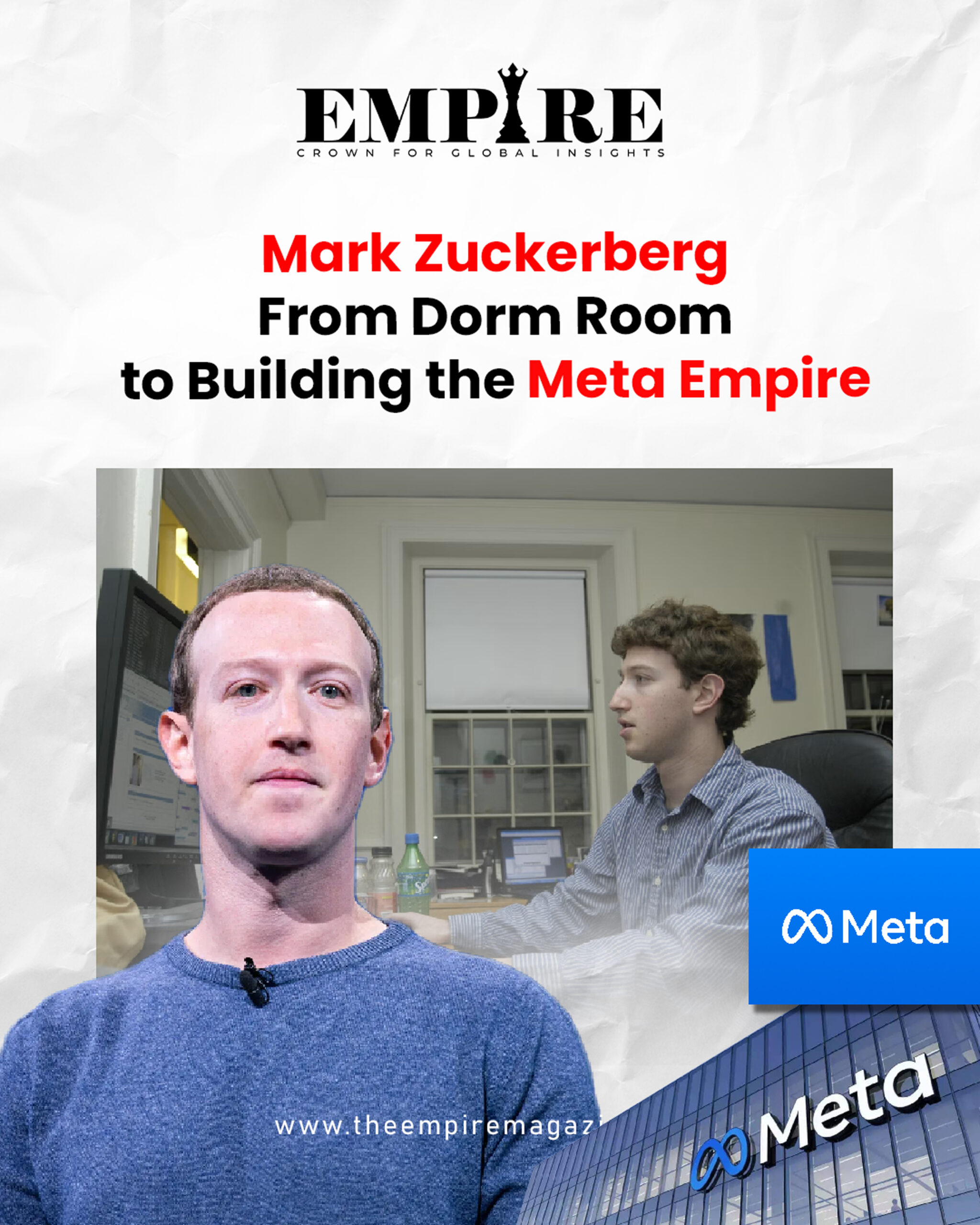
Mark Zuckerberg’s journey from a college dorm room at Harvard to creating one of the most influential technology empires in history is a defining story of the digital age. As the founder and CEO of Meta Platforms (formerly Facebook), he has built a company that connects billions of people worldwide and continues to shape how humanity interacts, communicates, and experiences the digital future.
Early Life and The Spark of Genius
Born on May 14, 1984, in White Plains, New York, Mark Zuckerberg showed exceptional talent in computer programming from a young age. His father, a dentist, encouraged his interest in technology and even hired a tutor for him. By high school, Zuckerberg had already developed several software programs, including one called ZuckNet for his father’s office.
In 2002, he enrolled at Harvard University. It was there, in his sophomore year, that the idea for “TheFacebook” was born. On February 4, 2004, Zuckerberg, along with his roommates Dustin Moskovitz, Eduardo Saverin, Andrew McCollum, and Chris Hughes, launched the platform initially limited to Harvard students. The idea was simple yet revolutionary: a digital directory where students could connect, share photos, and build profiles.
The Explosive Growth of Facebook
Within a month, more than half of Harvard’s undergraduate population had joined. The platform quickly expanded to other Ivy League universities, then to all universities, and eventually to the general public in 2006.
Key milestones in the company’s early growth include:
- 2005: Acquired the domain Facebook.com for $200,000 and dropped “The” from the name.
- 2006: Introduced the News Feed feature, which dramatically increased user engagement.
- 2008: Surpassed MySpace as the most popular social networking site.
- 2012: Went public with one of the largest IPOs in tech history.
By 2010, Facebook had become a global phenomenon, connecting over 500 million users.
Strategic Acquisitions That Shaped the Empire
One of Mark Zuckerberg’s greatest strengths has been his ability to identify and acquire emerging platforms before they became major threats. Major acquisitions include:
- Instagram (2012) – Bought for $1 billion when it had just 13 employees.
- WhatsApp (2014) – Acquired for $19 billion, giving Meta dominance in messaging.
- Oculus VR (2014) – A bold bet on virtual reality that laid the foundation for the metaverse vision.
These acquisitions significantly expanded Meta’s reach and capabilities beyond the core Facebook platform.
The Bold Rebrand to Meta (2021)
In October 2021, Zuckerberg announced that Facebook Inc. would rebrand to Meta Platforms, signaling a major strategic shift toward building the “metaverse” — a immersive, interconnected 3D digital world. This move represented his long-term vision of evolving social media from 2D feeds to immersive experiences.
While the metaverse push faced early skepticism and high costs, Meta continued investing heavily in virtual and augmented reality technologies, including the Quest VR headset lineup.
Leadership Style and Controversies
Mark Zuckerberg is known for his calm, analytical, and long-term thinking. He famously wears the same gray t-shirt daily to minimize decision fatigue. His leadership has been praised for product focus and criticized for privacy issues, content moderation challenges, and regulatory battles.
Major challenges faced by Meta under his leadership include:
- Cambridge Analytica scandal (2018)
- Antitrust lawsuits and regulatory pressure globally
- Competition from TikTok
- Criticism over mental health impact on users
- Heavy financial investment in the metaverse during uncertain times
Despite these hurdles, Zuckerberg has shown remarkable resilience and adaptability.
Meta in 2026: Current Standing
As of 2026, Meta remains one of the most powerful technology companies in the world. The company has successfully rebounded from previous challenges through strong advertising revenue, AI advancements, and continued user growth across its family of apps (Facebook, Instagram, WhatsApp, and Threads).
Zuckerberg has increasingly focused on artificial intelligence, positioning Meta as a leader in open-source AI development while balancing growth in its core social media business with ambitious bets on the metaverse and wearable technology.
Lessons from Mark Zuckerberg’s Leadership
- Think Long-Term: Zuckerberg consistently makes decisions with a 10–20 year horizon.
- Move Fast and Break Things: His early motto encouraged innovation and speed.
- Adapt or Die: Willingness to pivot the company’s focus (from social network to metaverse to AI).
- Control Your Destiny: Maintaining majority voting rights to steer the company according to his vision.
- Learn from Criticism: Using public backlash as fuel for product improvements.
For more inspiring stories of leadership, technology, and global business, read our detailed coverage here.
Follow The Empire Magazine for more updates on business, startups, technology, and global insights: Instagram | Facebook
– The Empire Magazine
Crown For Global Insights