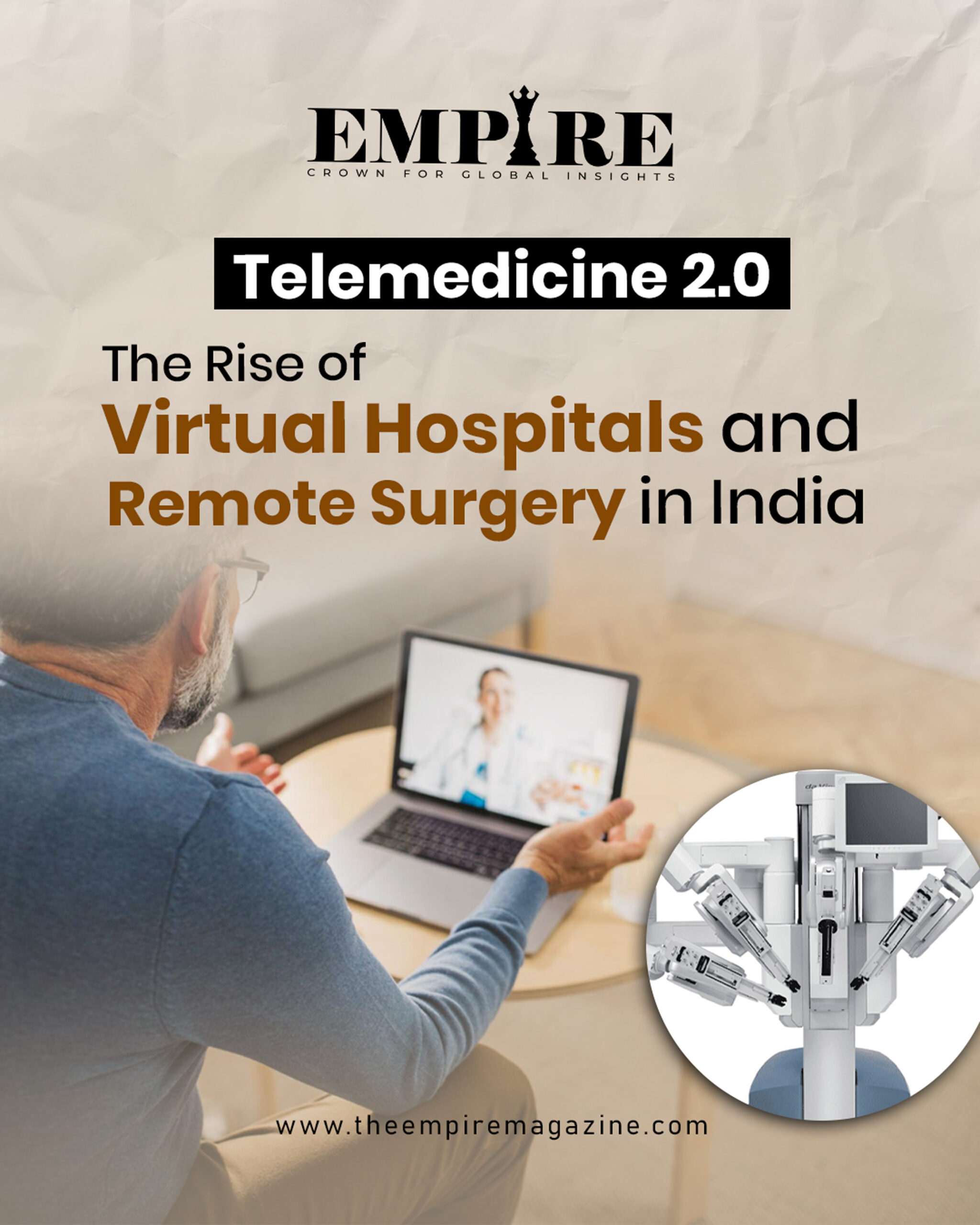
Telemedicine 2.0 is revolutionizing healthcare delivery in India. The country is rapidly moving beyond basic video consultations toward advanced Virtual Hospitals and Remote Robotic Surgery, making quality healthcare more accessible, especially in rural and underserved areas.
What is Telemedicine 2.0?
Telemedicine 2.0 represents the next generation of digital healthcare. It goes far beyond first-generation online doctor consultations. It integrates Artificial Intelligence, 5G connectivity, robotics, Internet of Things (IoT), and real-time data analytics to deliver comprehensive medical care remotely.
Key components include:
- Virtual Hospitals & Virtual ICUs
- AI-powered diagnostics
- Remote patient monitoring
- Robotic telesurgery
- Integrated digital health records
Explosive Growth of Telemedicine in India
The Indian telemedicine market is growing at a remarkable pace. In 2026, the market is valued at approximately USD 4.48 billion and is projected to reach USD 12.63 billion by 2031, expanding at a CAGR of over 23%.
Government initiatives like Ayushman Bharat Digital Mission and the national telemedicine platform eSanjeevani have played a crucial role. eSanjeevani has already facilitated hundreds of millions of consultations, connecting patients in remote areas with specialist doctors in urban centers.
The Rise of Virtual Hospitals in India
Virtual Hospitals are emerging as a game-changer. Leading hospital chains like Apollo Hospitals have successfully deployed Virtual ICUs and tele-ICU models that allow critical care specialists to monitor and guide treatment for patients in smaller hospitals located hundreds of kilometers away.
Benefits of Virtual Hospitals:
- 24/7 specialist access for Tier 2, Tier 3, and rural hospitals
- Reduced need for patient transfers to metros
- Lower healthcare costs
- Faster clinical decision-making
- Improved survival rates in critical care
Apollo Hospitals and other networks are now running full-fledged virtual care programs, including post-acute care at home and chronic disease management.
Remote Surgery: India’s New Medical Milestone
One of the most exciting developments in Telemedicine 2.0 is the progress in robotic telesurgery. Indian surgeons have successfully performed complex procedures where the surgeon operates from a distant location using high-speed 5G networks and advanced robotic systems.
Notable achievements in 2026 include:
- Long-distance robotic surgeries covering over 1,200 kilometers
- International telesurgery demonstrations (e.g., surgeons in India operating on patients abroad)
- Projects like Project Vimana and Project Operion aimed at enabling remote robotic surgery even in battlefield or emergency conditions
Hospitals such as Sir Ganga Ram Hospital (Delhi) and Apollo Hospitals have led pioneering telesurgery initiatives using systems like the SSI Mantra robot.
Why Remote Surgery Matters for India
India faces a severe shortage of super-specialist surgeons, especially in smaller cities and villages. Remote surgery can bridge this gap by allowing top surgeons in metros to operate on patients anywhere in the country — or even internationally.
Advantages:
- Expert surgical care reaches remote locations
- Reduced travel risks and costs for patients
- Shorter waiting times for complex procedures
- Training and mentoring of younger surgeons in real-time
Challenges Slowing Down Adoption
Despite impressive progress, several challenges remain:
- High Initial Cost — Robotic systems and 5G infrastructure require heavy investment.
- Connectivity Issues — Reliable high-speed internet is still inconsistent in many rural areas.
- Regulatory Framework — Clear guidelines for telesurgery and liability are still evolving.
- Data Privacy & Security — Protecting sensitive patient data is critical.
- Doctor Training — Surgeons need specialized training to adopt robotic and remote technologies.
The Road Ahead
2026 is proving to be a landmark year for Telemedicine 2.0 in India. With strong government support, rapid 5G rollout, falling technology costs, and increasing private investment, the future looks promising.
Experts believe that by 2030, a significant portion of routine consultations, critical care monitoring, and even complex surgeries in India could be delivered through advanced digital platforms.
The combination of virtual hospitals and remote surgery is not just improving access — it is redefining the entire healthcare delivery model in the world’s most populous nation.
For more insights on digital health innovations, read our detailed coverage here: Telemedicine 2.0 in India
Follow The Empire Magazine for more updates on HealthTech, startups, and innovation:
– The Empire Magazine
Crown For Global Insights