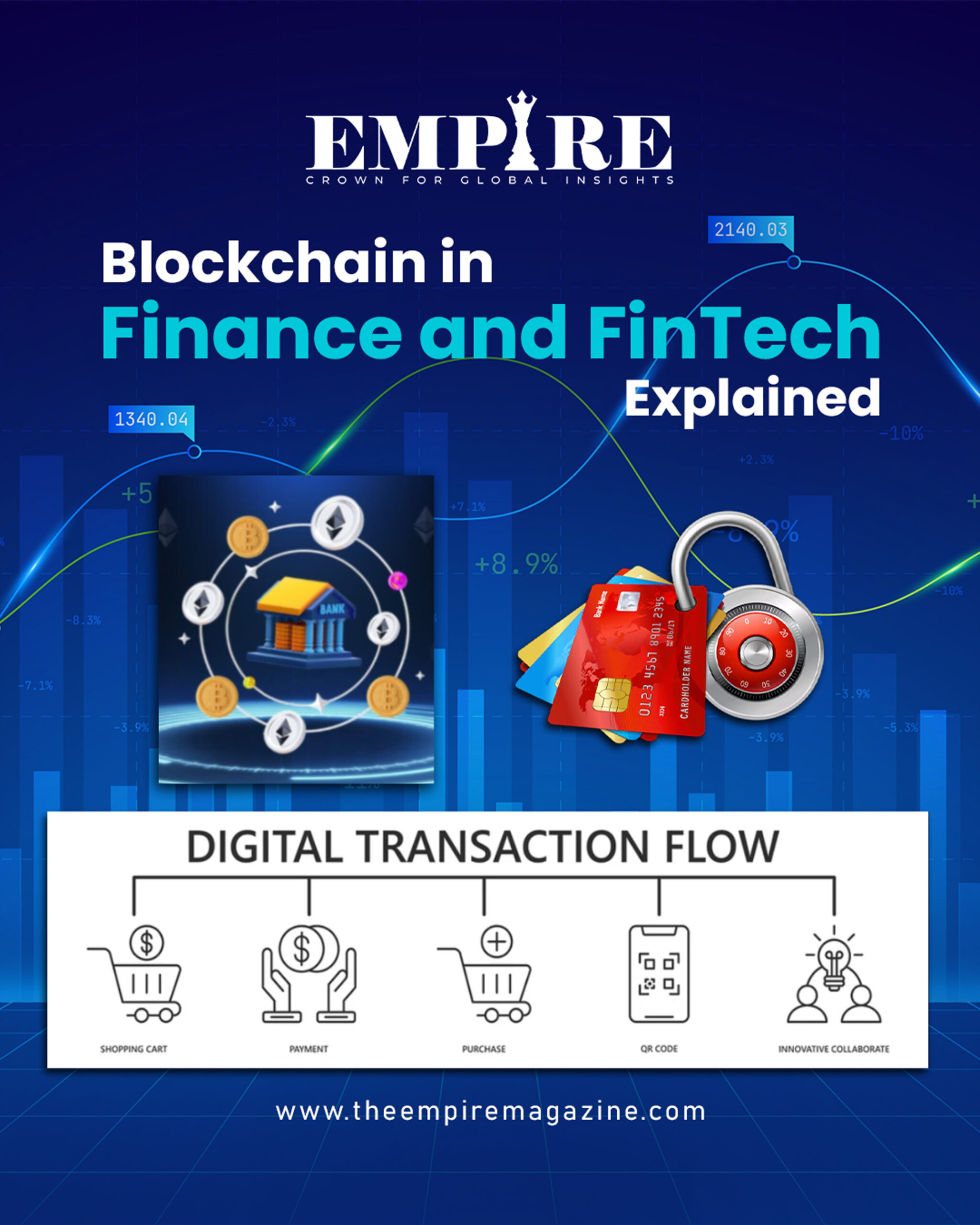
Blockchain in Finance and FinTech is revolutionizing how money moves, how trust is established, and how financial services operate in 2026. What began as the technology behind Bitcoin has evolved into a powerful tool that is reshaping banking, payments, investing, and insurance. This article explains blockchain technology and its growing impact on the financial world in clear, practical terms.
What is Blockchain?
Blockchain is a decentralized digital ledger that records transactions across many computers in a way that makes it nearly impossible to alter, hack, or cheat the system. Unlike traditional databases controlled by a single entity, a blockchain is distributed across a network of computers (called nodes).
Each “block” contains a list of transactions. Once a block is filled and verified, it is linked to the previous block using cryptography, forming a chain of blocks — hence the name “blockchain.” This structure ensures transparency, security, and immutability.
There are two main types relevant to finance:
- Public Blockchains (like Bitcoin and Ethereum) — open to anyone.
- Private/Permissioned Blockchains — controlled by specific organizations or consortia, commonly used by banks and financial institutions.
How Blockchain Works in Finance
In traditional finance, intermediaries such as banks, clearing houses, and payment processors are needed to verify transactions and maintain trust. Blockchain removes or reduces the need for these middlemen by enabling peer-to-peer transactions with built-in verification.
When a transaction occurs on a blockchain:
- It is broadcast to the network.
- Nodes validate the transaction using consensus mechanisms (such as Proof of Work or Proof of Stake).
- Once verified, the transaction is added to a new block.
- The block is permanently linked to the chain.
This process creates a transparent, auditable record that all participants can view without relying on a central authority.
Major Applications in FinTech
1. Cryptocurrencies and Digital Assets Bitcoin and thousands of other cryptocurrencies operate on blockchain. Beyond simple payments, tokenized assets now represent real-world items like real estate, stocks, and commodities on the blockchain, enabling fractional ownership and 24/7 trading.
2. Cross-Border Payments Traditional international transfers are slow and expensive. Blockchain-powered solutions significantly reduce costs and settlement times from days to minutes or seconds. Many banks and FinTech companies now use blockchain rails for remittances and wholesale payments.
3. Smart Contracts Smart contracts are self-executing agreements written in code. They automatically trigger actions when predefined conditions are met. In finance, they power decentralized lending, insurance claims, derivatives, and automated compliance processes.
4. Decentralized Finance (DeFi) DeFi platforms offer traditional financial services — lending, borrowing, trading, and earning interest — without banks. Built on public blockchains, these protocols provide greater transparency and often higher yields, though with increased risk.
5. Trade Finance and Supply Chain Blockchain improves transparency in trade finance by creating immutable records of shipments, invoices, and letters of credit. This reduces fraud and speeds up processes that traditionally involve heavy paperwork.
6. Digital Identity and KYC Blockchain enables secure, portable digital identities. Financial institutions can verify customers more efficiently while maintaining privacy through zero-knowledge proofs.
7. Tokenization of Real-World Assets In 2026, tokenization is gaining serious traction. Real estate, bonds, private equity, and even fine art are being converted into digital tokens, making high-value assets more liquid and accessible to smaller investors.
Key Benefits of Blockchain in Finance
- Reduced Costs: Fewer intermediaries mean lower transaction and operational fees.
- Speed: Near-instant settlement for many types of transactions.
- Transparency and Auditability: Every transaction is traceable.
- Security: Cryptographic protection and decentralization make systems highly resistant to tampering.
- Financial Inclusion: People without traditional bank accounts can access services using only a smartphone.
- Programmability: Smart contracts enable automated, complex financial products.
Challenges and Risks
Despite its promise, blockchain in finance faces several hurdles:
- Regulatory Uncertainty: Governments worldwide are still developing clear frameworks.
- Scalability: Public blockchains can struggle with high transaction volumes.
- Energy Consumption: Some consensus mechanisms remain energy-intensive.
- Interoperability: Different blockchains often don’t communicate easily.
- Security Incidents: While the technology is secure, user errors and smart contract vulnerabilities have led to major losses.
- Adoption Barriers: Legacy systems in traditional finance are complex and expensive to replace.
The Current State in 2026
Blockchain adoption in finance has moved from experimentation to production. Major banks run private blockchains for internal operations and participate in industry consortia. Central banks are exploring or piloting Central Bank Digital Currencies (CBDCs) built on blockchain technology. Institutional investors increasingly allocate capital to digital assets and blockchain infrastructure.
FinTech startups continue to drive innovation, particularly in DeFi, payments, and asset tokenization. Hybrid models that combine traditional finance with blockchain (often called “TradFi + DeFi”) are becoming the most practical path forward for many institutions.
Future Outlook
The convergence of blockchain with artificial intelligence, 5G, and Internet of Things (IoT) will create even more powerful applications. We can expect more sophisticated decentralized applications, improved privacy solutions, and greater mainstream integration of blockchain-based financial products.
As regulation becomes clearer, institutional adoption is likely to accelerate. The future of finance will probably be a hybrid system where blockchain powers the infrastructure while traditional institutions provide customer-facing services and regulatory compliance.
Conclusion
Blockchain in Finance and FinTech is not just a buzzword — it is a foundational technology that is reshaping money and financial services. While challenges remain, the benefits of transparency, efficiency, and innovation are too significant to ignore.
For businesses and individuals alike, understanding blockchain is becoming essential financial literacy. Those who adapt early will be better positioned to benefit from the ongoing transformation of the global financial system.
For more technology and finance insights, explore related coverage here: Internal Link.
Follow The Empire Magazine on Instagram and Facebook for the latest updates.
– The Empire Magazine
Crown For Global Insights