
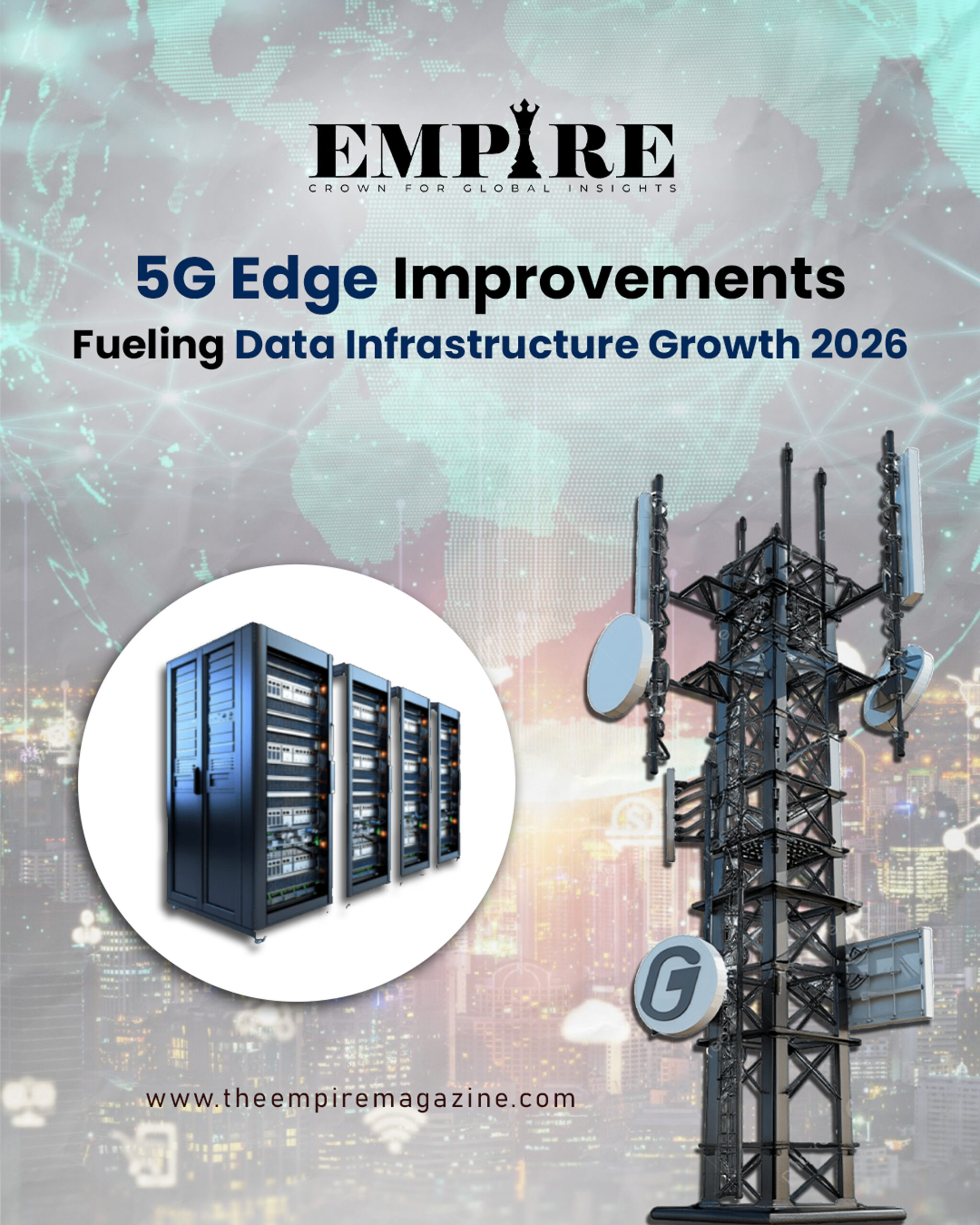
5G Edge Improvements are transforming global connectivity and computing in 2026. As 5G networks mature and edge computing expands rapidly, businesses and consumers benefit from ultra-low latency, higher bandwidth, and smarter data processing closer to the source. This powerful combination drives significant growth in data infrastructure, supporting everything from industrial automation to real-time AI applications and immersive experiences.
The Evolution of 5G Networks in 2026
By 2026, 5G has moved well beyond initial deployment phases. Standalone (SA) 5G networks are expanding in leading markets, delivering consistent high performance, improved uplink speeds, and better support for massive device connectivity. 5G Advanced technologies further enhance capabilities with features optimized for reliability and efficiency.
These advancements provide the high-bandwidth, low-latency foundation essential for modern applications. Average mobile data consumption continues to rise sharply, exceeding 30 GB per smartphone monthly in many regions. This surge powers video streaming, cloud gaming, augmented reality, and enterprise IoT deployments at unprecedented scale.
Edge Computing: Processing Data Closer to the Action
Edge computing processes data near its generation point rather than sending everything to centralized cloud facilities. In 2026, this approach delivers dramatic improvements in speed and efficiency. When combined with 5G, edge solutions achieve latency under 5 milliseconds in many scenarios, enabling real-time decision-making critical for autonomous systems, robotics, and predictive maintenance.
5G Edge Improvements allow organizations to deploy compute resources at cell towers, regional hubs, and even on-premises locations. This distributed architecture reduces strain on core networks, enhances security through localized data handling, and supports compliance with data sovereignty requirements. Industries such as manufacturing, healthcare, transportation, and retail are adopting edge solutions at accelerating rates.
Small language models and optimized AI inference run efficiently at the edge, bringing intelligence directly to devices and local nodes. This shift supports applications like smart factories with instant quality control via machine vision, remote healthcare monitoring with immediate alerts, and autonomous vehicles making split-second decisions.
Explosive Growth in Data Infrastructure
The synergy between 5G, edge computing, and AI fuels massive investment in data infrastructure. Global data center capacity is on track to nearly double between 2026 and 2030, with nearly 100 GW of new capacity expected in that period. Spending on data centers grows dramatically, reflecting the infrastructure supercycle driven by AI workloads and digital transformation.
Edge data centers play an increasingly important role. These smaller, distributed facilities bring compute power closer to users and devices, complementing large hyperscale centers. The overall edge computing market expands rapidly as organizations seek balanced hybrid architectures that combine the scalability of the cloud with the performance of localized processing.
Key drivers of this growth include:
- Surging AI training and inference demands
- Explosive IoT device proliferation
- Need for real-time analytics in Industry 4.0
- Rising requirements for low-latency consumer experiences
Private 5G networks integrated with edge infrastructure gain traction in industrial settings, offering dedicated connectivity with enhanced security and control.
Industry Applications and Real-World Impact
In manufacturing, 5G Edge Improvements enable closed-loop automation systems where machines respond instantly to sensor data. Predictive maintenance reduces downtime, while computer vision systems inspect products in real time with high accuracy.
Healthcare benefits from reliable remote monitoring and telesurgery possibilities. Smart cities leverage edge computing for traffic management, public safety, and environmental monitoring with minimal delays.
Retail experiences improve through personalized in-store interactions, smart inventory systems, and augmented reality try-on features. Transportation and logistics gain from better fleet management and autonomous operations support.
Consumer applications also advance significantly. Mobile apps deliver richer experiences with near-instant loading, seamless AR features, and intelligent on-device processing that respects privacy.
Challenges and Opportunities Ahead
Despite strong momentum, challenges remain. Power consumption and energy efficiency are major concerns as data infrastructure expands. Grid constraints in some regions slow large-scale builds, pushing innovation in cooling technologies, renewable integration, and more efficient hardware.
Talent shortages in edge systems, 5G engineering, and AI operations create another hurdle. Organizations invest heavily in upskilling to manage complex hybrid environments effectively.
Security requires continuous attention. Distributed architectures increase the attack surface, demanding robust zero-trust approaches and advanced encryption tailored for edge deployments.
On the opportunity side, the market for 5G edge computing shows exceptional growth projections. Costs for deployment continue to decrease as technology matures, making advanced solutions accessible to more organizations, including small and medium enterprises.
Sustainability emerges as both a challenge and differentiator. Companies that optimize energy use at the edge and in data centers gain competitive advantages through lower operating costs and stronger environmental credentials.
Future Outlook for 5G, Edge, and Data Infrastructure
Looking forward, the convergence of 5G Advanced, edge AI, and next-generation data infrastructure sets the stage for transformative applications. Multi-access edge computing (MEC) integrated with telecom networks will unlock new services previously impossible due to latency or bandwidth limitations.
Hybrid cloud-edge architectures become the standard design pattern, offering flexibility, resilience, and cost optimization. As small, specialized AI models proliferate, more intelligence moves to the edge, reducing dependency on constant cloud connectivity while maintaining powerful capabilities.
The global push toward digitalization across industries ensures sustained investment. Regions investing early in comprehensive 5G and edge infrastructure position themselves as leaders in the AI-powered economy.
Business leaders should evaluate their current setups against future needs. Strategies that embrace distributed computing, invest in connectivity, and prioritize data infrastructure will be best positioned to capitalize on these advancements.
For more technology and infrastructure insights, explore related coverage here: Internal Link.
Follow The Empire Magazine on Instagram and Facebook for the latest updates.
– The Empire Magazine
Crown For Global Insights